
Table of Contents
Introduction: Why Wall Insulators Matter
As energy prices climb and environmental standards tighten, wall insulators have become a central concern for homeowners seeking warmer, more efficient and more valuable properties. Walls typically account for a significant share of heat loss in UK homes, particularly in older solid-walled or uninsulated cavity-walled houses, so addressing them delivers some of the biggest gains available to a property owner. Quality insulation on a house slows the flow of heat between the inside and outside, keeping winter warmth indoors and summer heat out.
The benefits are tangible: lower energy use and bills, more stable indoor temperatures, and reduced carbon emissions in line with the UK’s climate targets. In this guide, we’ll explore the main types of wall insulators used in modern UK homes, the key benefits they bring, the costs and return on investment to consider, and how to choose the right solution for your property and budget.
What Are Wall Insulators?
Wall insulators are materials or systems installed in or on walls to reduce heat transfer. Their performance is usually specified by their thermal resistance, or R-value—the higher the R-value, the better the insulating effect. Common wall insulators found in homes include fibreglass and glasswool, cellulose, mineral wool, spray foam, rigid foam boards, EPS beads and insulation-backed plasterboard, as detailed in this overview of the best insulation for walls.
At their core, these materials work by trapping still air within fibres, foam cells or bead-filled cavities, reducing conduction through the wall and, when installed as a continuous layer with airtight detailing, blocking air leakage too.
How insulation on a house regulates temperature
Heat naturally flows from warm areas to cold ones. In winter, warm indoor air tries to escape through external walls; in summer, the process reverses and heat flows inwards. Insulation slows this exchange. Fibrous products such as glass and mineral wool or cellulose trap air in countless tiny pockets, while foam boards and spray foams use closed or open cells to resist heat flow and reduce air leakage. Cavity wall insulation fills the gap between a wall’s inner and outer leaves to stop convection and conduction across that void. The result is less heat loss, shorter boiler or heat pump run-times, and more even internal temperatures.
Why this matters for modern construction
UK building regulations have progressively tightened insulation requirements, pushing builders toward higher-performing wall assemblies—thicker insulation layers, rigid foam boards, structural insulated panels and well-detailed cavity systems. Modern buyers increasingly expect lower running costs, good EPC ratings and climate-resilient comfort. As the Federation of Master Builders notes, effective wall insulators remain one of the most cost-effective ways to meet these expectations while complying with energy standards. Homeowners planning broader eco-friendly refurbishments will find that wall insulation is a cornerstone of any sustainable living strategy in London.
Types of Wall Insulators for Modern London Homes
Wall insulators can be understood in two ways: by the material used and by where the insulation is placed. London’s housing stock is remarkably diverse—from Victorian solid-walled terraces to post-war cavity-walled semis and contemporary self-builds—so understanding both dimensions helps you match the right solution to the right home.
Common material-based wall insulators
Fibreglass and glasswool batts and rolls are among the most common insulation types in UK homes. Supplied as rolls or batts placed between studs or battens, they are relatively inexpensive, fire-resistant, widely available and straightforward for installers to handle. They do, however, require correct thickness and a careful fit to avoid gaps that undermine performance.
Cellulose insulation is a loose-fill or blown-in product typically made from recycled paper treated with fire retardants. It boasts strong environmental credentials and fits well around services, though it can settle over time and must be kept dry to avoid mould.
Mineral wool (rock or stone wool) is made from molten rock spun into fibres. Used in stud walls, cavity systems and as external wall slabs, it offers excellent fire resistance and acoustic performance with stable thermal behaviour—making it ideal where fire safety and sound control are priorities.
Spray foam is a liquid polyurethane foam sprayed or injected into cavities, where it expands to fill gaps. Open-cell foam is flexible and good for sound absorption, while closed-cell offers a higher R-value per inch and better moisture resistance. While excellent at air-sealing complex areas, it carries an important UK caveat: mortgage lenders are often wary of homes with spray foam due to inspection and damp concerns, sometimes refusing lending altogether. Homeowners considering expanding insulation foam for other areas of their home, such as garage doors, should also be aware of these material-specific considerations.
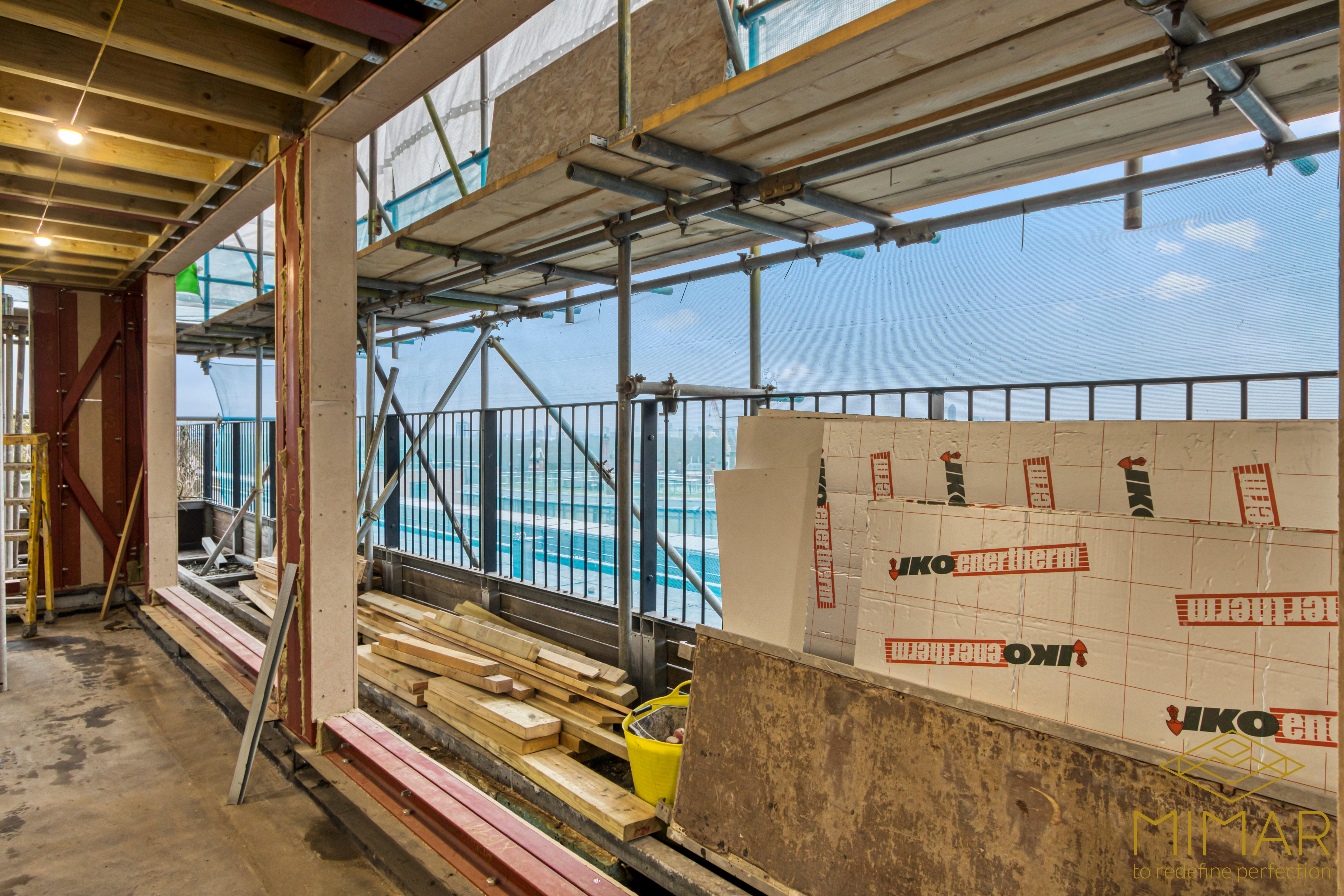
Rigid foam boards—including polyisocyanurate (PIR), expanded polystyrene (EPS) and extruded polystyrene (XPS)—offer very high thermal resistance per inch. They are common in external wall insulation, internal lining systems and structural insulated panels, helping homes meet tight U-value targets with slim build-ups.
Wood fibre and bio-based boards, finished with lime plaster, are breathable and particularly suited to heritage or solid-walled properties that need vapour-permeable solutions. The team at Wrapt Homes highlights how these materials manage moisture safely, though they tend to be thicker and more expensive than synthetic alternatives. Finally, reflective multi-foil membranes—multi-layer aluminium sheets with foam or wadding cores—are useful where space is tight on internal walls, working by reflecting radiant heat.
Placement-based distinctions
Cavity wall insulation suits homes built with a gap between two wall leaves. The cavity is filled with EPS beads, mineral wool or polyurethane foam. As LivGreen explains, it is a relatively quick retrofit completed from outside with minimal disruption—ideal for post-1920s homes with suitable cavities and no major damp issues.
Internal wall insulation (IWI) adds insulation to the inner face of solid walls or partitions. Approaches include insulation-backed plasterboard fixed with adhesive dabs, timber or metal battens filled with mineral wool and finished in plasterboard, or breathable wood fibre boards with lime plaster. IWI can be more cost-effective than external work and is well-suited where a building’s exterior appearance must be preserved—a frequent requirement in London’s many conservation areas. The trade-offs are reduced room size and the need for careful detailing at junctions to avoid cold bridging and condensation.
External wall insulation (EWI) involves fixing insulation boards—often EPS, mineral wool or PIR—to the outside of solid walls, then covering them with render or cladding. Typical systems use boards around 60–100 mm thick. EWI creates a continuous thermal layer that cuts cold bridges, protects the masonry, provides a fresh weather-resistant façade, improves soundproofing and helps manage damp. It is especially well-suited to solid-wall homes and deep retrofits where a façade refresh is also desired. For a detailed look at how external wall insulation can boost your home’s energy efficiency, comfort and value, it’s worth exploring the full range of options available to London homeowners.
Structural insulated panel homes
Structural insulated panels (SIPs) represent a thoroughly modern approach. These prefabricated panels feature a core of rigid foam insulation sandwiched between structural boards, typically OSB. Used for walls, roofs and floors in new builds and extensions, structural insulated panel homes offer very high insulation levels compared with traditional cavity walls, lightweight yet strong panels that speed up construction, and reduced thermal bridging thanks to their continuous insulation layer. In the UK, SIPs are popular for eco-friendly self-builds and extensions. While they can in principle be retrofitted, they are predominantly a new-build solution. Those interested in how sustainability features in new builds across London are evolving will find SIPs represent one of the most forward-thinking construction approaches available.
Matching Solution to Home
Cavity wall insulation suits mainstream 20th-century cavity homes; internal wall insulation works where the exterior is protected or budgets are tighter; external wall insulation excels on solid-walled or poorly-insulated homes needing both a fabric and aesthetic upgrade; and SIPs shine in new eco-builds targeting very low energy demand.
Benefits of Wall Insulators for London Homes
The advantages of investing in quality wall insulators extend well beyond a warmer living room. They touch on running costs, comfort, acoustics, building health, the environment and long-term property value.
Energy efficiency and lower bills
Insulating walls significantly cuts heat loss, reducing the energy needed to keep a home comfortable. For London households facing volatile energy tariffs, this translates into meaningful annual savings on heating. High-performance wall insulators such as rigid foam and SIPs also help homes meet—or exceed—Building Regulations U-value requirements, which in turn improves overall EPC ratings. It’s also worth considering how attic insulation works alongside wall insulation to maximise temperature control and energy savings throughout the whole home.
Improved comfort and temperature regulation
Better wall insulation reduces cold spots and draughty areas, keeping room temperatures more even throughout the day. Both internal and external systems raise the surface temperature of walls, cutting the risk of condensation on cold surfaces and making rooms feel less damp or chilly. The difference in everyday liveability is often what homeowners notice first.
Noise reduction
Acoustic performance is an underrated benefit, particularly in busy parts of London. Mineral wool, glasswool and dense wood fibre all offer good sound absorption, reducing noise transmission between rooms and from outside. Rigid foam boards and EWI systems add mass and decoupling to walls, which can further help dampen external traffic and street noise.
Moisture control and building protection
Correctly chosen and installed insulation keeps internal surfaces warmer, reducing surface condensation and the mould risk that comes with it. External systems also protect masonry from driving rain and freeze-thaw cycles. For heritage and solid-walled properties, breathable solutions such as wood fibre and lime are important, allowing moisture to migrate safely and protecting the building fabric. The opposite is also true: poorly chosen products, such as mis-applied closed-cell spray foam, can trap moisture—which is precisely why product selection and detailing are so critical.
Environmental advantages
Reduced energy use translates directly into lower carbon emissions, especially in gas-heated homes. Some insulators carry strong green credentials too—glasswool made from recycled glass bottles, or cellulose from recycled paper. External insulation that extends the life of an existing building also supports retrofit over rebuild, which is generally better from an embodied-carbon perspective.
Long-term value
Upgrading wall insulation can improve EPC banding—something buyers increasingly scrutinise—and reduce running costs, making a home more attractive to energy-conscious purchasers. When properly installed, EWI and IWI systems are considered long-life improvements that contribute to lasting asset value rather than short-term cosmetic appeal.
Cost Considerations for Wall Insulation in London
Pricing for wall insulation varies considerably, and understanding the drivers helps you budget realistically and compare quotes fairly.
Factors that influence pricing
Several variables shape the final figure. Wall type and construction matter—cavity versus solid wall, brick, block, timber frame or heritage masonry each behave differently. The chosen method (cavity fill, internal lining, external system or SIPs) and the material (mineral wool and EPS tend to be cheaper per square metre than PIR, wood fibre or closed-cell spray foam) both affect cost. Higher performance targets require more or higher-grade material, raising the price. Property size and complexity—larger external wall areas and intricate junctions around windows, eaves and rooflines—add labour and materials. Finally, access and condition play a role: scaffolding, repairs to existing render or brickwork, and any damp remediation can all increase a project’s total. Homeowners looking to reduce overall energy costs may also want to explore whether they qualify for free loft insulation schemes, which can complement wall insulation upgrades and further reduce energy bills.
External house insulation cost
External wall insulation usually sits at the higher end of retrofit spending. This reflects the scaffolding required, the extensive external detailing, and the new render or cladding finishes applied across all treated façades. Typical systems combine 60–100 mm insulation boards with mesh and decorative render. While the upfront external house insulation cost is greater than cavity fill or simple internal upgrades, EWI offers the greatest energy-saving potential on solid-walled homes. It also bundles insulation, façade renewal and weather protection into a single project—which can make strong economic sense when external works are due anyway.
Comparing costs across methods
| Insulation Method | Relative Cost Position |
|---|---|
| Cavity wall insulation (beads / blown mineral wool) | Lowest per m² |
| Insulation-backed plasterboard (simple internal) | Low |
| Battened internal systems with PIR / mineral wool | Mid-range |
| External wall insulation (solid-wall homes) | Higher |
| Structural insulated panels (new build) | Part of build cost |
| Spray foam retrofit | High & contentious |
It’s worth noting that SIPs are generally considered part of the structural build cost for a new home rather than a standalone insulation upgrade, while spray foam can prove costly and contentious if later removal is needed or if it affects mortgageability.
The cost-benefit relationship
Cavity wall and loft insulation often deliver the shortest payback periods, but wall insulation in general cuts energy bills year after year, protects against future energy price rises and can lift both comfort and property value. With EWI and deeper retrofits, the return on investment should be viewed over a longer horizon and weighed alongside reduced maintenance from a new render finish, an improved appearance, and better moisture and structural performance. For an exact picture, market costs are best confirmed via a professional survey, as figures depend heavily on the individual property.
How to Choose the Right Wall Insulator
Selecting the right wall insulator is a balance of practical and financial factors unique to each home.
Key factors to weigh
Start with home type and wall construction. Cavity walls, solid walls and timber frame each call for different approaches. Heritage properties—common across London’s older boroughs—often need vapour-permeable systems such as wood fibre and lime, whereas later 20th-century homes frequently suit mineral wool or glasswool between battens with a plasterboard finish. Consider climate and exposure too: areas subject to high wind-driven rain require careful cavity assessment and robust external systems.
Budget and disruption tolerance are equally important. Internal systems can be cheaper but more disruptive for occupants, involving redecoration and some loss of room size. External systems cost more but cause less internal upheaval and improve the façade at the same time. Where thickness must be minimised, rigid boards and multi-foil membranes help. Any existing damp or structural issues must be addressed before insulating, and breathable solutions may be necessary on solid walls. Finally, be mindful of mortgage and resale implications—particularly with spray foam, where lenders may be reluctant to lend.
When structural insulated panel homes make sense
SIPs are most appropriate for new builds or major extensions aiming for very low energy use, quick construction and high airtightness with integrated insulation. Self-build and modern eco-home projects are the typical candidates. For a straightforward retrofit, however, cavity, internal or external wall insulation will usually be the more practical route, as SIPs are less suited to upgrading an existing structure.
Professional versus DIY
Professional installation is strongly recommended for cavity wall insulation, which needs a proper drilling pattern and density; for external wall insulation, with its critical detailing, structural fixings and weatherproofing; and for spray foam and SIP installations. Confident DIYers might tackle some internal upgrades, such as installing insulation-backed plasterboard or mineral wool between battens—but they must follow manufacturer and Building Regulations guidance on vapour control, fire safety and junction detailing. Using qualified installers helps ensure the correct product choice, reduces the risk of condensation, damp and thermal bridging, and protects both warranties and mortgageability.
Conclusion
Choosing the right wall insulators is one of the most effective ways to improve a modern home’s comfort, energy efficiency and long-term value. By understanding the different types of wall insulation—cavity, internal, external and SIP systems—the materials available, and the cost–benefit trade-offs, homeowners can select a solution tailored precisely to their property and budget. Quality insulation on a house pays back not only in lower bills but in everyday comfort, a healthier building fabric and a stronger position when it comes time to sell.
If you’re ready to take the next step, the most valuable move is to arrange a professional insulation survey, compare options for external or internal upgrades, or—if you’re planning a new build—explore structural insulated panel homes as a high-performance alternative. Contact Mimar Construction for expert guidance on specifying and installing the right wall insulators for your London home, combining design sensitivity with rigorous, regulation-compliant delivery.