
Table of Contents
Introduction: Transform Your Home’s Energy Performance
In London’s challenging climate, maintaining a comfortable home while managing energy costs requires strategic thinking. External wall insulation (EWI) has emerged as one of the most effective solutions for improving home insulation and energy efficiency in properties throughout the capital and beyond. For a deeper look at sustainable living and how eco-friendly refurbishments—such as energy-efficient lighting, solar panels, and the use of sustainable materials in insulation—are shaping London homes, see this guide to sustainable living in London.
External wall insulation involves applying insulating material to the outside walls of a building, followed by a protective render or decorative finish. This comprehensive approach creates a thermal envelope that significantly reduces heat loss, keeping your home warmer in winter and cooler in summer while dramatically cutting energy bills.
With rising energy costs and growing environmental awareness, EWI has gained substantial popularity among London homeowners seeking to improve their property’s thermal performance while supporting sustainability goals. The benefits extend beyond simple energy savings to include enhanced comfort, reduced condensation, improved aesthetics, and increased property value.
This guide explores everything you need to know about insulation on a house’s exterior walls, helping you understand if this powerful energy-efficiency solution is right for your London home.
Understanding External Wall Insulation in London
External wall insulation fundamentally changes how your home interacts with the environment. Instead of losing heat through poorly insulated walls, EWI creates a protective thermal barrier that wraps your entire property. This comprehensive approach to house insulation outside walls delivers impressive results, particularly for older London properties built with solid wall construction. If you’re exploring other forms of insulation for specific areas—such as garage doors, underfloors, and exterior walls—there are tailored techniques to help keep energy costs in check.
Unlike other insulation methods, EWI is applied exclusively to the exterior of your property. The system typically consists of insulation boards secured to the outside walls, covered with reinforcing mesh and render, then finished with a decorative coating. The result is not just improved thermal performance but often an attractive refresh of your home’s appearance.
It’s important to distinguish exterior wall insulation from other types of home insulation. While cavity wall insulation fills the gap between two layers of brickwork, and internal insulation is applied to interior walls, EWI creates an entirely new outer layer. This approach preserves your internal living space while maximizing thermal benefits. To further maximize your home’s energy efficiency, consider how loft insulation and other cheap house insulation techniques can complement wall insulation.
For context, structural insulated panel homes represent a different construction method entirely. SIPs are factory-manufactured panels with insulating foam cores sandwiched between structural boards, typically used in new construction rather than retrofitting existing buildings. While both solutions prioritize energy efficiency, EWI is specifically designed to transform existing properties without major structural changes.
Benefits of External Wall Insulation
Installing external wall insulation offers numerous advantages that make it an attractive option for London homeowners looking to improve their property’s performance and comfort.
Significant Energy Efficiency Improvements
The primary benefit of exterior wall insulation is dramatic improvement in thermal performance. Uninsulated solid walls can lose up to a third of your home’s heat. EWI can transform a wall’s U-value (heat transfer measurement) from approximately 2.70 W/m²K in an uninsulated solid wall to below 0.30 W/m²K, representing a substantial improvement in thermal efficiency. This transformation creates a home that maintains comfortable temperatures with much less energy input.
Substantial Cost Savings
The improved thermal performance translates directly to lower energy bills. According to the Energy Saving Trust, homes with external wall insulation can reduce heating costs by 25-40%, saving households up to £410 annually. With energy prices continuing to rise, these savings become increasingly significant over time.
Financial Insight
While external wall insulation requires initial investment, many London homeowners find the system pays for itself through energy savings within 10-15 years, while continuing to deliver benefits for decades thereafter.
Enhanced Comfort and Living Environment
Beyond financial benefits, EWI creates a noticeably more comfortable home. The insulation eliminates cold spots and drafts, maintains more consistent indoor temperatures, and reduces condensation and dampness. Many London homeowners report significant improvements in winter comfort and overall living quality after installation.
Noise Reduction
For London residents dealing with urban noise, EWI offers a welcome acoustic benefit. The additional insulation layer provides sound dampening properties that reduce external noise penetration, creating a quieter, more peaceful indoor environment, particularly valuable for homes near busy roads or in high-density areas. You can discover more strategies to minimize noise and disruption—both during and after construction projects—in this dedicated blog on reducing noise and mess during building works.
Property Protection and Reduced Maintenance
External wall insulation effectively shields your property’s structural walls from weather exposure. This protection reduces the impact of rain, frost, and temperature fluctuations, potentially extending the lifespan of your building’s fabric. The new rendered finish often requires less maintenance than traditional brick or stone facades that might otherwise need pointing or repairs.
Aesthetic Improvements
EWI systems come with various finishing options that can transform and modernize your home’s appearance. The render can be textured, colored, or styled to complement your property’s character, offering an opportunity for visual enhancement alongside thermal benefits. This aspect is particularly valuable for older London properties with weathered or damaged facades.
Increased Property Value
With energy efficiency becoming increasingly important to buyers, homes with external wall insulation often command higher market values. The improved EPC (Energy Performance Certificate) rating, reduced running costs, and enhanced appearance all contribute to making your property more attractive to potential purchasers.
Environmental Benefits
By reducing energy consumption, external wall insulation helps lower your home’s carbon footprint. This contribution to sustainability aligns with London’s broader climate goals and supports the transition toward more environmentally responsible housing. To explore more on how using sustainable insulation materials can contribute to eco-friendly refurbishments, see this guide to sustainable living in London.
The Process of Applying External Wall Insulation
Understanding the installation process helps homeowners prepare for an external wall insulation project. While professional contractors handle the technical aspects, knowing what to expect ensures a smoother experience. For tips on effectively planning and combining EWI with other updates—such as underfloor insulation and garage door insulation—see our collection of expert insulation techniques.
Step-by-Step Installation Process
- Property Assessment and Preparation: The process begins with a thorough assessment of your home’s suitability for EWI. Contractors check the condition of existing walls, identify any repairs needed, and develop a detailed specification. Preparation includes cleaning walls, removing obstacles, and establishing a level surface for installation.
- Fixing the Insulation Boards: High-performance insulation boards are secured to the exterior walls using a combination of special adhesive and mechanical fixings. These boards are carefully measured and cut to fit around windows, doors, and other features.
- Applying Reinforcement Layer: Once the insulation is in place, contractors apply a base coat of render embedded with a reinforcing mesh. This layer provides strength and crack resistance to the system.
- Finishing Coat Application: The final stage involves applying a decorative finish coat, available in various textures and colors. This outer layer provides weather protection while defining your home’s new appearance.
- Detail Work and Completion: The installation concludes with detail work around windows, doors, roofline, and other junctions. Contractors reinstall fixtures like downpipes and lights, making any necessary adjustments.
The entire process typically takes between two to four weeks for an average London home, depending on size, complexity, and weather conditions. Professional installation ensures the system meets performance standards and qualifies for any available warranties.
What Homeowners Should Expect
During installation, homeowners can expect some disruption, including:
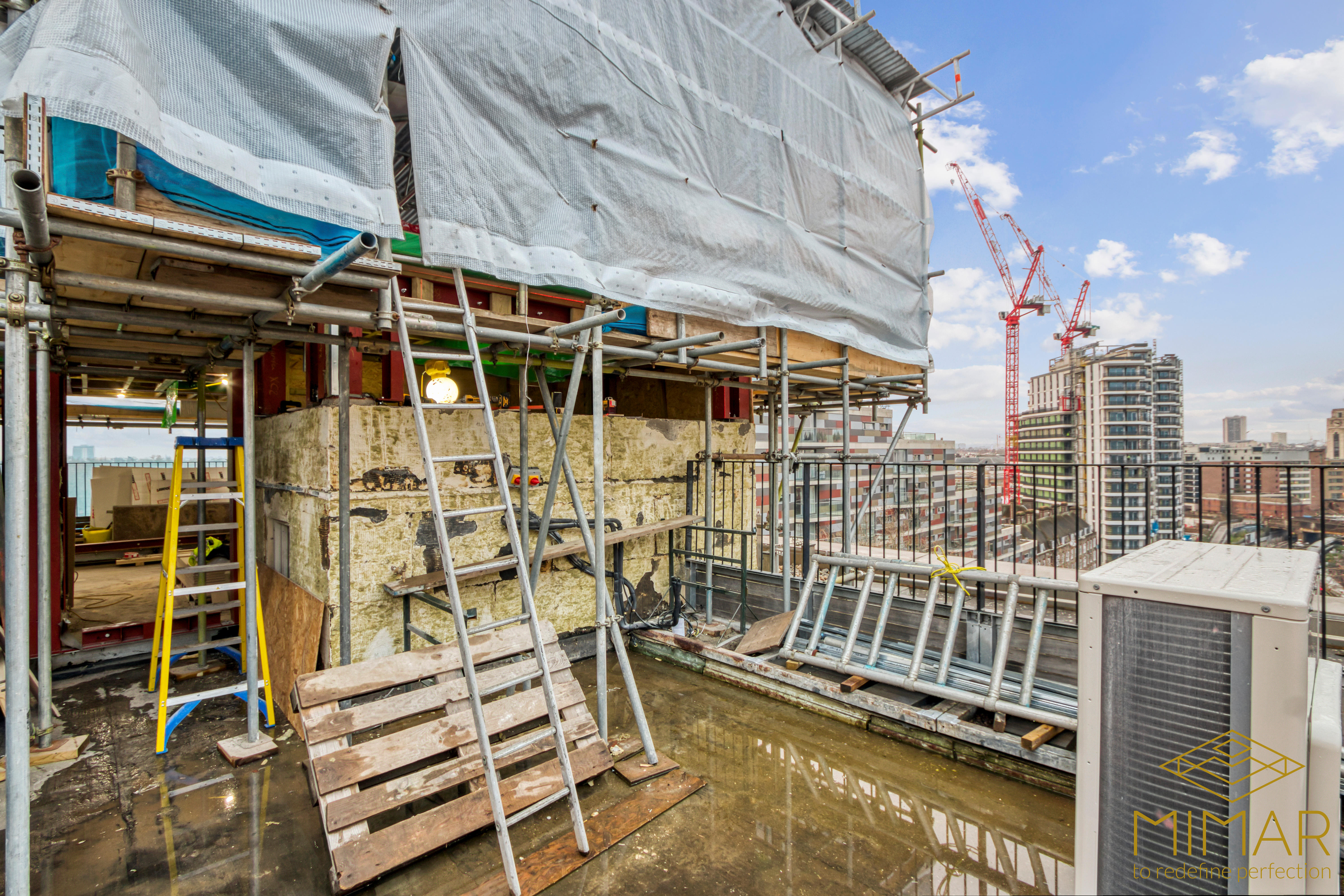
- Scaffolding erected around the property
- Noise and activity during working hours
- Temporary removal of external fixtures
- Limited access to areas immediately surrounding the house
Good contractors minimize disruption and communicate clearly throughout the process. Most work occurs outside the home, allowing normal life to continue indoors with minimal interruption. For a closer look at strategies to minimize mess and reduce disruption for occupants and neighbors, visit this resource on managing building works inconvenience.
Comparison with Structural Insulated Panel Homes
While external wall insulation retrofits existing buildings, structural insulated panel homes represent an entirely different approach. SIPs are used primarily for new construction or major rebuilds, where entire wall systems are created using factory-manufactured panels.
The key differences include:
| External Wall Insulation | Structural Insulated Panel Homes |
|---|---|
| Applied to existing structures | Forms the actual structure itself |
| Retrofitting solution | New construction method |
| Installed on-site in stages | Factory manufactured, assembled on-site |
| Preserves original building structure | Creates entirely new structure |
Both approaches deliver excellent thermal performance but serve different purposes in the construction and renovation market. If your project involves a significant overhaul or new build, working with an architect and understanding planning permission requirements is crucial—get practical guidance on the architect-led design-build process in London here.
Considerations Before Installing External Wall Insulation in London
Before proceeding with external wall insulation, London homeowners should carefully evaluate several important factors to ensure the system is appropriate for their property and circumstances. For any construction work—especially those requiring modifications to the building envelope—it’s vital to address legal and logistical aspects such as planning permission, site surveys, and builder selection. Prepare effectively by reviewing this guide to getting permissions and preparing for construction projects.
Suitability Assessment
External wall insulation performs best on certain property types:
- Solid wall construction: Homes built before the 1930s typically have solid walls without cavities, making them ideal candidates for EWI
- Properties with weather-damaged facades: Homes needing external repairs can benefit from combining restoration with insulation
- Buildings where internal space is at a premium: Unlike internal insulation, EWI preserves valuable interior floor area
Some properties may present challenges, including homes with significant architectural features that would be obscured by insulation, or buildings with limited access for installation.
Planning and Regulatory Requirements in London
London’s diverse architectural landscape means planning considerations vary significantly across boroughs:
- Planning permission: While many EWI installations qualify as permitted development, properties in conservation areas or listed buildings typically require planning permission
- Building regulations: All installations must comply with current building regulations regarding thermal performance, fire safety, and ventilation
- Party wall agreements: May be required if the installation affects walls shared with neighbors
Always check with your local London borough planning department before proceeding. Local authorities can provide specific guidance relevant to your area and property type. To understand the process of navigating permissions and building regulations, consult the detailed advice in this practical guide to construction planning in London.
Design and Aesthetic Considerations
External wall insulation changes your home’s appearance, requiring thoughtful design decisions:
- Render color and texture choices should complement your property and neighborhood context
- Architectural details may need special treatment or recreation
- Window and door reveals require careful detailing to maintain proportions
- External features like porches, bay windows, and decorative elements need integration into the design
Working with designers experienced in London’s architectural styles helps ensure the finished result enhances rather than detracts from your property’s character. Discover how an architect-led refurbishment can help maximize visual appeal and compliance for your insulation project.
Practical and Logistical Factors
Several practical considerations affect installation:
- Property access: Sufficient space is needed for scaffolding and materials
- External fixtures: Lights, pipes, satellite dishes, and other fittings need removal and reinstallation
- Adjacent properties: Proximity to neighboring buildings may affect installation methods
- Weather considerations: Certain installation stages require appropriate weather conditions
A thorough site assessment by experienced contractors helps identify and address these practical challenges before work begins. Also, if your project involves basement conversions or additions, be aware that effective insulation and waterproofing play vital roles in basement construction.
External Wall Insulation vs. Other Insulation Methods
When considering home insulation on a house, London homeowners face several options. Understanding how external wall insulation compares to alternatives helps inform the right decision for your property.
Comparing Insulation Approaches
| Insulation Method | Key Benefits | Potential Drawbacks | Best Applications |
|---|---|---|---|
| External Wall Insulation | Preserves internal space; reduces thermal bridging; improves weatherproofing; updates appearance | Higher initial cost; changes exterior appearance; requires good external access | Solid wall properties; homes needing facade improvement; where internal space is valuable |
| Internal Wall Insulation | Lower cost; maintains external appearance; suitable for selected rooms | Reduces internal floor area; disrupts internal features; requires redecoration | Listed buildings; conservation areas; where external appearance must be preserved |
| Cavity Wall Insulation | Cost-effective; minimal disruption; invisible once installed | Only suitable for cavity walls; less effective than EWI; potential damp issues if inappropriately installed | Properties built after 1930s with unfilled wall cavities |
| Structural Insulated Panels | Excellent insulation; rapid construction; good airtightness | Only for new builds or major renovations; requires complete wall replacement | New construction; extensions; complete rebuilds |
Effectiveness Comparison
In terms of thermal performance, external wall insulation typically delivers superior results compared to other retrofitting options. The continuous insulation layer minimizes thermal bridging (heat escaping through gaps or structural elements), creating a more consistent thermal envelope.
For London’s older housing stock with solid walls, EWI can improve thermal performance dramatically. While cavity wall insulation might reduce heat loss by 35% in suitable properties, external wall insulation can achieve reductions of 45% or more in solid wall homes, according to industry data. If you are seeking the most budget-friendly overall approach, learn more about cheap house insulation upgrades and eligibility for free loft insulation for additional savings.
Combining Insulation Approaches
For maximum energy efficiency, some London homeowners combine insulation methods:
- Whole house approach: Combining external wall insulation with loft insulation, floor insulation, and high-performance windows for comprehensive thermal improvement
- Hybrid solutions: Using EWI on the rear and side elevations while employing internal insulation on front facades where preserving street appearance is important
- Phased implementation: Starting with the most cost-effective measures before progressing to external wall insulation
This integrated approach maximizes energy performance while respecting architectural constraints and budget limitations. For practical case studies on such tailored insulation tactics—including those combining wall, floor, and specialist insulation—see these real-life examples and tips.
Professional Advice
Consult with energy efficiency specialists who understand London’s diverse housing stock to determine the optimal insulation strategy for your specific property type and condition.
Case Studies and Real-World Examples
Examining real-world applications of external wall insulation in London and beyond provides valuable insights into its practical benefits and transformative potential. If you’re considering basement conversions or garage upgrades along with EWI, this guide to basement insulation and planning further illustrates how holistic approaches can deliver outstanding results.
Victorian Terrace Transformation in North London
A solid-wall Victorian terrace in Camden underwent external wall insulation as part of a comprehensive energy efficiency upgrade. The project delivered:
- Reduction in annual heating costs of 35%
- Elimination of persistent damp issues in the rear bedrooms
- Significant improvement in acoustic insulation from busy street noise
- Refreshed exterior appearance while maintaining period character through careful detailing
The owners reported that winter comfort improved dramatically, with previously unusable rooms becoming comfortable living spaces. The property’s market valuation increased beyond the cost of works, reflecting growing buyer preference for energy-efficient homes.
Council Housing Regeneration Project in East London
A large-scale regeneration of council-owned solid wall properties in East London utilized external wall insulation to address fuel poverty and improve living conditions. Results included:
- Average reduction in heating costs of £325 per household annually
- Dramatic improvement in thermal comfort reported by 92% of residents
- Reduction in condensation and mold issues by over 80%
- Modernized appearance of aging housing stock, improving community pride
This project demonstrated how external wall insulation can deliver significant social benefits alongside energy performance improvements, especially in older housing stock.
1930s Semi-Detached Home in South London
A 1930s semi-detached property with partial cavity wall construction underwent a hybrid approach:
- External wall insulation applied to solid wall sections (bay windows and extensions)
- Cavity wall insulation installed in suitable main walls
- The combined approach achieved a 42% reduction in heating energy use
- Internal temperatures stabilized, with fewer fluctuations throughout the day
This case highlights how tailored approaches combining different insulation methods can maximize effectiveness in London’s diverse housing stock.
New-Build Comparison: Structural Insulated Panel Home
While not an EWI retrofit, a new structural insulated panel home built in London’s suburbs provides an interesting comparison:
- The SIP construction achieved exceptional thermal performance (U-value of 0.15 W/m²K)
- Annual heating costs were approximately 65% lower than similar-sized traditional constructions
- Construction time was reduced by 40% compared to conventional methods
This example illustrates how structural insulated panel homes represent an alternative high-performance approach for new construction, while EWI remains the preferred solution for improving existing buildings. If you want to maximize whole-property efficiency, you can also look into options for free loft insulation and other cost-effective insulation upgrades.
Key Learnings from Case Studies
These real-world examples reveal several consistent patterns:
- External wall insulation delivers substantial, measurable improvements in energy efficiency
- Benefits extend beyond energy savings to comfort, health, and property protection
- Success depends on proper assessment, design sensitivity, and quality installation
- The approach must be tailored to specific property types and conditions
The evidence from these case studies supports external wall insulation as a proven, effective solution for improving London’s existing housing stock.
Conclusion: Is External Wall Insulation Right for Your London Home?
External wall insulation represents one of the most comprehensive and effective ways to enhance your home’s energy performance, particularly for London’s older solid wall properties. The benefits extend far beyond simple energy savings, creating warmer, more comfortable living spaces while reducing environmental impact and often enhancing property value.
For homeowners considering home insulation options, EWI offers distinct advantages:
- Superior thermal performance compared to many alternative insulation methods
- Preservation of internal living space
- Opportunity to refresh and modernize external appearance
- Protection of the building fabric from weather damage
- Reduced condensation and improved indoor air quality
However, the decision requires careful consideration of your specific circumstances, including:
- Your property’s construction type and condition
- Local planning constraints and conservation requirements
- Budget availability and potential return on investment
- Long-term plans for the property
For many London homeowners, particularly those with solid wall properties experiencing high heating costs, cold internal surfaces, or issues with damp, external wall insulation provides an excellent solution that addresses multiple problems simultaneously. The initial investment typically delivers returns through energy savings, improved comfort, and potential property value enhancement.
As energy costs continue to rise and environmental concerns grow, improving your home’s thermal performance becomes increasingly important. External wall insulation offers a proven, effective way to transform your property’s energy efficiency while creating a more comfortable, sustainable living environment for years to come. For a holistic approach, explore how eco-friendly refurbishments, sustainable insulation materials, and upgrades to basements or garages can further boost your home’s performance.
To determine if exterior wall insulation is the right choice for your specific property, we recommend consulting with specialists who understand London’s diverse housing stock and can provide tailored advice based on your home’s unique characteristics and your personal priorities. For more on preparing for major refurbishment, see our tips on working with architects and planning your project from permissions to completion.