
Estimated Reading Time: 15 minutes
Table of Contents
- Introduction: The Modern Heating Solution for New Builds
- Understanding Air Source Heat Pumps in New Homes
- Planning Stage: Preparing for Installation in London
- Compliance, Permissions and Standards in London
- Selecting the Right System and Installer
- Site Preparation for New Builds
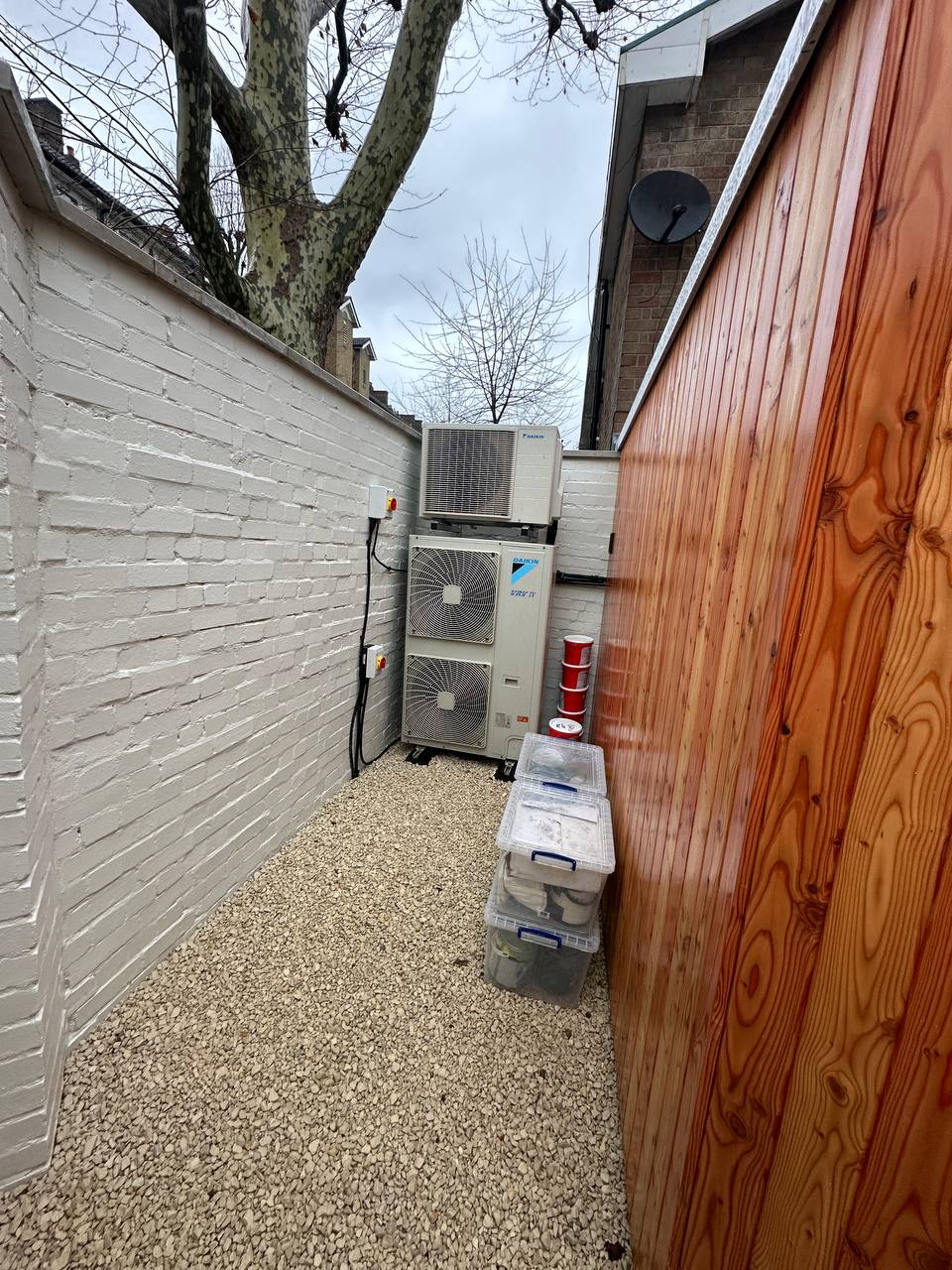
- Outdoor Unit Installation: Step-by-Step
- Indoor Components and Distribution Systems
- Electrical and Control System Integration
- Commissioning and Testing Your Heat Pump
- Handover: Living With Your New Heat Pump
- Maintenance, Servicing and Long-Term Care
- Costs, Timelines and Avoiding Common Pitfalls
- Integration with Your Home’s Energy Strategy
- Conclusion: Your Path to Efficient Heating
Introduction: The Modern Heating Solution for New Builds
Air source heat pumps represent the future of home heating and cooling, especially for new build properties in London and across the UK. These innovative systems extract heat from the outside air—even in cold weather—and efficiently transfer it into your home. As the UK moves toward more sustainable building practices, air to air heat pump installation has become increasingly common in new construction projects, offering an environmentally friendly alternative to traditional gas boilers.
This comprehensive guide walks you through the entire process of fitting air source heat pump systems in new builds. Whether you’re a self-builder creating your dream home, a developer working on multiple properties, or a homeowner planning a new construction, you’ll find practical, step-by-step advice on everything from initial planning to final commissioning and beyond.
With the Future Homes Standard on the horizon and increasing focus on low-carbon technologies, understanding how a heatpump installed in your new property can enhance comfort, reduce carbon emissions, and potentially lower running costs is more valuable than ever. Let’s explore how to integrate these efficient heating systems into your new build project successfully.
Understanding Air Source Heat Pumps in New Homes
Air source heat pumps (ASHPs) operate on a surprisingly simple principle: they extract heat from the outside air and upgrade it through a refrigerant cycle to provide warmth for your home. Unlike traditional heating systems that burn fuel to generate heat, ASHPs move existing heat from one place to another—making them incredibly efficient. In well-designed systems, they can deliver 2.5-4+ units of heat for every unit of electricity consumed, depending on conditions and system design.
When considering air to air heat pump installation for a new build, it’s important to understand the two main system types:
Air-to-Water Heat Pumps
Air-to-water systems transfer the captured heat to water, which is then circulated through your home. These systems:
- Heat water for underfloor heating, radiators, and domestic hot water via a cylinder
- Function as a direct replacement for a traditional boiler in a wet central heating system
- Represent the most common choice for UK new builds as they align well with Building Regulations and low-carbon targets
Air-to-Air Heat Pumps
Air-to-air systems work more like efficient reverse-cycle air conditioning units:
- They use an outdoor unit connected to indoor fan-coil units that deliver warm (or cool) air directly into rooms
- They don’t provide hot water—a separate solution is required
- They’re particularly attractive for heating and cooling in open-plan or well-zoned homes
New build homes offer the perfect environment for heat pump technology. According to the Self Build Portal, modern construction standards create highly insulated, airtight buildings that allow heat pumps to operate at their most efficient—using lower flow temperatures while maintaining comfortable indoor conditions.
Why New Builds Are Ideal for Heat Pumps
There are several reasons why having a heatpump installed during construction makes perfect sense:
- High fabric efficiency – New builds can be designed with excellent insulation and airtightness, allowing heat pumps to run steadily at lower temperatures, maximizing efficiency and minimizing running costs.
- Freedom to design optimal systems – Starting from scratch means you can incorporate low-temperature emitters like underfloor heating from the beginning, rather than retrofitting them later.
- Design flexibility – New construction allows you to position outdoor units optimally, plan efficient pipe runs, and allocate space for all components without compromises.
- Regulatory compliance – Heat pumps help new homes meet increasingly stringent energy and carbon standards, making them attractive for achieving required SAP/EPC ratings.
The Grant UK Heat Pump Guide highlights that new builds with heat pumps often achieve better efficiency than retrofitted systems because the entire heating system can be designed specifically for low-temperature operation from day one.
Did You Know?
The Future Homes Standard, due to be implemented in the mid-2020s, aims for 75-80% lower carbon emissions compared to 2013 standards. Industry experts anticipate that heat pumps will effectively replace fossil fuel boilers in most new homes as a result of these changes.
Planning Stage: Preparing for Installation in London
Successful air source heat pump installation begins long before the first component is fitted. In London’s competitive property market, where space comes at a premium and building regulations can be stringent, early planning is absolutely essential.
The Importance of Early Planning in London Projects
Heat pump performance depends heavily on whole-house design considerations, including fabric efficiency, emitter selection, plant space allocation, and electrical infrastructure. For London properties, where space optimization is crucial, decisions about system type, plant room location, outdoor unit positioning, and heat distribution methods should be made at the concept or planning stage—not left until first fix.
Integrating these decisions early in your London project ensures that your architect can incorporate necessary spaces and access points into the design, potentially saving costly revisions later.
Assessing Heating and Cooling Needs
Before choosing specific equipment, you’ll need to consider several factors about your new London home:
- Size, orientation, and overall design of the property
- Insulation strategy and glazing performance
- Whether cooling will be required (particularly relevant in London’s urban heat island)
- Hot water requirements based on occupancy
While detailed heat-loss calculations will be performed later by your installer, having a conceptual understanding of these factors helps guide early decisions. According to the Royal Institution of Chartered Surveyors, properly sizing a heat pump is critical to its performance—undersized units struggle to heat the property, while oversized ones may cycle inefficiently and cost more than necessary.
Choosing Between Air-to-Air and Air-to-Water Systems for London Properties
For London new builds, your choice between system types should consider:
Choose air-to-water if:
- You want hot water and space heating from a single system
- You’re already planning underfloor heating or radiators
- Meeting SAP calculations and Building Regulations is a priority
- You prefer a more traditional heating approach with modern efficiency
Choose air-to-air if:
- You want integrated cooling capability (valuable in London summers)
- You’re comfortable having a separate hot water solution
- Your London property has an open-plan layout well-suited to fan-coil placement
- You want rapid response times for heating and cooling
Positioning Indoor and Outdoor Units in London Properties
Location planning is particularly critical in London, where outdoor space may be limited and neighbor considerations important:
Outdoor unit placement should consider:
- Clear airflow access and adequate clearances for performance and maintenance
- Proximity to the plant room to minimize pipe runs and heat losses
- Noise implications for neighboring properties (especially important in London’s dense urban environment)
- Visual impact on the property’s appearance and any planning sensitivities
- Security and protection from debris or damage in urban settings
Indoor component location planning should include:
- Space allocation for hot water cylinders, buffer tanks, and manifolds (for air-to-water)
- Optimal positioning of fan-coil units for effective air distribution (for air-to-air)
- Access for maintenance and future component replacement
Coordination between your architect, builder, and mechanical/electrical designers is essential. Your ASHP specialist should be involved early to ensure that your London property’s plans incorporate:
- ASHP plant space requirements in floor plans
- Outdoor unit position on elevations and site plan
- Routing for pipework, cable runs, and condensate drainage before structural and services drawings are finalized
This collaborative approach ensures that your fitting air source heat pump project is seamlessly integrated into the overall building design, reducing the risk of complications during construction.
Compliance, Permissions and Standards in London
Navigating London’s regulatory landscape for air source heat pump installation requires careful attention to both national regulations and local planning considerations. Understanding what permissions you need—and when you don’t—can save valuable time in your project timeline.
Planning Permission vs. Permitted Development in London
In most cases across England, including London, domestic air source heat pumps are classified as “permitted development,” meaning specific planning permission is often not required if the installation meets certain criteria. According to Rise Retrofit, these criteria typically include:
- The unit is at least one meter from the property boundary
- The installation complies with MCS Planning Standards or equivalent
- The external unit volume is less than 0.6 cubic meters
- The unit is not installed on a pitched roof or within 1 meter of a flat roof edge
- The unit meets noise requirements (typically 42 decibels at neighboring property boundaries)
However, in London’s complex urban environment, you may still need planning permission if:
- Your property is in a Conservation Area or Area of Outstanding Natural Beauty
- You’re working with a listed building
- The property is a flat rather than a house
- Your installation doesn’t meet all permitted development criteria
As of May 2025, new regulations have simplified and expanded permitted development rights for heat pumps, making installations “simpler and more flexible” according to Navien UK. This is particularly beneficial for London homeowners looking to adopt this technology.
Building Regulations and Energy Standards for London New Builds
All new London homes must comply with current Building Regulations, with several sections particularly relevant to heat pump installations:
- Part L (Conservation of fuel and power) – Sets standards for energy efficiency and carbon performance; heat pumps help meet low CO₂ targets and primary energy limits
- Part F (Ventilation) – Important when designing airtight homes with MVHR systems alongside heat pumps
- Part P (Electrical safety) – Covers electrical work associated with heat pump installation
Additionally, the London Plan includes policies that encourage sustainable design and construction, often making heat pumps an attractive option for meeting local planning requirements alongside national Building Regulations.
Certification and Competence Requirements
When selecting an installer for your London project, look for these important credentials:
- MCS (Microgeneration Certification Scheme) – This UK certification covers both products and installers, and is typically required for accessing incentives like the Boiler Upgrade Scheme. It also provides quality assurance that’s particularly valuable in London’s high-end property market.
- Professional body memberships – Affiliations with organizations like NICEIC (for electrical work) or relevant heating and ventilation associations indicate competence and adherence to industry standards.
Essential Documentation for London Heat Pump Projects
As a London property owner or developer, you should expect to receive a comprehensive documentation package including:
- System design specifications and heat-loss calculation summary
- MCS certificate (if applicable) and installer credentials
- Manufacturer documentation including user and installation manuals
- Commissioning sheets showing key settings, test results, and sign-off
- Warranty and guarantee details
- Maintenance schedule and service contact information
This documentation isn’t just for compliance—it’s valuable for future property sales and helps ensure your system operates efficiently for years to come.
Selecting the Right System and Installer
Choosing the appropriate heat pump system and a qualified installer is crucial for ensuring your London new build benefits from efficient, reliable heating and cooling. This section guides you through the evaluation process.
Evaluating Heat Pump Systems for London New Builds
When assessing heat pump options for your project, consider these key factors:
Capacity Range
Correct sizing is critical for system performance. Installers should calculate the required output based on the specific heat loss characteristics of your new build—not on general rules of thumb. According to the Greenmatch installation guide, an accurately sized system will provide optimal comfort while maintaining efficiency.
Efficiency Ratings
Look for high seasonal efficiency (SCOP) values and good energy-label ratings specifically for low-temperature operation, which is typical in well-insulated new homes. Higher efficiency ratings translate directly to lower running costs—particularly important in London where energy costs can be significant.
Brand Reliability
Prioritize established manufacturers with strong UK support networks, long-term parts availability, and proven track records. This is especially important in London’s premium property market, where system reliability directly impacts property value.
System Compatibility
Ensure the system can integrate effectively with other planned features of your home, such as:
- Underfloor heating systems
- Smart home controls
- Solar PV or other renewable technologies
- Cooling capabilities (if required)
Choosing a Professional Installer in London
London’s competitive construction market offers many installation companies, but quality varies significantly. Look for these qualifications when selecting your installer:
- Relevant certification – MCS accreditation and proof of training on your chosen system brand
- New build experience – Specific experience with heat pump installation in new construction rather than just retrofits
- Local knowledge – Familiarity with London’s unique building stock and regulatory requirements
- Comprehensive design approach – Willingness to provide detailed heat-loss calculations and system design documentation
- Clear quotation process – Transparent pricing with scope, exclusions, and assumptions clearly stated
- Verifiable references – Case studies or references from similar London projects
Essential Questions for Your Installer
Before committing to an installer for your air to air heat pump installation or air-to-water system, ask these important questions:
- “How have you sized the system for my specific new build design?”
- “What flow temperatures are you designing to, and how does that affect my choice of underfloor heating or radiators?”
- “How will the hot water system be configured, and what are the expected reheat times?”
- “What’s included in your commissioning and handover process?”
- “What warranties apply to both equipment and workmanship, and what servicing is required to maintain them?”
- “How will you integrate the heat pump with other systems like PV, MVHR, or smart controls?”
- “What experience do you have with similar London properties?”
Understanding Heat Pump Installation Quotations
A professional quotation for your London heat pump installation should include:
| Component | What to Expect |
|---|---|
| System Description | Clear details of system type, model, capacity, and main components |
| Installation Scope | Overview of pipework, electrical works, and any builder’s work required |
| Programme | Timeline showing first-fix, second-fix, and commissioning dates aligned with build stages |
| Cost Breakdown | Itemized equipment, labor, and ancillary costs including VAT |
| Terms | Warranty information, service agreements, and payment schedule |
Be wary of quotations that lack detail or seem unusually low—quality heat pump installation requires proper design and premium components to deliver long-term performance.
Site Preparation for New Builds
Proper site preparation is fundamental to successful heat pump integration in your London new build. This phase ensures that all the necessary groundwork is in place before equipment installation begins.
Integrating Heat Pump Installation into Your London Build Schedule
Heat pump installation isn’t a single event but a process that spans several stages of construction. For efficient project management, your London build schedule should accommodate:
- Early shell stages: Installation of concrete pad/bracket and creation of external wall penetrations
- First fix: Installation of pipework and cable routes before walls and floors are closed
- Second fix: Mounting of equipment, final connections, and system filling
- Commissioning: Final setup and testing near completion once power and water are available
This phased approach aligns with typical London construction sequencing and ensures that heat pump installation doesn’t create delays or require disruptive remedial work.
Preparing Foundations for the Outdoor Unit
The outdoor unit of your heat pump requires proper structural support. In London properties where space is often at a premium, careful preparation of this area is essential:
Concrete pad or slabs:
- Must provide a stable, level base
- Should be slightly raised to prevent issues with standing water or snow
- Typically needs to be at least 100mm thick for domestic units
Wall brackets (common in London where ground space is limited):
- Must be rated for the weight of your specific unit
- Should include vibration isolation to prevent noise transmission through the building structure
- Require adequate clearance for service access
Your installer should provide specific requirements for your chosen system, but discussing these needs with your builder early prevents misunderstandings or delays.
Planning Service Routes in London New Builds
Early planning of service routes is particularly important in London’s often complex building designs:
- Refrigerant or flow/return pipe routes between outdoor unit and indoor components should be planned before insulation, plasterboarding, and floor screeds are completed
- Electrical supply cables and control wiring paths need to be incorporated into first-fix electrical works
- Condensate drainage routes must be established with adequate fall and frost protection
The Samphire Homes ASHP guide emphasizes that minimizing pipe and cable runs not only reduces heat loss and installation costs but also improves system efficiency—particularly valuable in premium London developments where energy performance is a selling point.
Ensuring Proper Ventilation and Drainage
For optimal performance of your outdoor unit in London’s variable climate:
- Maintain clear space around the unit according to manufacturer specifications (typically 300-500mm at sides and 1000mm at front)
- Ensure good air circulation to prevent the unit from recycling its own cold exhaust air
- Provide proper drainage for condensate and defrost water to prevent ice formation on paths and patios during winter
- Consider London’s microclimate—units in sheltered urban locations may perform differently than those in exposed areas
Coordinating Between Trades in London Projects
Effective coordination between different trades is crucial for smooth heat pump installation, especially in London’s fast-paced construction environment:
- Builder: Responsible for pad/bracket installation, wall penetrations, structural openings, and making good
- Plumber/ASHP installer: Handles primary pipework, cylinder installation, manifold fitting, and system flushing
- Electrician: Provides electrical supplies, isolators, consumer unit modifications, and control system wiring
Regular coordination meetings should align heat pump installation tasks with other building services to avoid clashes and ensure efficient workflow—particularly important in London’s typically tight construction timelines.
Outdoor Unit Installation: Step-by-Step
The outdoor unit is the heart of your air source heat pump system. Its proper installation is crucial for system efficiency, longevity, and compliance with London’s noise regulations and aesthetic considerations.
Finalizing the Outdoor Unit Position
Before installation begins, confirm the final position based on:
- Required clearances for airflow and maintenance access (typically 300-500mm at sides, 1000mm at front)
- Noise implications for neighboring properties—particularly important in London’s dense urban environment
- Aesthetic impact on the property’s appearance
- Optimal pipe run distance to indoor components
- Protection from falling debris, especially in London’s tree-lined streets
According to Navien UK’s installation guide, positioning the outdoor unit correctly not only ensures optimal performance but also helps comply with the noise limits required under permitted development rules—crucial for avoiding planning issues in London.
Installation Sequence for Outdoor Units
The typical installation process follows these steps:
- Install base or brackets: Secure the concrete pad or wall-mounting brackets, ensuring they’re level and stable. For wall mounts, verify the wall construction can support the unit’s weight.
- Position anti-vibration mounts: These reduce noise transmission and are particularly important in London’s terraced or semi-detached properties where noise could affect neighbors.
- Lift and secure the outdoor unit: Carefully position the unit on its mounting system, ensuring it’s level and firmly fixed. This often requires at least two people due to the unit’s weight.
- Connect service routes: Attach pipework (refrigerant lines for air-to-air systems or flow/return water pipes for air-to-water systems) and electrical connections according to the manufacturer’s specifications.
- Install condensate drainage: Connect and test the condensate drain to ensure proper water discharge away from the building’s foundations.
- Verify clearances: Confirm that the installed unit maintains all required clearances for airflow and future maintenance access.
Weather and Debris Protection in London Conditions
London’s urban environment presents specific challenges for outdoor heat pump units:
- Position the unit to avoid overhead gutters or roof edges that could drip directly onto it
- Consider simple guards or covers to protect from falling leaves in London’s leafy neighborhoods
- Ensure the unit is elevated enough to prevent issues during heavy rain or potential flooding
- In areas with high pollution or dust levels (common in central London), allow for more frequent coil cleaning
These precautions help maintain system efficiency and extend equipment life despite London’s variable weather conditions and urban environment.
Professional Tip
In London’s premium property market, consider acoustic enclosures or decorative screens that reduce noise while enhancing aesthetics. These must be carefully designed to maintain proper airflow while addressing both visual impact and sound concerns—particularly valuable in high-end developments where external appearance affects property value.
Differences Between Air-to-Air and Air-to-Water Outdoor Installations
While the outdoor units for both system types look similar, there are important differences in their connections:
- Air-to-water systems: Connect to water flow and return pipes, typically with insulation to prevent heat loss and often located close to the internal plant room housing the hot water cylinder
- Air-to-air systems: Connect to refrigerant lines that branch to multiple indoor fan-coil units throughout the property, requiring careful planning of refrigerant pipe routes
Your installation team should be experienced with your specific system type to ensure proper setup and compliance with refrigerant handling regulations where applicable.
Indoor Components and Distribution Systems
The indoor elements of your heat pump system are crucial for effectively distributing warmth (and potentially cooling) throughout your London property. This section explains the installation considerations for these components.
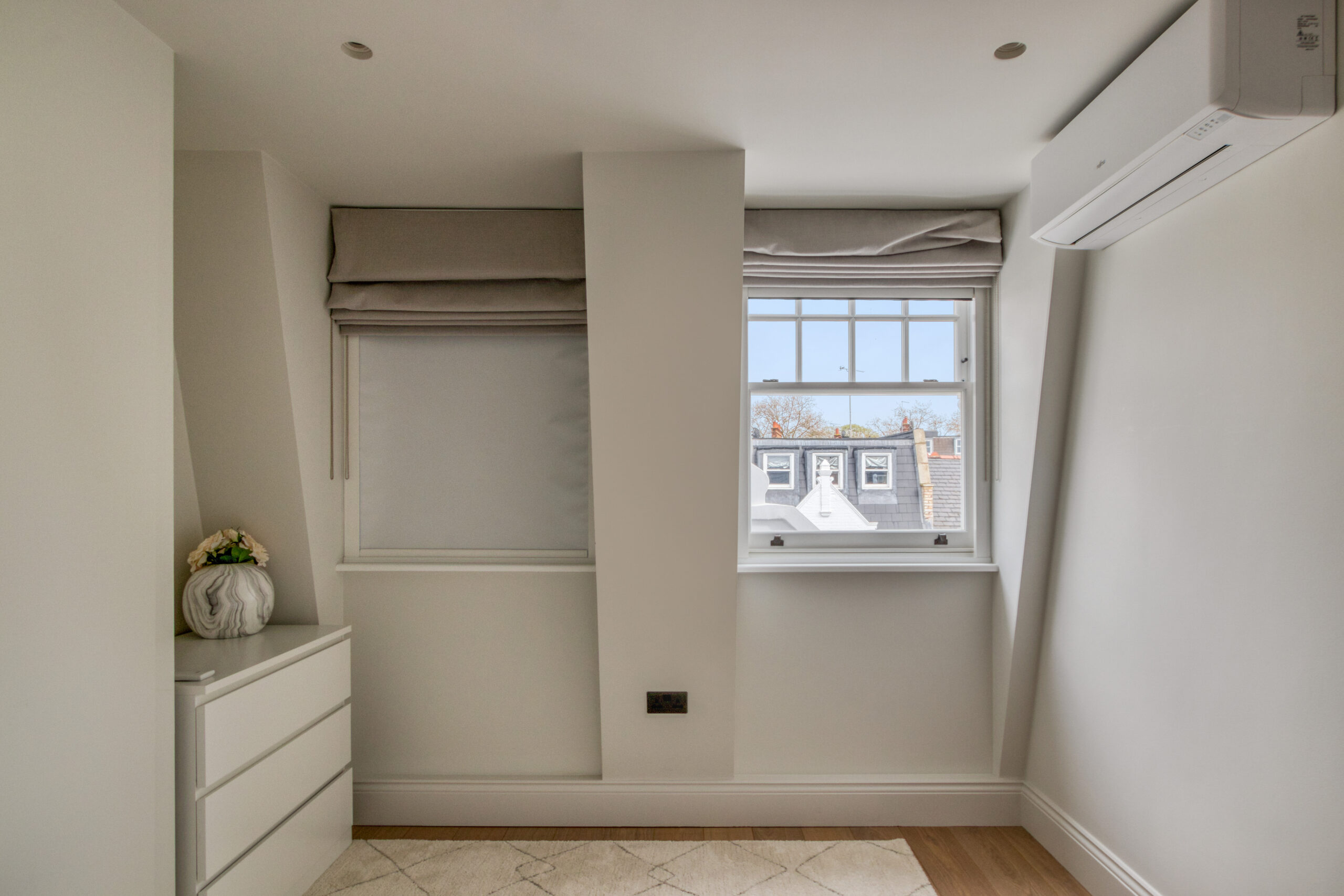
Installing Indoor Units for Air-to-Air Systems in London Homes
Air-to-air heat pump systems use indoor fan units to distribute conditioned air directly into your living spaces:
Positioning considerations:
- High-wall units are typically installed 2.1-2.4m above floor level for optimal air distribution
- Ceiling cassettes provide discreet installation in rooms with suspended ceilings
- Floor-standing units may be preferred in rooms with limited wall space
- All units should be positioned to avoid direct airflow onto seating areas or beds
Zoning strategy for London properties:
- Separate indoor units allow independent temperature control in different zones
- Common configurations include separate units for living areas and bedroom zones
- For London’s open-plan apartments, strategic unit placement ensures even coverage
Condensate management:
- Each indoor unit requires condensate drainage (especially important when using cooling mode)
- Drain lines must have sufficient fall (minimum 1:50) to prevent water pooling
- Condensate pumps may be required where gravity drainage isn’t possible
Air-to-Water Indoor Components for London New Builds
Air-to-water systems require several indoor components to distribute heat via water:
Hot water cylinder installation:
- Typically located in a dedicated plant room, utility room, or purpose-built cupboard
- Must be properly sized based on household hot water demand
- Requires sufficient access space for maintenance and potential future replacement
Space heating distribution options:
- Underfloor heating: Ideal for heat pumps due to its large surface area that works efficiently with lower flow temperatures. According to Nu-Heat Northeast, underfloor heating paired with heat pumps can deliver superior comfort while maintaining high efficiency.
- Low-temperature radiators: Larger than conventional radiators to work effectively with the lower flow temperatures typical of heat pump systems
Controls integration:
- Central control panel for the heat pump system
- Room thermostats and zone controllers for temperature management throughout the property
- Weather compensation controls that adjust system operation based on outdoor temperature
Pipework and Cabling Installation
Proper installation of distribution networks is critical for system efficiency:
- All pipework and cable routes should be planned and installed before walls and floors are closed to avoid surface-mounting later
- Pipework must be properly insulated to minimize heat loss during distribution
- Refrigerant pipes for air-to-air systems require careful installation with proper bending techniques and joint sealing
- For air-to-water systems, heating circuits should be pressure-tested before final connections
Integration with Other Building Systems
Modern London properties often incorporate multiple systems that should work harmoniously with your heat pump:
- MVHR (Mechanical Ventilation with Heat Recovery): Supply and extract locations should be coordinated with your heating distribution to avoid cold spots or interfering with airflow patterns
- Solar PV: Controls can be configured to optimize heat pump operation during periods of solar generation, maximizing self-consumption of generated electricity
- Smart home systems: Integration with property-wide automation can enhance comfort while optimizing energy use
In London’s premium property market, seamless integration of these systems can significantly enhance both comfort and property value.
Electrical and Control System Integration
The electrical infrastructure and control systems are critical components of your heat pump installation. In London’s high-value property market, sophisticated control systems are increasingly expected as standard in new builds.
The Electrician’s Role in London Heat Pump Installations
A qualified electrician is essential to your installation team and will be responsible for:
- Providing a properly sized dedicated circuit for the heat pump with appropriate protection devices
- Installing isolators for safe maintenance access
- Running power supplies to both outdoor and indoor units
- Installing control wiring between system components
- Testing all electrical connections for safety and compliance with regulations
In London’s complex regulatory environment, using NICEIC-registered electricians helps ensure compliance with both Building Regulations and specific local requirements.
Connecting to Your Home’s Electrical System
Heat pumps require proper integration with your property’s electrical infrastructure:
- The system connects to the consumer unit via a dedicated circuit breaker (typically 20-40 amps depending on system size)
- Protection devices including RCDs/RCBOs must be installed according to current regulations
- An external weatherproof isolator is installed near the outdoor unit for maintenance safety
- For larger systems, your electrician may need to verify that your property’s incoming supply capacity is sufficient
The Greenmatch installation guide notes that electrical work for heat pump installation should always be performed by qualified electricians who understand the specific requirements of these systems.
Control Systems for London Heat Pumps
Modern heat pump installations in London typically include sophisticated control systems:
Basic control components:
- Heat pump controller managing overall operation
- Room thermostats for temperature monitoring and adjustment
- Zone controllers for managing different areas independently
- Hot water temperature and timing controls
Advanced control options:
- Weather compensation systems that adjust operation based on outdoor temperature
- Smart controls allowing remote operation via smartphone apps
- Integration with home automation systems
- Energy monitoring to track system performance
For London properties, where owners often expect cutting-edge technology, these advanced control options can be a significant selling point.
Setting Up User-Friendly Controls
During commissioning, your installer should:
- Configure basic schedules and temperature set-points based on your lifestyle and preferences
- Program appropriate set-back temperatures for periods when spaces are unoccupied
- Ensure all controls are intuitively labeled and easy to understand
- Set up any smartphone apps or remote access systems
This setup process is crucial for ensuring that your system operates efficiently from day one. According to the Samphire Homes ASHP guide, proper control setup can significantly impact both comfort levels and running costs.
London Energy Savings Tip
If your London property has solar PV installed or you’re on a time-of-use electricity tariff, ask your installer about configuring your heat pump controls to prioritize operation during low-cost periods or when solar generation is at its peak. This can substantially reduce running costs in London’s expensive energy market.
Commissioning and Testing Your Heat Pump
Commissioning is the critical final stage that transforms your installed components into a functioning, efficient heating system. This process ensures your London property’s heat pump will deliver optimal performance from day one.
What Commissioning Involves
In simple terms, commissioning includes:
- System checks: Verifying that all components are installed correctly and operating as intended
- Settings adjustment: Fine-tuning flow temperatures, weather compensation curves, and operating schedules
- Performance testing: Confirming the system can effectively heat your space and provide hot water as designed
- Safety verification: Testing all safety devices and protective functions
Commissioning should always be performed by qualified technicians who understand both the technical requirements of the system and the specific needs of your London property.
The Installer’s Commissioning Process
After the physical installation is complete, your installer will follow a structured commissioning sequence:
- System preparation: Filling and flushing the heating system to remove air and debris
- Initial power-up: Carefully activating the system and performing initial checks
- Configuration: Programming the heat pump controller with appropriate settings
- Test cycles: Running the system through heating, cooling (if applicable), and hot water cycles
- Performance verification: Measuring key parameters like flow temperatures, return temperatures, and pressure
- Control testing: Ensuring all thermostats, zones, and schedules function correctly
- Documentation: Recording all commissioning data on a formal commissioning sheet
This process typically takes several hours to complete properly and should not be rushed. According to the Greenmatch installation guide, thorough commissioning is essential for ensuring both efficiency and reliability.
Documentation and Demonstration for London Homeowners
At the end of commissioning, your installer should provide:
- Comprehensive user guides and equipment manuals
- A summary of key system settings and their purpose
- A detailed maintenance schedule outlining required service intervals
- Warranty documentation for all major components
- Contact information for ongoing support and service
Additionally, they should conduct a thorough demonstration showing you:
- How to adjust room temperatures and hot water settings
- How to switch between operating modes
- How to set schedules and timers
- What to do if you notice any warning indicators
This handover process is particularly important in London’s premium property market, where clients expect comprehensive support and clear documentation.
Performance and Efficiency Verification
Before signing off on the installation, your commissioning engineer should verify:
- That all rooms can reach and maintain their set-point temperatures
- That hot water is delivered at the correct temperature and with appropriate recovery times
- That the system is operating within the efficiency parameters promised during design
Some installers may also set up ongoing monitoring to track system performance over time, allowing for future optimization based on actual usage patterns.
Handover: Living With Your New Heat Pump
The handover marks the transition from installation to everyday use of your heat pump system. Understanding how to operate and interact with your new heating system is essential for maximizing comfort and efficiency in your London home.
Essential Knowledge for New Heat Pump Owners
On handover day, ensure you understand:
- The basics of turning your system on and off safely
- How to select between heating, hot water, and cooling modes (if applicable)
- Methods for adjusting room temperatures and hot water settings
- Programming schedules for different times of day or days of the week
- Special functions like “holiday mode” for periods of absence
- How to identify and respond to any warning indicators
Take notes during the demonstration and don’t hesitate to ask questions—this is your opportunity to gain confidence with the system.
The Settling-In Period for London Heat Pump Systems
New heat pump systems typically require an adjustment period:
- During the first few weeks, you may need minor adjustments to schedules and set-points as you learn how the system behaves in your specific property
- The installer might need to fine-tune weather compensation settings if some rooms are slightly over or under-heated
- In new builds, there’s often a “drying out” period where the building fabric releases moisture, which can affect heating behavior
- Your usage patterns may evolve as you become familiar with the system, leading to further optimization opportunities
This settling-in phase is normal and doesn’t indicate any problem with the installation—it’s simply part of adapting the system to your specific needs and property characteristics.
Seasonal Operation in London’s Climate
Understanding how your system operates throughout London’s seasonal changes helps maximize comfort and efficiency:
Air-to-air systems:
- Switching between heating and cooling modes requires a simple controller adjustment
- Set appropriate temperatures—avoid excessively low cooling settings in summer (around 23-24°C is typically comfortable while remaining efficient)
- Be aware that performance can vary with outdoor temperature, particularly in London’s occasional temperature extremes
Air-to-water systems:
- Space heating typically runs more in winter months while hot water production continues year-round
- Some systems have different settings for the heating season versus summer mode
- Weather compensation automatically adjusts operation based on outdoor conditions, optimizing efficiency
Adapting to Heat Pump Living
Heat pumps operate differently from traditional heating systems, and adapting your habits can enhance comfort and efficiency:
- Heat pumps typically work best when maintaining steady temperatures rather than with large setbacks and recovery periods
- In well-insulated London new builds, minor temperature setbacks (1-2°C) overnight or during absences are more efficient than turning the system off completely
- Be patient with temperature changes—heat pumps often heat rooms more gradually than gas boilers but maintain more consistent comfort
- Take advantage of zoning capabilities to heat only the areas you’re using, particularly valuable in larger London properties
With proper understanding and small adjustments to your heating habits, your heat pump will deliver exceptional comfort while maintaining energy efficiency.
Maintenance, Servicing and Long-Term Care
Proper maintenance ensures your London heat pump installation continues to operate efficiently throughout its expected 15-20 year lifespan. This section outlines essential care practices for heat pump owners.
Routine Homeowner Maintenance
As a heat pump owner, several simple maintenance tasks will help maintain peak performance:
- Regularly check that the outdoor unit remains clear of leaves, debris, and snow—particularly important in London’s leafy suburbs and during autumn
- Ensure vegetation around the outdoor unit is trimmed back to maintain proper airflow (typically at least 300-500mm clearance)
- Periodically check indoor components for any signs of water leakage or unusual operation
- If you have an air-to-air system, clean or replace indoor unit filters according to manufacturer recommendations (typically every 1-3 months)
According to the Rise Retrofit quick guide, keeping the outdoor unit clean and unobstructed is one of the most important maintenance tasks and can significantly impact system efficiency.
Professional Servicing Requirements
To maintain warranty coverage and ensure optimal performance, professional servicing is essential:
- Most manufacturers recommend annual servicing by a qualified technician
- Professional service typically includes:
- Visual inspection of outdoor and indoor units
- Checking refrigerant levels and pressures
- Examination of electrical connections and components
- Cleaning of heat exchangers and filters
- Verification of control system operation
- Testing of safety devices
- For London properties, consider setting up a service agreement with your installer or a reputable local maintenance company
Regular professional servicing not only maintains efficiency but can identify potential issues before they develop into costly problems.
The Impact of Good Maintenance on Performance
Investing in proper maintenance delivers significant benefits:
- Sustained efficiency: Well-maintained systems maintain their efficiency ratings, keeping running costs low—particularly important with London’s high energy prices
- Enhanced reliability: Regular checks reduce the risk of unexpected breakdowns and extend system lifespan
- Warranty protection: Most manufacturers require documented annual servicing to maintain warranty coverage
- Optimal comfort: Properly maintained systems deliver more consistent heating and cooling performance
The Royal Institution of Chartered Surveyors notes that well-maintained heat pumps can maintain their efficiency levels throughout their operational life, making maintenance a worthwhile investment.
Recognizing Warning Signs
Being alert to potential issues allows for early intervention. Contact your service provider if you notice:
- A noticeable drop in heating performance or hot water temperature
- Unusual noises from either outdoor or indoor units
- Error codes or warning lights on your controller display
- Significant ice buildup on the outdoor unit outside of normal defrost cycles
- Unexpected increases in electricity consumption
Prompt attention to these warning signs can prevent minor issues from developing into major problems requiring costly repairs.
London Property Management Tip
For London investment properties or high-end homes, consider remote monitoring systems that alert both you and your maintenance provider to performance issues in real-time. These systems can be particularly valuable for properties that aren’t continuously occupied, providing peace of mind and protecting your investment.
Costs, Timelines and Avoiding Common Pitfalls
Understanding the financial and scheduling aspects of heat pump installation helps ensure your London project proceeds smoothly and delivers value for money.
Heat Pump Installation Timeline in London New Builds
Heat pump installation integrates with your construction schedule at several key points:
- Design stage (pre-construction): System selection, layout planning, and plant space allocation
- Shell and first fix: Installation of outdoor unit base, wall penetrations, and preliminary pipe/cable runs
- Second fix: Equipment mounting, final connections, and system filling
- Pre-completion: Commissioning, testing, and handover
For most London residential properties, the actual on-site installation work typically spans 2-5 days, depending on system complexity and property size. However, these days are spread across the construction timeline rather than occurring consecutively.
According to Nu-Heat Northeast, coordinating heat pump installation with other construction activities is essential for efficiency and cost control, particularly in London’s fast-paced building environment.
Cost Components for London Heat Pump Projects
While specific prices vary based on property size, system type, and London location, understanding the main cost categories helps with budgeting:
Equipment costs:
- Outdoor unit(s)
- Indoor components (cylinder, manifolds, fan coils)
- Control systems
- Distribution system (underfloor heating, radiators, or fan coils)
Installation labor:
- ASHP specialist/heating engineer
- Electrician
- Commissioning engineer
Additional works:
- Groundworks for outdoor unit base
- Electrical supply upgrades if required
- Any decorative screening or acoustic treatment
In London’s premium construction market, high-quality heat pump installations typically represent a significant but worthwhile investment in long-term comfort and energy efficiency.
Common Installation Mistakes and How to Avoid Them
Being aware of typical pitfalls helps ensure your project runs smoothly:
Late decision-making: Selecting a heat pump after the design is finalized often leads to compromised locations and inefficient layouts. Solution: Integrate heat pump planning from the earliest design stages.
Poor outdoor unit positioning: Inadequate attention to noise, airflow, or access can cause neighbor complaints and performance issues. Solution: Carefully consider all aspects of outdoor unit location, particularly in London’s dense urban environment.
Undersized distribution systems: Conventional radiators or underfloor heating not designed for heat pump operation can lead to poor comfort and efficiency. Solution: Ensure all emitters are specifically designed for low-temperature operation.
Weak coordination between trades: Miscommunication often results in missing or misrouted services. Solution: Establish clear drawings, specifications, and regular site coordination meetings.
Insufficient user training: Inadequate handover can lead to inefficient operation. Solution: Ensure comprehensive demonstration and documentation are provided.
The Navien UK installation guide emphasizes that proper planning and communication between all parties involved is the key to avoiding these common issues.
Maximizing Value from Your London Heat Pump Investment
To ensure the best return on your investment:
- Select a system with high seasonal efficiency ratings (SCOP)
- Prioritize quality installation over lowest upfront cost
- Consider the total cost of ownership (initial investment plus running costs) rather than just purchase price
- Ensure your system is properly sized—neither oversized nor undersized
- Choose a reliable manufacturer with good warranty coverage and UK support
In London’s property market, a well-designed and properly installed heat pump system can add significant value to your property while delivering long-term operating cost benefits.
Integration with Your Home’s Energy Strategy
Heat pumps work most effectively as part of a comprehensive energy strategy. For London new builds, integrating your heat pump with other systems and approaches maximizes both comfort and efficiency.
Heat Pumps in Low-Carbon London Homes
Your air source heat pump forms a central component in a low-carbon home strategy:
- It provides efficient electric heating, aligning with the UK’s increasingly renewable electricity grid
- It supports London’s sustainability goals and helps meet building regulations
- When paired with other technologies, it creates a comprehensive approach to reducing carbon emissions and energy costs
The Grant UK guide to heat pumps in new builds notes that heat pumps are increasingly becoming the standard heating solution for new properties as the UK moves toward its net-zero carbon goals.
Complementary Building Approaches
Several design and construction approaches work synergistically with heat pumps:
Insulation and airtightness:
- High-performance insulation reduces heat loss, allowing smaller heat pump systems
- Excellent airtightness minimizes infiltration losses, improving overall efficiency
- Together, these “fabric first” measures can reduce heating demand by 50-80% compared to older construction methods
According to Self Build Portal, better fabric efficiency translates directly into smaller, more affordable heat pump systems and significantly lower running costs—particularly valuable in London where both construction and energy costs are high.
Low-temperature emitters:
- Underfloor heating provides large surface areas ideal for the lower flow temperatures of heat pumps
- Oversized or low-temperature radiators deliver effective warmth without requiring high water temperatures
- These emitters enable heat pumps to operate at their most efficient flow temperatures (typically 35-45°C)
Technology Integration for London Smart Homes
Modern London properties often incorporate multiple technologies that can work together with heat pumps:
Solar PV integration:
- Heat pumps can be programmed to prioritize operation during periods of solar generation
- This “self-consumption” approach maximizes the value of your solar electricity
- Some systems can automatically heat water when excess solar power is available
Smart tariffs and controls:
- Time-of-use electricity tariffs allow heat pumps to operate when electricity is cheapest
- Smart controls can optimize operation based on electricity prices, weather forecasts, and occupancy patterns
- These approaches can significantly reduce running costs in London’s expensive energy market
Home battery systems:
- Battery storage can further enhance self-consumption of solar energy
- Some advanced systems can store cheap off-peak electricity specifically for heat pump use
- This approach is particularly valuable for maximizing energy independence
Future-Proofing Your London Property
Installing a heat pump in your new London property offers significant future benefits:
- Regulatory readiness: Your property will already meet increasingly stringent energy regulations
- Energy price protection: As electricity continues to decarbonize while gas prices potentially rise, heat pumps offer long-term cost stability
- Market appeal: Energy-efficient properties command premium prices in London’s environmentally-conscious market
- Upgrade pathways: A well-designed system can accommodate future technological improvements in controls and integration
By viewing your heat pump as part of an integrated energy strategy rather than just a heating appliance, you maximize both its immediate benefits and its long-term value to your London property.
Conclusion: Your Path to Efficient Heating
Installing an air source heat pump in your London new build represents a forward-thinking approach to home heating and cooling. From initial planning through design, installation, commissioning, and ongoing operation, the journey requires careful consideration and expert implementation—but the rewards are substantial.
A properly designed and installed heat pump system delivers multiple benefits for London properties:
- Efficient, low-carbon heating that aligns with both national and London-specific environmental goals
- Potential for cooling capability—increasingly valuable in London’s warming climate
- Integration with smart home technologies and renewable energy sources
- Long-term energy cost stability in an uncertain market
- Enhanced property value in London’s premium real estate market

The key to success lies in approaching air to air heat pump installation as an integral part of your overall building design rather than an afterthought. By planning early, selecting qualified professionals, and ensuring proper integration with your building’s fabric and other systems, you’ll create a home that delivers exceptional comfort while minimizing environmental impact.
For the best results with fitting air source heat pump systems in your London new build, remember these essential principles:
- Engage with heat pump specialists during the earliest design phases
- Prioritize building fabric efficiency alongside your heating system design
- Select appropriately sized systems and components designed specifically for heat pump operation
- Choose qualified, experienced installers with relevant certification
- Ensure comprehensive commissioning and handover
- Maintain your system regularly to preserve efficiency and reliability
With these considerations in mind, your heatpump installed in your new London property will provide years of efficient, comfortable, and sustainable heating—representing a wise investment in both your home’s immediate livability and its long-term value.
Ready to explore how an air source heat pump could enhance your London new build project? Contact our team of specialists for a consultation tailored to your specific requirements and property design.