

Table of Contents
- Introduction to Permitted Development for Side Extensions
- What Are Side Extensions?
- Permitted Development Explained
- Side Extension Criteria Under Permitted Development
- Limitations and Conditions
- When Planning Permission is Required
- Verifying Permitted Development Status
- Permitted Development vs. Planning Permission
- Guidance for Homeowners
- Frequently Asked Questions
- Conclusion
Introduction to Permitted Development for Side Extensions in London
For London homeowners looking to expand their living space, side extensions offer a practical solution to add valuable square footage without sacrificing garden space. However, navigating the regulatory landscape can be daunting, particularly understanding whether your extension falls under permitted development rights or requires formal planning permission. For a more detailed look at all extension types and their benefits for London homes, read our expert guide to maximising space with an extension.
Permitted development rights were introduced to streamline minor home improvements by removing the need for full planning applications in certain circumstances. For side extensions specifically, these rights can save homeowners significant time, money, and administrative hassle—but only when the proposed work meets all the necessary criteria.
With London’s diverse property types and the presence of numerous conservation areas, understanding the nuances of permitted development extension regulations is crucial before breaking ground. This guide will walk you through everything you need to know about permitted development rights for side extensions, helping you determine whether your project can proceed without planning permission or if you’ll need to submit a formal application.
Why Understanding Permitted Development Matters
Building an extension without required planning permission can result in enforcement action, potentially leading to costly demolition or retrospective applications. Conversely, unnecessarily applying for planning permission when your extension qualifies as permitted development can delay your project by months and add significant costs. Get more insights about the practical steps for planning and permissions in our project preparation guide.
What Are Side Extensions?
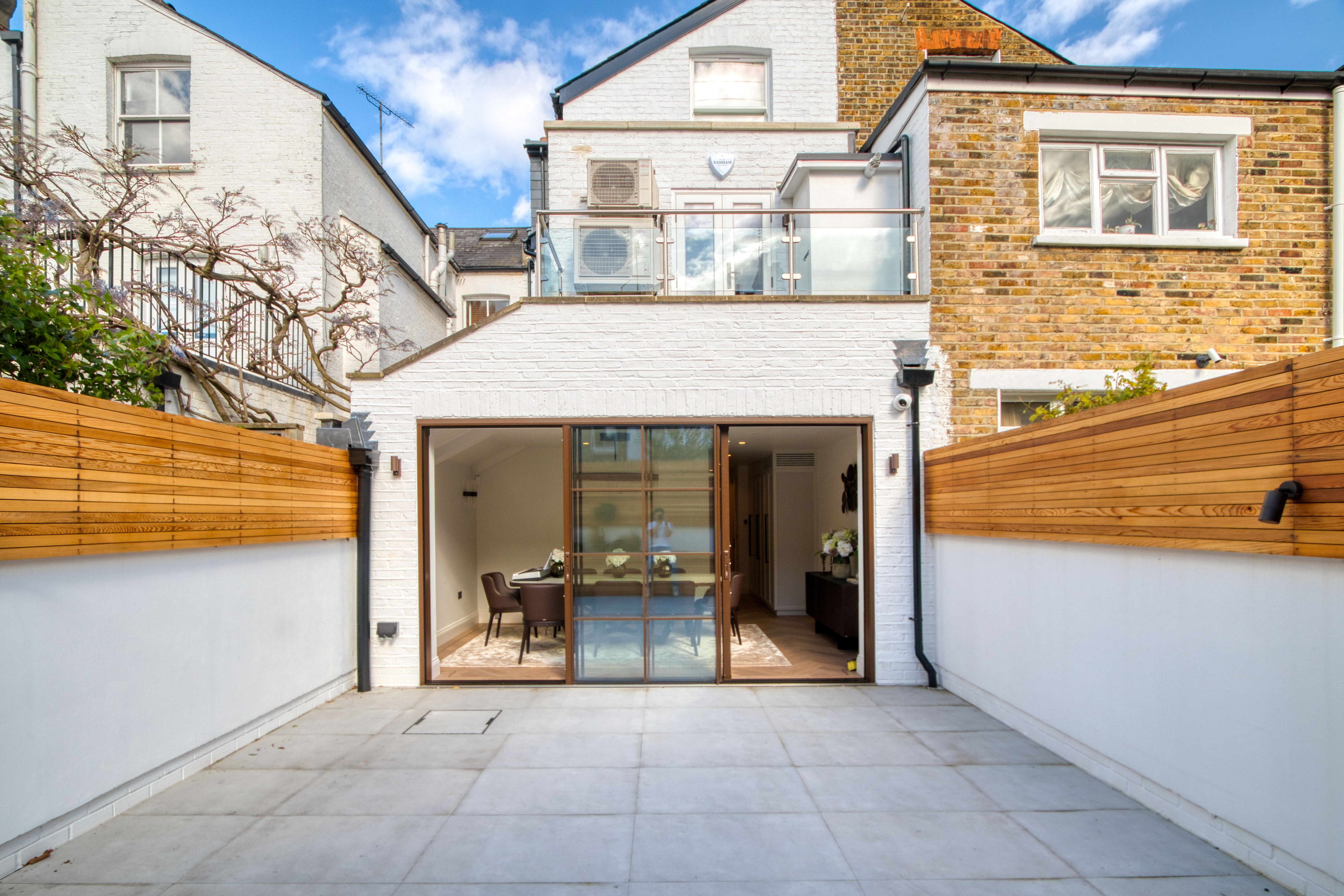
A side extension is a structural addition built alongside the lateral aspect of a house, typically extending along the original dwelling’s flank wall. Unlike other types of extensions, side extensions utilize the often underused space to the side of a property, making them particularly valuable in London where space comes at a premium.
Understanding the distinction between different types of extensions is important when navigating permitted development rights, as different rules apply to each—explore these and more in our full breakdown of extension types:
| Extension Type | Description | Key Considerations |
|---|---|---|
| Side Extension | Built alongside the house, extending from the side wall | Often limited by width, proximity to boundaries, and cannot usually face highways |
| Rear Extension | Projects out from the back of the house | Generally allows greater depth than side extensions |
| Front Extension | Projects forward from the front of the house | Rarely permitted under permitted development |
| Wraparound Extension | Combines side and rear extensions in an L-shape | Typically requires planning permission |
Side extensions are particularly popular in London’s suburban areas where properties often have space to one side. They provide an ideal opportunity to expand kitchens, add utility rooms, or create additional living space without encroaching on valuable garden areas.
Permitted Development Explained
Permitted development rights are a set of national guidelines that allow certain building works to be carried out without the need for a planning application. These rights are defined in the Town and Country Planning (General Permitted Development) (England) Order 2015 (as amended) and provide a framework within which homeowners can make improvements to their properties.
For side extensions, permitted development rights can represent a significant advantage, allowing homeowners to proceed with construction much more quickly than if they needed to secure planning permission. However, these rights come with specific limitations and conditions that must be strictly adhered to. If you are interested in other types of permitted development, such as loft conversions, you can find in-depth information in our dedicated article on loft extension permitted development.
It’s important to note that permitted development rights apply only to houses (dwellinghouses), not to flats, maisonettes, or other buildings. Additionally, these rights may be removed or restricted in certain areas through what are known as Article 4 Directions, particularly in conservation areas, national parks, Areas of Outstanding Natural Beauty, and World Heritage Sites.
In London specifically, the density of conservation areas means that many properties have restricted permitted development rights, making it essential to verify your property’s status before proceeding with any works.
Side Extension Criteria Under Permitted Development
For a side extension to qualify as permitted development in London or elsewhere in England, it must meet all of the following criteria:
- It must be a single-storey extension only
- It must not face a highway (this includes roads, footpaths, and bridleways)
- The maximum height must not exceed 4 meters
- If within 2 meters of a boundary, the eaves height must not exceed 3 meters
- The width must not be greater than half the width of the original house
- The total area of all extensions (including the side extension) must not exceed 50% of the land around the original house (as it was first built or as it stood on July 1, 1948)
- The extension must use materials similar in appearance to the existing house
- The extension must not include verandas, balconies, raised platforms, or microwave antennas
Understanding “Original House”
The “original house” refers to the house as it was first built or as it stood on July 1, 1948 (if built before that date). Any previous extensions, even those built by former owners, count against your permitted development allowance. To better understand the step-by-step process, inspections, and documentation you’ll need before starting work, refer to our comprehensive guide on project practicalities.
Meeting all these criteria is essential for your side extension to be considered permitted development. If any single criterion is not met, you will need to apply for planning permission before proceeding with construction.
Limitations and Conditions for Side Extensions in London
When planning a side extension under permitted development in London, you need to be aware of several key limitations and special conditions that may apply to your property.
Size, Height, and Placement Restrictions
The dimensional restrictions for side extensions are particularly important:
- Height limitation: Maximum 4 meters for single-storey extensions
- Eaves height: Maximum 3 meters if within 2 meters of a boundary
- Width restriction: Cannot be wider than half the width of the original house
- Land coverage: All extensions and outbuildings combined must not cover more than 50% of the garden/curtilage (excluding the original house footprint)
These restrictions ensure that side extensions remain proportionate to the original dwelling and don’t overly impact neighboring properties or the street scene.
Special Policies for Specific Properties
In London, with its rich architectural heritage, many properties fall under special designations that affect permitted development rights:
| Property Type | Permitted Development Status |
|---|---|
| Listed Buildings | No permitted development rights; all extensions require planning permission and likely listed building consent |
| Properties in Conservation Areas | Permitted development rights typically restricted; side extensions often require planning permission |
| Properties in Article 4 Direction Areas | Permitted development rights may be removed or restricted |
| Properties created through Prior Approval | Generally do not benefit from householder permitted development rights |
London has over 1,000 conservation areas, covering approximately 20% of the city, making it particularly important for London homeowners to check whether their property is affected by such designations before proceeding with any extension plans.
Additionally, some London boroughs have implemented specific Article 4 Directions that remove permitted development rights for particular types of development in certain areas. It’s always advisable to check with your local planning authority about any such restrictions that might apply to your property.
When Planning Permission is Required for Extensions
Understanding when your side extension requires planning permission is crucial to avoid potential enforcement issues. Here are the main scenarios where planning permission would be necessary:
Scenarios Where Permitted Development Rights Do Not Apply
Your side extension will require planning permission if:
- It is more than one storey high
- It faces a highway
- It exceeds half the width of the original house
- It exceeds 4 meters in height (or 3 meters at the eaves if within 2 meters of a boundary)
- The total of all extensions would exceed 50% of the curtilage
- Your property is a flat or maisonette (which do not have permitted development rights for extensions)
- Your property is in a designated area where permitted development rights are restricted
- Your property is listed
- Your property was created through prior approval (e.g., office-to-residential conversion)
- Your extension includes features not allowed under permitted development (like balconies or raised platforms)
- Permitted development rights have been removed by condition on a previous planning permission or by an Article 4 Direction
Additionally, if you’re planning a wraparound extension that combines side and rear aspects, this will almost always require planning permission as it typically falls outside permitted development parameters. Learn more about tackling planning hurdles and collaborating efficiently with professionals in our architect-led renovation guide.
Assessing if “Extension Do I Need Planning Permission” Applies
To determine whether your extension requires planning permission, follow these steps:
- Check your property’s status (house, flat, listed, in conservation area, etc.)
- Measure your proposed extension against permitted development criteria
- Check if there are any Article 4 Directions affecting your area
- Review any planning conditions attached to previous permissions for your property
- If in doubt, contact your local planning authority or consult a planning professional
For London homeowners specifically, the complexity of local planning policies means that seeking professional advice is often the safest approach when determining whether planning permission for extensions is required.
Verifying Permitted Development Status
Before proceeding with a side extension under permitted development rights, it’s advisable to formally verify your project’s status. This provides legal certainty and protection against potential future disputes.
Official Channels and Resources
There are several ways to verify whether your proposed side extension qualifies as permitted development:
- Planning Portal: The UK government’s official online planning resource provides guidance on permitted development rights and planning requirements
- Local Planning Authority: Your local council’s planning department can provide advice specific to your area and property
- Professional Advice: Consulting with a chartered town planner or architect with planning expertise can provide expert assessment of your project
In London, each borough operates its own planning department, and local interpretations of national policies can vary. It’s always worth checking with your specific London borough for any local policies that might affect your permitted development rights. To ensure a smooth start, read our article on project practicalities for tips on permissions, surveys, and working with the right builder.
Lawful Development Certificate
A Lawful Development Certificate (LDC) is the most secure way to confirm that your side extension qualifies as permitted development. While not mandatory, obtaining an LDC offers several benefits:
- Provides legal confirmation that your extension doesn’t require planning permission
- Protects against future enforcement action
- Offers documentation for when you sell your property
- Gives peace of mind before investing in construction
To apply for an LDC, you’ll need to submit an application to your local planning authority with plans and documentation demonstrating how your proposed extension complies with all permitted development criteria. While there is a fee for this application, it’s significantly less than a full planning application and provides valuable legal certainty.
London Permitted Development Extension Tip
In London’s competitive property market, having an LDC can add value when selling your home, as it provides future buyers with confidence about the legality of any extensions. This is particularly important in London’s higher-value property market.
Permitted Development vs. Planning Permission: Process Comparison
Understanding the differences between proceeding under permitted development rights versus applying for planning permission helps homeowners make informed decisions about their extension projects. For a side-by-side look at working with professionals, managing communication, and ensuring your design is realised, see our guide on effective communication between architects, clients, and builders.
| Aspect | Permitted Development | Planning Permission |
|---|---|---|
| Application Process | No formal application required (optional LDC application) | Formal application with detailed plans and documentation |
| Timeframe | Immediate start possible (8 weeks if applying for LDC) | Typically 8-10 weeks for determination |
| Cost | No fee (unless applying for LDC, which costs approximately £103 for householders) | Application fee (approximately £206 for householder applications) |
| Neighbor Consultation | Not required | Formal consultation with neighbors and potentially wider community |
| Design Flexibility | Must adhere strictly to permitted development criteria | Potential for greater flexibility, subject to planning policy |
| Certainty | Binary decision based on meeting criteria | Subjective assessment against local policies |
If Your Side Extension Doesn’t Meet Permitted Development Criteria
If your proposed side extension doesn’t qualify for permitted development, you’ll need to submit a planning application. In this case:
- Prepare detailed plans and elevations of your proposed extension
- Complete an application form through the Planning Portal
- Pay the application fee
- Submit supporting documentation (design and access statements may be required in conservation areas)
- Wait for the consultation period and decision (typically 8-10 weeks)
In London, planning policies can vary significantly between boroughs. Some London boroughs have specific design guides for residential extensions that you’ll need to comply with. Pre-application advice services are offered by most London boroughs and can be valuable in understanding local requirements before submitting a full application. For advice on maximizing your extension, managing expectations, and selecting the ideal architect, visit our comprehensive architecture and renovation resource.
Guidance for Homeowners Planning Side Extensions in London
Whether proceeding under permitted development rights or applying for planning permission, the following guidance will help ensure a successful side extension project:
Professional Input
While not always legally required, professional input can be invaluable:
- Architects: Can design an extension that maximizes space while remaining compliant with regulations. Read our practical tips on working with architects for better results.
- Planning Consultants: Provide expertise on navigating planning requirements
- Structural Engineers: Essential for ensuring structural integrity
- Party Wall Surveyors: Required if building on or near a boundary with neighbors
Building Regulations
Even if your side extension falls under permitted development, you’ll still need to comply with Building Regulations. These cover aspects such as:
- Structural stability
- Fire safety
- Ventilation
- Energy efficiency
- Drainage
Building Regulations approval is separate from planning permission and permitted development considerations. You’ll need to submit a Building Regulations application to your local authority or approved inspector. To coordinate effectively with your builders and consultants, see our guide on project team communication best practices.
Other Considerations
- Party Wall Agreements: If building on or near a boundary, you’ll likely need a Party Wall Agreement with your neighbors
- Insurance: Notify your home insurer about the extension
- Utilities: Check for any services (water, gas, electricity) that might run through the proposed extension area
Frequently Asked Questions
What are the exact measurements I need to follow for side extensions under permitted development?
For a side extension to qualify as permitted development, it must be single-storey, no more than 4 meters in height overall (3 meters at the eaves if within 2 meters of a boundary), and no wider than half the width of the original house. It must not be forward of the principal elevation and must not face a highway.
How close can my side extension be to the boundary of my property?
There is no minimum distance requirement between your side extension and the boundary under permitted development rights. However, if your extension is within 2 meters of the boundary, the eaves height must not exceed 3 meters. Additionally, you may need a Party Wall Agreement if building on or close to the boundary. More information about practical site issues and agreements can be found in our practical project planning article.
Can I build a two-storey side extension under permitted development?
No, two-storey side extensions always require planning permission. Permitted development rights for side extensions only apply to single-storey structures.
Do permitted development rights apply to flats or maisonettes?
No, permitted development rights for extensions only apply to houses (dwellinghouses). If you own a flat or maisonette, you will need planning permission for any extension, including side extensions.
Are there exceptions for certain properties in London?
Yes, several types of properties have restricted or no permitted development rights, including listed buildings, properties in conservation areas, and homes created through prior approval processes. Additionally, many London boroughs have Article 4 Directions in place that restrict permitted development rights in specific areas.
What happens if I build a side extension without checking if I need planning permission for extensions?
If you build an extension that requires planning permission without obtaining it, you may face enforcement action from your local planning authority. This could result in having to demolish the extension or apply for retrospective planning permission, which is not guaranteed to be approved. To avoid costly missteps and ensure you have all permissions, see our complete planning and permissions checklist.
Can I combine a side extension with a rear extension under permitted development?
While both side extensions and rear extensions can individually fall under permitted development rights, combining them into a wraparound extension typically requires planning permission. This is because the combined structure often exceeds permitted development limitations. Discover more about the challenges and best strategies for these large projects in our wrapping up on extensions guide.
Conclusion
Navigating the world of permitted development for side extensions requires careful attention to detail and a thorough understanding of the regulations. For London homeowners in particular, the complexities of local planning policies and the prevalence of conservation areas make it essential to verify your property’s status before proceeding with any works.
The key takeaways from this guide are:
- Side extensions can often be built under permitted development rights, saving time and money
- Strict criteria must be met, including height, width, and location requirements
- Special considerations apply for properties in conservation areas, listed buildings, and other designated areas
- Obtaining a Lawful Development Certificate provides legal certainty
- Even when permitted development applies, Building Regulations approval is still required
By understanding whether your side extension qualifies as a permitted development extension or requires planning permission for extensions, you can approach your project with confidence, avoiding costly mistakes and delays. For further reading and to deepen your project knowledge, we invite you to explore our resources on London home extensions, building project essentials, choosing architects and planning well, and achieving great project communication.
Remember that while this guide provides comprehensive information, planning regulations can change, and local interpretations may vary. For absolute certainty about your specific project, consult your local planning authority or seek professional advice from a planning consultant or architect experienced in London’s planning landscape.