Introduction: A Step-by-Step Guide to Electric Underfloor Heating Installation
Electric underfloor heating installation has become an increasingly popular upgrade for homeowners looking to improve comfort, eliminate bulky radiators, and bring modern efficiency to their homes. Whether you are renovating a bathroom, refreshing a kitchen, or upgrading a ground-floor room, understanding the full process from initial planning through to commissioning is essential before any work begins. This guide walks through each stage clearly and in sequence, so you know exactly what to expect and where professional support is needed along the way.
What Is an Electric Heating Floor?
An electric heating floor consists of thin heating cables or pre-assembled mats embedded directly beneath the floor surface. Powered by electricity, the system radiates heat evenly upward from the floor plane, warming the room from the ground up rather than relying on wall-mounted radiators or forced air. According to Thermosphere, electric underfloor heating integrates seamlessly into modern homes as either a primary heat source or a supplementary comfort layer, working particularly well under tiles, laminate, or vinyl flooring where its low-profile installation adds minimal floor height. Because each room can be controlled independently via a thermostat, the system also supports a zoned approach to heating — only warming spaces when and where they are needed.
When Is an Electric Heating Floor System the Right Choice?
An electric heating floor system is best suited to smaller rooms such as bathrooms, en-suites, kitchens, and studies, where the installation footprint is manageable and the benefits of even heat distribution are most noticeable. As Tile Giant explains, it is an ideal solution for both new builds and retrofit renovations where a low installation height — typically under 10mm — is required to avoid significantly raising floor levels. Homeowners are often drawn to electric systems because they respond quickly, warming a room within hours of being switched on, and because they eliminate the need for radiators entirely in the treated zone. Projects that need to avoid the complexity of water-based plumbing, or where available ceiling height or structural constraints rule out thicker floor build-ups, are particularly strong candidates for this approach.
Electric Systems vs. Water-Based Underfloor Heating Pipes
It is worth clarifying the distinction between electric systems and water-based alternatives before going further, as the two are frequently confused. Water-based systems rely on a network of underfloor heating pipes set into screed, connected to a boiler, pump, and manifold. They are better suited to whole-house installations and, while cheaper to run over the long term in larger properties, they involve considerably more complex installation work, higher upfront costs, and longer commissioning times. Electric systems, by contrast, use cable mats rather than underfloor heating pipes, making them far quicker to install, more accessible for smaller areas, and generally more practical for retrofitting into existing homes without major structural disruption. Understanding this difference helps set realistic expectations for both the installation process and the ongoing running costs of each approach.
Electric Underfloor Heating Installation
Planning & Measurement
Subfloor Preparation
Insulation Boards
Mat Placement
Sensor & Thermostat
Resistance Testing
Floor Covering
Commissioning
Planning and Preparation in London Homes
Thorough planning before installation begins is one of the most important factors in a successful outcome. For London homes in particular, where floor heights are often tightly constrained in period properties and room layouts can be irregular, this stage deserves careful attention. The process starts with sketching an accurate room layout and identifying all fixed elements — toilets, vanity units, kitchen cabinets, built-in furniture — that will sit over the floor and cannot be heated beneath. As noted by PlumbNation, these unheated zones must be excluded from calculations, and a perimeter clearance of 40–50mm should be maintained around all walls and obstacles to prevent cable damage and overheating at the edges. The subfloor should also be assessed at this stage for levelness, dryness, and structural stability, and the proximity of the power source and availability of a dedicated electrical circuit should be confirmed before any materials are ordered.
Choosing the Right System Components
Selecting the right components for the project is just as important as the installation itself. The heating floor mat — a pre-spaced heating cable fixed to a mesh backing — is the most common format for regular-shaped rooms, as it can be rolled out quickly and offers consistent cable spacing. For irregular room shapes, loose cable systems offer greater flexibility since they can be routed around obstacles more freely. Alongside the mat or cable, the key components include a thermostat for user control, a floor sensor for monitoring surface temperature, insulation boards to sit beneath the heating layer, and the appropriate adhesives or levelling compounds for the floor type. Fastwarm highlights that insulation boards beneath the mat can improve system efficiency by up to 50% by preventing heat from being lost downward into the subfloor — making them a component that should not be omitted even when budgets are tight.
Component Tip
Always select a mat sized to match your heatable area rather than the total room footprint. Ordering based on the measured coverage zone — excluding all fixed furniture and fittings — prevents wasteful overlap and ensures the system operates safely and efficiently.
Preparing the Installation Area
Before laying any heating components, the subfloor must be properly prepared. This means thoroughly cleaning the surface to remove dust, debris, and any loose material, then checking for any unevenness, cracks, or protrusions. Any significant dips or bumps should be addressed with a levelling compound before the insulation layer goes down. Once the surface is level and clean, insulation boards can be laid in a staggered pattern — similar to brickwork — and secured with adhesive or screws, with all joints taped to create a continuous thermal barrier. Channels may also need to be cut into the insulation at this stage to accommodate the sensor conduit and cold tail cables, ensuring these elements can sit flush without creating raised areas beneath the finished floor. Smart Plumbing & Heating Bristol emphasises that an unprimed or uneven surface is one of the most common causes of poor adhesion and system failure further down the line, making this preparation stage foundational to the project’s success.
Planning the Placement of the Heating Floor Mat
With the subfloor prepared and insulation in place, the next step is to plan exactly how the heating floor mat will be positioned before it is permanently fixed. The mat should be dry-laid first — unrolled across the floor without adhesive — starting from near the thermostat or power point location and working outward across the heatable zone. When the mat reaches a wall or obstacle, only the mesh backing should be cut with scissors to allow the mat to change direction; the heating cables themselves must never be cut under any circumstances. The mat should be flipped and reversed to double back in the opposite direction, maintaining a consistent spacing between cable runs — typically a minimum of 60mm — and keeping the required perimeter gap from all walls and fixed elements. Topps Tiles recommends completing a resistance test at this dry-lay stage to confirm that the mat’s electrical values match the manufacturer’s specification before any adhesive is applied.
The Core Installation Flow
Once the dry-lay plan has been confirmed and tested, the physical installation can proceed in a logical sequence. The insulation layer should already be in place, with channels prepared for the cold tail cables and sensor conduit. The heating floor mat is then secured to the insulation surface using tape or a suitable adhesive, keeping it flat and free from any distortion or overlapping. The floor sensor is placed in its conduit between two cable runs — not directly under a cable — and the conduit is capped and taped securely in position. The cold tail cables, which are the non-heating leads that run from the mat to the thermostat position, are routed to the wall back box through the prepared channel without any jointing inside the wall cavity. The final electrical connections — connecting the live and neutral terminals to the thermostat and linking the system to the mains supply — must be carried out by a qualified electrician in line with UK Part P regulations. This step is not optional: without certified electrical work, the installation cannot be formally signed off and may not be covered by building insurance.
Controls and Monitoring
The thermostat and floor sensor are integral to the long-term performance of the system, not simply optional add-ons. The thermostat should be mounted on a shaded wall at approximately 1.5 metres above floor level to avoid false readings from direct sunlight or draughts. The floor sensor feeds real-time temperature data back to the thermostat, allowing the system to maintain a set floor surface temperature — typically with a maximum limit of around 27°C to protect certain floor coverings from heat damage. Modern thermostats often support app-based control and programmable schedules, enabling zonal management across different rooms. Fastwarm notes that the thermostat connections should be tested before the floor covering is applied, as accessing the cables beneath a finished floor is not a straightforward repair.
Testing and Checking Before Floor Covering
Before any floor finish is applied, a thorough testing phase is essential. A multimeter should be used to carry out resistance tests on the mat, cables, and floor sensor, with the readings checked against the manufacturer’s stated values to identify any damage that may have occurred during laying. A brief power-on test via the thermostat can also confirm that the system heats without any hotspots or irregularities. The electrician conducting the final wiring should also verify that all connections are secure and certify the installation as compliant. This testing stage is the last practical opportunity to identify and resolve any faults before they are permanently buried beneath the floor surface — making it a step that should never be rushed or skipped.
Installation Stage
Key Action
Planning
Sketch layout, measure heatable area, confirm power source
Subfloor Prep
Clean, level, prime, and install insulation boards
With testing complete and the system certified, the floor covering can be applied. For tiled floors, a self-levelling compound or thinset tile adhesive is applied over the heating mat at a depth of around 1–5mm, encasing the cables without air pockets that could cause uneven heating or hotspots. Even trowelling technique is important here to ensure the mat is fully embedded before tiles are laid on top. For laminate or engineered wood floors, a floating installation method is generally used, as these products cannot be glued directly over the mat. Thick carpets should be avoided entirely, as they insulate against the rising heat and significantly reduce the system’s efficiency. Regardless of floor type, the adhesive or compound should be allowed to cure fully — typically 24–48 hours — before the floor is subjected to weight or grouting begins. This installation walkthrough provides a useful visual reference for the covering stage of the process.
Post-Installation: Setup and Initial Use in London Properties
Once the floor covering has been laid and fully cured, the system is ready to be commissioned. The thermostat should initially be set to floor-sensor mode with a surface temperature limit of 27°C, and the system should be left off for 24 hours after the adhesive has cured to allow any remaining moisture to continue dissipating. When the system is first switched on, the temperature should be raised gradually — by approximately 2°C per day — up to the desired operating level. This controlled approach prevents thermal shock to the floor covering, which could otherwise cause cracking or warping, particularly with stone tiles or wood-based products. Thermosphere recommends running the system on low settings for the first week to allow the entire floor assembly to acclimatise before normal scheduling begins. Certificates from the electrician should be retained alongside any manufacturer warranties for future reference.
Common Mistakes to Avoid
A number of installation errors appear consistently across electric underfloor heating projects, and most are entirely preventable with careful planning. The most serious is cutting the heating cables — only the mesh backing of a heating floor mat should ever be cut, and only with scissors rather than a knife. Positioning the mat beneath fixed fixtures such as toilets, bath panels, or kitchen base units creates trapped heat with no outlet, leading to hotspots and potential cable damage. Skipping the insulation layer beneath the mat is another frequent oversight that results in significant heat loss downward and noticeably higher running costs. Mats should never be overlapped, and the required 40–50mm perimeter gap from walls and obstacles must always be observed. Feeding cable joints or cold tail connections inside wall cavities without proper routing is a wiring fault that can cause overheating within the wall structure. Finally, neglecting to level or prime the subfloor before installation leads to poor adhesion and an uneven finished surface that is difficult to correct after the fact.
DIY or Professional Support?
Electric underfloor heating installation occupies an interesting middle ground when it comes to the DIY versus professional question. The physical preparation work — cleaning and levelling the subfloor, fitting insulation boards, laying and positioning the heating floor mat, and installing the sensor conduit — is accessible to a competent DIYer with basic tools including a multimeter, tape measure, and scissors. In a small bathroom or kitchen, the physical installation can often be completed in one to two days. However, the electrical connection of the system to the mains supply is a different matter entirely. Under UK Part P building regulations, this work must be carried out and certified by a qualified electrician. Attempting to connect the thermostat and mains wiring without the appropriate qualifications not only creates a safety risk but also invalidates the installation for insurance and resale purposes. For complex layouts, larger areas, or properties with limited electrical capacity, engaging a specialist from the outset is the more practical approach overall.
Conclusion: The Complete Electric Underfloor Heating Installation Journey
Electric underfloor heating installation is a well-structured process that, when followed correctly, delivers reliable and efficient warmth beneath almost any floor finish. The journey begins with accurate planning and layout assessment, moves through subfloor preparation and insulation, progresses to the careful positioning and securing of the heating floor mat, and then involves the certified electrical connection of controls and monitoring components. A thorough testing phase before the floor covering is applied protects the investment, and a gradual commissioning process ensures the finished heating floor system performs safely from day one. Avoiding the common mistakes covered in this guide — and knowing where professional input is required — makes the difference between a system that performs well for years and one that causes problems from the outset. If you are considering electric underfloor heating for a London property and would like expert guidance on the right approach for your project, contact the Mimar team to discuss your requirements.
Electric underfloor heating is especially popular in bathroom renovation London projects, where removing radiators can free up wall space and improve comfort.
It can also be a smart addition during a kitchen remodeling, particularly when upgrading flooring and improving day-to-day functionality.
In compact layouts, pairing this system with small bathroom remodeling ideas can help maximise both comfort and usable space.
Because insulation has such a direct impact on efficiency, homeowners may also benefit from exploring broader eco-friendly refurbishments that reduce overall energy consumption.
For properties with older external envelopes, external wall insulation can further improve heat retention and overall comfort.
And since certified electrical work is essential, it is worth understanding EICR certificate cost and importance when planning compliance and safety checks in London homes.
London’s residential property market is in the midst of a remarkable period of transformation. Across the capital, cranes punctuate skylines, former industrial sites are being reimagined, and entire neighbourhoods are being reborn as vibrant, modern places to live. From riverside apartments in Bankside to energy-efficient family homes in outer boroughs, new developments in London UK are delivering a diverse and exciting range of housing at a pace that reflects both urgent demand and genuine ambition.
This guide is designed to give you a clear, practical overview of what is happening across the city — where developments are concentrated, what kinds of homes are being built, who they suit best, and what to consider when exploring your options. Whether you are a first-time buyer, an investor, or a family looking for more space, understanding the breadth of London’s new build market is an essential starting point.
Why Interest in New Developments in London is Growing
London has long been one of the world’s most desirable cities to live in, but in recent years several converging forces have accelerated interest in new builds specifically. Lifestyle expectations have shifted significantly — buyers increasingly want homes that are move-in ready, energy-efficient, and designed for the way people actually live today, with open-plan layouts, smart home features, and access to shared amenities built in from the outset.
Investment appeal remains powerful too. London attracts nearly 40 million visitors annually, underlining the city’s enduring global draw — a factor that supports long-term property values and rental demand alike. Alongside this, regeneration has become one of the most compelling drivers of new development activity. Former industrial sites, redundant civic buildings, and underused land are being repurposed into thriving residential communities, creating genuine value for early buyers in emerging locations.
Perhaps most fundamentally, housing supply remains a persistent challenge across London. Initiatives like those from Places for London, which is delivering over 1,400 homes across multiple boroughs, reflect the scale of effort required to address the gap between supply and demand. It is this combination of lifestyle aspiration, investment logic, regeneration momentum, and structural housing need that continues to fuel interest in new developments across the capital.
The Current Landscape of New Developments in London
The range of new build activity currently underway in London is genuinely broad. Developers such as Barratt, Berkeley, CBRE Residential, Knight Frank, and Fairview are all active across the city, each bringing different approaches to design, scale, and target buyer.
Several defining trends are shaping the current market. Mixed-use developments — where residential space sits alongside co-working facilities, retail, and leisure — are increasingly common, reflecting the blurring of home and work life. There is also growing demand for design-led schemes that honour the character of their surroundings, whether that means loft-style apartments in creative districts or sensitive conversions of period buildings in central neighbourhoods. Sustainability is no longer a differentiator but an expectation, with energy efficiency now a standard consideration across most new schemes. At the premium end of the market, gated developments and riverside addresses continue to command significant interest, with prices reflecting both prestige and scarcity.
London New Developments
Mixed-Use Schemes
Period Conversions
Riverside Addresses
Energy Efficiency
Loft-Style Living
Gated Communities
Regeneration Sites
Outer Borough Growth
Where the Most Notable Developments Are Emerging in London
Development activity is spread across London’s geography, but certain areas are seeing particularly concentrated growth. In central London, locations including Covent Garden, Marylebone, Bankside, and Borough are home to some of the most high-profile schemes. Marylebone’s 100 George Street, for instance, sits within a price range of £1.75 million to £15.5 million, illustrating the premium attached to truly central addresses. Bankside’s Opus development at Bankside Yards starts from £850,000, offering riverside living in one of London’s most culturally rich neighbourhoods.
East London continues to attract significant development, with Bethnal Green and the Angel area of Islington both seeing active schemes. Angel Village, launching in Q1 2026 with prices from £571,500, is one of the more anticipated upcoming releases. In west and south-west London, White City, Vauxhall, Fulham, Kensington, and Barnes all feature notable projects. Graphite Square in Vauxhall, completing Autumn 2025 with 160 homes, is a strong example of the mixed-use model gaining traction in regenerating areas.
Further out, Greenford Quay in west London offers canal-side living at a more accessible price point, while Fairview’s Park Quarter provides family-friendly green space in north London. These outer-borough developments are increasingly appealing to buyers who want the benefits of a new build without the price premium of more central postcodes.
Types of Properties Available in London’s New Developments
The variety of property types available within London’s new development market is one of its greatest strengths. New build flats in London make up a significant proportion of overall supply, ranging from compact studios and one-bedroom apartments through to expansive lateral flats and penthouses. Developments like Gramercy Lofts and Chapter House in Covent Garden — which offers 40 units within a sensitively converted period building — illustrate the breadth of what the flat market encompasses, from characterful conversions to sleek contemporary apartments.
New build houses in London, while less numerous, are available across the city and tend to be found either in outer boroughs or within carefully planned estate developments. Chelsea Barracks offers freehold houses extending to over 13,000 square feet at the very top of the market, while more accessible family schemes such as Wattons provide three and four-bedroom energy-efficient homes in a format better suited to everyday family life.
Between these two poles sits a wide range of new build homes in London that blur the categories — duplexes, townhouses, maisonettes, and penthouses that offer the scale of a house with the convenience of apartment living. Properties range in size from around 405 square feet at the compact end through to over 5,000 square feet for the most expansive riverside and prestige addresses, meaning there is genuinely something for almost every requirement.
Who Are New Developments Most Relevant For?
One of the most useful ways to approach London’s new build market is to think about who each type of development is designed for. First-time buyers will find the most accessible entry points in outer-borough schemes and emerging regeneration areas — developments like Angel Village and Greenford Quay offer studio and one-bedroom apartments at prices that, while still significant, represent a more realistic starting point for those taking their first step onto the property ladder.
Families tend to be drawn toward larger apartments or houses in boroughs where school catchments, green space, and community infrastructure are well established. Developments in Barnes, Bethnal Green, and north London’s Park Quarter all cater to this need. Professionals, particularly those working in creative or tech industries, are increasingly attracted to loft-style and open-plan schemes in areas like White City and Vauxhall, where co-working facilities integrated into the development — as seen at Graphite Square — add a practical dimension to daily life.
Downsizers looking to simplify without sacrificing location often find that amenity-rich central flats serve their needs well, with developments like Beverley Waterside in Barnes offering compact but thoughtfully designed homes from around 565 square feet in a highly desirable setting. At the other end of the spectrum, investors continue to target prestige postcodes in Marylebone and Kensington, where capital appreciation and rental demand remain robust.
Features and Benefits of Modern London Developments in London
Modern new developments in London offer a range of features that distinguish them clearly from older housing stock. Transport connectivity is consistently a headline benefit — proximity to the Underground, Overground, and in some cases London’s canal network makes daily commuting significantly more straightforward. Developments in Vauxhall, Fulham, and along the canal at Greenford Quay are all positioned with accessibility firmly in mind.
Design quality has also risen substantially across the market. Developers are increasingly investing in architecture that responds thoughtfully to its context, whether blending contemporary interiors with Victorian facades — as at Chapter House — or creating entirely new landmark buildings that contribute positively to their surroundings. Shared amenities such as gated access, rooftop terraces, concierge services, and co-working spaces are now common features across mid-to-premium developments, adding tangible lifestyle value beyond the front door.
Sustainability is another defining characteristic of the current generation of new builds. Energy-efficient homes with better insulation, modern heating systems, and lower running costs are increasingly standard, making new builds an attractive option not just on aesthetic grounds but on practical financial ones too.
Buyer’s Perspective
New build homes in London typically come with lower maintenance costs and modern warranties compared to older properties. Factor in projected energy savings when comparing the true cost of a new build against an older equivalent in the same area.
Comparing Property Options by Lifestyle Needs in London
Choosing between new build flats in London and new build houses in London — or one of the many property types that sit between them — ultimately comes down to lifestyle fit. The table below offers a practical framework for thinking through which type of new build home in London is likely to suit different circumstances best.
Lifestyle Profile
Best Property Fit
Example Developments
Urban professionals & singles
New build flats London
8 Harbord Square (loft-style), Marylebone apartments; low maintenance, central access
Growing families
New build houses London
Wattons (3–4 bed energy-efficient), Chelsea Barracks freeholds; space to expand
Commuters seeking balance
New build homes London (mixed)
Greenford Quay canal apartments, Opus at Bankside; transport links plus green space
Holland Park Gate (Kensington), The Ariel (White City); views and exclusivity
As a general principle, new build flats in London suit those prioritising urban convenience and lower maintenance, while new build houses in London better serve families who need dedicated outdoor space and room to grow. The wide middle ground — duplexes, townhouses, and larger lateral apartments — offers a compelling blend of both worlds for buyers whose needs sit somewhere between the two.
Affordability and Value Across London
Pricing across London’s new development market varies enormously depending on location, property type, and development style. At the more accessible end, apartments in Bethnal Green start from around £380,000, while White City’s The Ariel begins at £595,000. Mid-market options in Barnes and Bankside sit broadly in the £500,000 to £850,000 range, and the premium tier — Marylebone, Kensington, and the most prestigious central addresses — extends well above £1.75 million.
Beyond location, property type has a meaningful impact on value. New build flats in London are generally more affordable on an absolute basis than new build houses in London, though on a per-square-foot basis the gap can narrow considerably in premium developments. Development style also matters — gated communities and loft-style conversions typically attract a price premium of 20 to 50 percent compared with more standard new build schemes in the same area. Outer boroughs like Greenford offer significantly better value per square foot than equivalent central developments, making them increasingly attractive to buyers who are willing to trade proximity for space.
Transport, Schools, Green Space, and Neighbourhood Change in London
Beyond the individual property, the wider neighbourhood context is one of the most important factors in evaluating any new development. Transport links are perhaps the single most consistent driver of value — developments with strong Underground or Overground connections, such as those in Vauxhall and Fulham, consistently outperform in terms of both buyer demand and long-term price performance. Canal-side locations like Greenford Quay add the additional lifestyle benefit of waterway access and walking routes.
For families, school catchments are often decisive. Areas like Barnes and Bethnal Green benefit from well-regarded local schools, and developers are increasingly factoring educational proximity into their marketing. Green space is another critical consideration, particularly post-pandemic, with developments like Park Quarter in north London and Beverley Brook in Barnes offering residents direct access to parkland and open space.
Perhaps the most exciting dimension for long-term buyers is neighbourhood transformation. Former industrial and civic sites that are being converted into residential communities — such as Brigade Court, which occupies the former London Fire Brigade headquarters — create the opportunity to buy into an area that is actively improving, with infrastructure, retail, and community amenity growing around the development over time. Places for London’s borough-wide programmes are a good example of how strategic, large-scale investment can reshape the character and desirability of entire postcodes.
What to Look Out for When Comparing Developments in London
When researching new build options, there are several practical considerations that can significantly affect both your experience of buying and your long-term satisfaction with the property. Completion dates are one of the most important — a development listed as completing in Autumn 2025 or launching in Q1 2026 will have very different implications for your timeline than one already ready to occupy. Always clarify the developer’s track record on delivering to schedule.
Developer reputation matters enormously. Established names like Berkeley, Barratt, and Knight Frank bring not just quality assurance but also resale credibility — buyers and agents recognise these brands, which can support exit values in future. Service charges associated with shared amenities are worth scrutinising carefully, as they can meaningfully affect the true cost of ownership, particularly in developments with concierge, gym, or co-working facilities included.
Resale potential in regenerating areas deserves careful thought too. Buying early into a regeneration zone can deliver strong capital growth, but it requires confidence in the long-term trajectory of the area and patience through the period of transition. Comparing listings across platforms like Rightmove for size, views, and specification will help you build a realistic picture of relative value before committing.
Regeneration’s Role in Shaping Future New Developments in London
Regeneration is one of the most powerful forces reshaping London’s residential landscape. Across the city, former industrial sites, redundant public buildings, and underused land are being transformed into communities that bear little resemblance to what came before. Brigade Court, developed from the former London Fire Brigade headquarters in Borough, is a particularly striking example — converting a piece of civic history into contemporary residential use while preserving architectural character.
In Vauxhall, dockside renewal is bringing new residential, retail, and leisure uses to a stretch of the Thames that was long dominated by industry. White City continues to evolve following the transformation of the former BBC Television Centre, with further phases of development expanding the residential offer alongside the existing cultural and creative infrastructure. In Mayfair, even one of London’s most established neighbourhoods is seeing thoughtful estate-level regeneration through schemes like One Carrington, set within a conservation area context that demands a particularly sensitive approach.
Places for London’s borough-wide housing programmes reflect a more strategic approach to regeneration, targeting sustained delivery across multiple sites rather than individual landmark projects. Areas including Islington, Southwark, and Kensington all feature in the longer-term development pipeline, suggesting that the pace of transformation across the city is unlikely to slow in the years ahead.
The Near-Future Outlook for London’s Development Pipeline
Looking ahead, the pipeline for new developments in London UK remains active and well-stocked. Imminent completions like Graphite Square in Vauxhall — due Autumn 2025 with 160 homes — and anticipated launches like Angel Village in Q1 2026 reflect a market that continues to deliver despite planning complexity and construction cost pressures. Demand, driven by investment interest, genuine housing need, and London’s enduring global appeal, shows no sign of abating.
The direction of travel points clearly toward more sustainable, mixed-use development, particularly in outer London boroughs where land availability is greater and planning conditions are more favourable. Canal-side and riverside schemes are likely to remain popular as buyers increasingly prioritise green space and water proximity. At the premium end, central London luxury developments will continue to attract international buyer interest, supported by the capital’s cultural, educational, and financial infrastructure.
For buyers considering new build homes in London, new build flats in London, or new build houses in London, the message from the pipeline is broadly positive — there is meaningful choice available now, and more coming. The key is knowing where to look and what questions to ask.
Conclusion
London’s new development market is as dynamic and varied as the city itself. From compact studios in emerging regeneration zones to expansive riverside penthouses in some of the world’s most prestigious postcodes, the range of new build homes in London available today reflects a genuinely broad set of buyer needs, budgets, and aspirations. Understanding how the market is structured — where activity is concentrated, what drives value, and how different property types suit different lifestyles — puts you in a far stronger position to make confident, well-informed decisions.
Whether you are drawn to the convenience and low maintenance of new build flats in London, the space and permanence of new build houses in London, or something in between, the fundamentals of good decision-making remain consistent: research the developer, understand the neighbourhood trajectory, assess infrastructure carefully, and always look beyond the show apartment to the long-term picture. London’s built environment is being remade in significant ways — and for buyers who approach it with clarity and preparation, the opportunities are considerable.
Introduction: Why Custom Made Wardrobes Are Worth It
There is a significant difference between a wardrobe that fits your room and one that truly works for your life. Custom made wardrobes are tailored storage solutions designed and built specifically around your space, your habits, and your aesthetic preferences. Unlike a flat-pack unit pulled from a shop floor, they can be engineered to include soft-close drawers, motion-activated lighting, dedicated shoe storage, and every other detail that makes getting dressed in the morning feel effortless rather than chaotic.
The appeal goes far beyond aesthetics. Many homeowners find themselves battling the same recurring storage problems — cluttered surfaces, clothes spilling out of overfull drawers, wasted space above freestanding units, or corners that simply cannot accommodate a standard rectangular wardrobe. Custom built wardrobes solve these problems at the source by making use of every available inch, including the awkward ones. By the end of this guide, you will have a clear picture of the layouts, features, finishes, and decisions involved in creating a wardrobe that genuinely transforms your space.
Understanding the Key Terms
The terms used around bespoke storage can feel interchangeable, but they carry slightly different emphases. Custom made wardrobes refers to fully personalised units crafted to your exact specifications, with a strong focus on unique aesthetics, functionality, and fit. Custom built wardrobes tends to describe site-specific construction — often fitted floor-to-ceiling — with precision engineering at the heart of the design. A bespoke built in wardrobe, meanwhile, is typically handcrafted and integrated directly into the room’s architecture, using high-end materials to create a permanent, luxurious result that feels like it was always part of the building.
In practical terms, all three sit at the opposite end of the spectrum from freestanding or flat-pack options. Freestanding wardrobes leave gaps at the top and sides, collect dust in hard-to-reach areas, and are constrained by the standard dimensions in which they are manufactured. A bespoke fitted solution, by contrast, uses the full height of your ceiling, wraps around architectural quirks, and integrates with your room’s design rather than sitting awkwardly within it.
Aspect
Custom / Bespoke Built-In
Freestanding / Flat-Pack
Flexibility
Unlimited; adapts to odd shapes and ceiling heights
Limited sizes; gaps in awkward spaces
Fit
Perfect, floor-to-ceiling utilisation
Standard dimensions; wasted space above and sides
Aesthetics
Seamless room integration, dust-free
Can clash with décor, bulky, dust-prone
Longevity
High-quality materials built to last
Subject to wear; may need replacing sooner
Core Benefits of Custom Built Wardrobes in London
The most immediate benefit of custom built wardrobes is space maximisation. By building to the exact dimensions of your room — including height, width, and any irregular angles — every corner and niche becomes usable storage rather than dead space or a dust trap. In London homes especially, where square footage is at a premium, this distinction carries real weight.
Aesthetically, the result is a far more cohesive room. A well-designed bespoke built in wardrobe does not look like furniture that has been placed into a room — it looks like it belongs to the room. The choice of materials, finishes, and door styles can echo the rest of the interior, whether that means complementing original period features or reinforcing a clean, contemporary scheme. According to Fox Wardrobes, this seamless integration is one of the most consistently cited advantages among homeowners who make the switch from freestanding units.
In a competitive London property market, a beautifully designed bespoke built in wardrobe can be a meaningful selling point, signalling quality craftsmanship and thoughtful design to prospective buyers.
Layout and Configuration Options
One of the most exciting aspects of commissioning custom made wardrobes is choosing a layout that genuinely suits your space and the way you live. The most common configurations each offer distinct advantages depending on room size and personal preference.
A single wall layout keeps everything linear and is well-suited to smaller bedrooms, providing generous storage without encroaching on floor space. An L-shaped configuration makes excellent use of corners and works particularly well for busy professionals who benefit from being able to see and access items quickly. A U-shaped wardrobe wraps around three walls, offering comprehensive organisation in medium to large rooms, while a walk-in closet takes the concept further by creating an entirely dedicated dressing area — one of the most sought-after features in premium London homes.
For smaller rooms, reach-in setups with clever pull-out elements can deliver a surprisingly large amount of storage within a compact footprint. Walk-in wardrobes, on the other hand, offer full immersion and are ideal for fashion enthusiasts or anyone who wants their wardrobe to function as a proper dressing room. The right choice will always come back to the proportions of your room and the demands of your daily routine.
Wardrobe Layouts
Single Wall
L-Shaped
U-Shaped
Walk-In Closet
Reach-In
Alcove Fitted
Internal Storage and Personalisation
The internal configuration of custom built wardrobes is where the real personalisation begins. Rather than working around a fixed interior, you design the inside to reflect exactly how you dress and organise your life. Hanging sections can be split between short hang (shirts, jackets, folded trousers) and long hang (dresses, coats, suits), with rails positioned at heights that suit you rather than a notional average. Shelving can be fixed or adjustable, allowing you to accommodate bulkier folded items or reconfigure the layout as your needs evolve over time.
Drawers with soft-close mechanisms are a popular inclusion for everything from everyday clothing to bed linen, while pull-out trays offer a practical solution for items that benefit from being laid flat. For those with larger accessory collections, the range of specialist inserts available is extensive — dedicated shoe racks, bag storage, jewellery trays, tie and belt racks, and pull-out valet rails can all be incorporated as standard elements rather than afterthoughts.
For couples sharing a wardrobe, divided sections with clearly defined hanging and drawer space on each side avoid the daily negotiation over storage. In children’s rooms, adjustable shelving that can be reconfigured as a child grows makes the investment genuinely future-proof. For those who prioritise workwear, extra long-hang sections, built-in tie racks, and dedicated suit storage make the morning routine considerably smoother.
Exterior Design Choices and Finishes
While the interior drives functionality, the exterior of a bespoke built in wardrobe defines how it looks and feels within your room. Door style is one of the most significant choices. Sliding doors are a practical option in rooms where floor space in front of the wardrobe is limited, while hinged doors offer a more traditional feel and full, unobstructed access to the interior. Mirrored fronts remain perennially popular — they reflect light, create a sense of additional space, and eliminate the need for a separate full-length mirror. Shaker-style doors suit period interiors particularly well, while handleless designs deliver the kind of clean, seamless finish that defines contemporary London interiors.
Material and finish choices are equally diverse. Wood veneers, painted finishes, laminates, and glass panels each bring a different texture and character, and can be matched or contrasted with existing furniture, flooring, and wall colours. Hardware — from discreet integrated recesses to statement bar handles — adds a final layer of detail that can either blend quietly into the design or serve as a deliberate focal point. The cumulative effect of these choices is a wardrobe that feels purpose-built for your home rather than sourced from a catalogue.
Space Optimisation and Problem-Solving in London Homes
London properties frequently present the kinds of spatial challenges that defeat off-the-shelf storage solutions. Sloped ceilings in loft conversions, chimney breast recesses, rooms with alcoves on either side of a fireplace, awkward corners created by irregular floor plans — these are not unusual features in the capital, but they are precisely the situations where custom made wardrobes come into their own.
A bespoke built in wardrobe can be designed with an angled top to follow a sloped roofline, fitted into an attic space at the exact height where the ceiling permits, or shaped to wrap around a window or door frame without leaving a gap. Alcoves and recesses that would otherwise serve no purpose can be transformed into fully fitted storage with doors that flush seamlessly with the surrounding wall. In smaller London bedrooms where every centimetre counts, the ability to build floor-to-ceiling and wall-to-wall — without losing space to standard unit dimensions — can make a meaningful difference to how the room feels and functions.
Built Wardrobe Ideas for Every Lifestyle
One of the most compelling aspects of the bespoke wardrobe market is how effectively different built wardrobe ideas can be tailored to different ways of living. For a fashion enthusiast with an extensive wardrobe of clothing and accessories, a U-shaped or walk-in layout with mirrored walls, dedicated shoe display shelving, jewellery pull-outs, and a central island with drawers creates an experience closer to a boutique dressing room than a bedroom storage unit. Pull-down hanging rails can bring items stored at height within easy reach, making the most of ceiling height without sacrificing accessibility.
For minimalists, the goal is often the opposite — a single-wall fitted design with handleless sliding doors, clean painted finishes, and a simplified internal layout that keeps surfaces clear and the overall aesthetic calm. The wardrobe almost disappears into the room, which is precisely the point.
Couples benefit enormously from clearly divided sections, ensuring that shared storage does not become contested storage. Children’s wardrobes, meanwhile, can be designed with adjustable shelving at a lower starting height, with rails and drawers repositioned as the child grows — meaning the wardrobe evolves alongside them rather than being outgrown prematurely.
Functional Upgrades and Modern Features
Contemporary custom built wardrobes can incorporate a range of features that elevate everyday practicality well beyond what standard storage offers. Integrated LED lighting — whether as strips along hanging rails, shelf underlighting, or motion-sensor systems that activate when doors are opened — transforms a wardrobe from a functional box into a considered space. Soft-close doors and drawers reduce noise and wear, contributing to both the quality of day-to-day experience and the longevity of the unit itself.
Built-in mirrors, whether on door fronts or within the interior, are a practical luxury that removes the need for a separate dressing mirror. A pull-out dressing table integrated into the base of the wardrobe is a particularly intelligent solution for smaller rooms where a freestanding vanity would take up too much floor space. Valet rods — small pull-out bars for laying out the following day’s outfit — and integrated charging points for devices are among the more contemporary additions that reflect how wardrobes are increasingly being designed around modern routines rather than simply around clothing.
Planning and Decision-Making
Before approaching a designer or wardrobe company, it is worth investing some time in honest self-assessment. The most useful starting point is identifying where your current storage is genuinely failing — which surfaces are perpetually cluttered, which items are difficult to find or access, and which parts of your room feel inefficient. This gives any designer a clear brief to work from rather than a blank canvas.
Accurate measurements are equally important, including ceiling height, the position of any skirting boards, light switches, radiators, or power sockets that may affect the design, and any structural irregularities that need to be accommodated. From there, it is worth separating must-have features (a specific amount of long-hang space, for instance, or a particular number of drawers) from elements that would be desirable but are not essential.
When communicating with a designer, detailed sketches, lifestyle descriptions, and an in-person site visit all contribute to a more accurate and well-considered outcome. The more clearly you can articulate how you use your wardrobe day-to-day, the more effectively a specialist can translate that into a design that works for you.
Budget, Quality, and Value
The cost of custom made wardrobes varies considerably depending on a number of factors. Size is the most obvious — a full wall of fitted storage will naturally cost more than a single alcove unit. Material choice plays a significant role: solid wood and premium veneers sit at the higher end of the market, while laminates offer a more accessible price point without necessarily compromising on visual quality. The complexity of the design matters too — a straightforward reach-in wardrobe with standard internals costs less than a fully fitted walk-in closet with integrated lighting, bespoke joinery, and premium hardware throughout.
At the budget end of the spectrum, laminate finishes and simpler internal configurations can deliver a clean, functional result that is far superior to flat-pack alternatives. At the premium end, high-end bespoke built in wardrobe solutions using hand-finished veneers, solid drawer boxes, and quality ironmongery come with a higher initial investment but are built to last significantly longer and carry warranty coverage that reflects the quality of the craftsmanship. Evaluating quality through construction standards, material specification, and guarantees is the most reliable way to assess whether a quote represents genuine value rather than simply a low price.
Working With Professionals vs DIY Components
For straightforward spaces and tighter budgets, modular fitted wardrobe systems — available from a number of specialist retailers — can approximate the look of custom built wardrobes at a lower cost. These systems offer more flexibility than fully freestanding furniture and can be configured to suit a range of room sizes, though they are still constrained by standard module dimensions and will struggle to accommodate genuinely irregular spaces.
For complex rooms, high-end results, or truly bespoke outcomes, working with a professional designer and installer is almost always the better route. Specialists bring the expertise to handle intricate spatial challenges, produce a finish that modular systems cannot replicate, and take responsibility for the entire process from design through to installation. The investment is higher and the lead time longer, but the result is a wardrobe built precisely for your space and your life — not adapted from a standard format.
Approach
Pros
Cons
Specialist Professional
Perfect fit, high-end results, complex spaces handled with expertise
Higher cost, longer installation lead time
Modular / DIY Systems
More budget-friendly, quicker to install
Limited customisation, poor fit in irregular spaces
Maintenance and Longevity
One of the less-discussed advantages of a well-designed bespoke built in wardrobe is how much easier it is to keep clean and functional over time. Because fitted wardrobes leave no gaps above or behind them, dust and damp have far fewer opportunities to accumulate — a meaningful practical benefit in older London properties where air circulation can be limited. Soft-close hinges and drawer runners reduce the mechanical wear that comes from daily use, helping the unit retain its quality feel for longer.
In terms of ongoing care, the habits required are minimal. Wood veneers benefit from gentle wiping with a slightly damp cloth, while interior shelves and rails can be vacuumed or wiped down seasonally. Investing in quality ironmongery at the outset — drawer runners, hinges, and door mechanisms from reputable manufacturers — pays dividends over time, since these are the components that receive the most daily stress and are the most likely to show wear in cheaper products.
Conclusion
Custom made wardrobes represent one of the most genuinely transformative investments you can make in your home. They solve real, persistent storage problems, make the most of space that standard furniture simply cannot use, and deliver a finish that elevates the look and feel of an entire room. Whether you are drawn to the clean lines of a handleless modern design, the warmth of a classic shaker-style bespoke built in wardrobe, or the immersive luxury of a fully fitted walk-in closet, the breadth of built wardrobe ideas available means there is a solution to suit every lifestyle, every room size, and every budget.
The best starting point is always a clear understanding of what you need, an accurate picture of your space, and an honest conversation with someone who knows how to turn both into a wardrobe that works. If you are ready to explore what a bespoke fitted wardrobe could look like in your London home, get in touch with the team at Mimar to discuss your project.
Introduction: Expanding Your London Home Without Moving
For many London homeowners, the dilemma of needing more space without wanting to relocate has a compelling solution: the house extension. As property prices continue to climb across the capital, extending your existing home offers a pragmatic alternative to the substantial costs and stress associated with moving – including stamp duty, legal fees, and the emotional toll of leaving an established community.
Unlike basic home remodeling that simply reconfigures existing spaces, a house extension physically increases your property’s square footage, often boosting its market value by 10-20% while creating custom-designed spaces that meet your specific needs. Whether accommodating a growing family, creating a dedicated home office, or designing the kitchen of your dreams, extensions represent a significant but rewarding investment in your property’s future.
The success of any extension project largely depends on partnering with professional building contractors who bring specialized expertise to every stage of the process. From initial design concepts to structural assessments and project management, quality building services ensure your vision transforms into a seamless addition to your home.
In this comprehensive guide, we’ll explore everything you need to know about house extensions in London – from the various types available and planning considerations to costs, regulatory requirements, and the importance of working with experienced professionals. Whether you’re just beginning to consider expanding your home or already have plans in motion, this resource will help you navigate the complexities of house construction and home remodeling to create additional living space that enhances both your lifestyle and property value.
Understanding House Extensions
A house extension is a purposeful addition to your existing property that creates entirely new rooms or enlarges current spaces through construction. Unlike interior renovations that work within your home’s existing footprint, extensions expand the physical boundaries of your property, becoming an integral part of your house construction and broader home remodeling strategy.
London homeowners typically consider extensions for several compelling reasons:
Growing families – Creating additional bedrooms, bathrooms, or play areas for children
Remote working – Establishing dedicated home office spaces separated from living areas
Lifestyle enhancements – Adding entertainment rooms, hobby spaces, or accommodations for elderly relatives
Property value – Increasing square footage and modernizing layouts to boost market appeal
Avoiding relocation – Maintaining community ties and avoiding the substantial costs of moving
Extensions represent a significant segment of the building services industry in London, offering homeowners a cost-effective alternative to purchasing larger properties. Beyond simply adding space, well-designed extensions can dramatically improve energy efficiency, maximize natural light, and enhance overall well-being by creating purpose-built environments tailored to your specific needs.
When considering how an extension fits within your broader home improvement plans, it’s helpful to view it as both a structural enhancement and an opportunity to reimagine how you use your entire property. Many homeowners find that the process of extending catalyzes a comprehensive rethinking of their living arrangements, creating opportunities for improved flow, functionality, and aesthetic cohesion throughout the home.
Property Value Insight
A thoughtfully designed house extension typically adds more value to your property than it costs to build, with studies showing that extensions can increase home values by 10-20%, depending on location, quality of finish, and how well the new space integrates with the existing structure.
Types of House Extensions in London
London’s diverse housing stock – from Victorian terraces to post-war semis and modern townhouses – offers various extension possibilities. Each type has distinct advantages and suits different property layouts. Building contractors often specialize in particular extension styles based on local architectural patterns and planning considerations.
Single-Storey Rear Extension
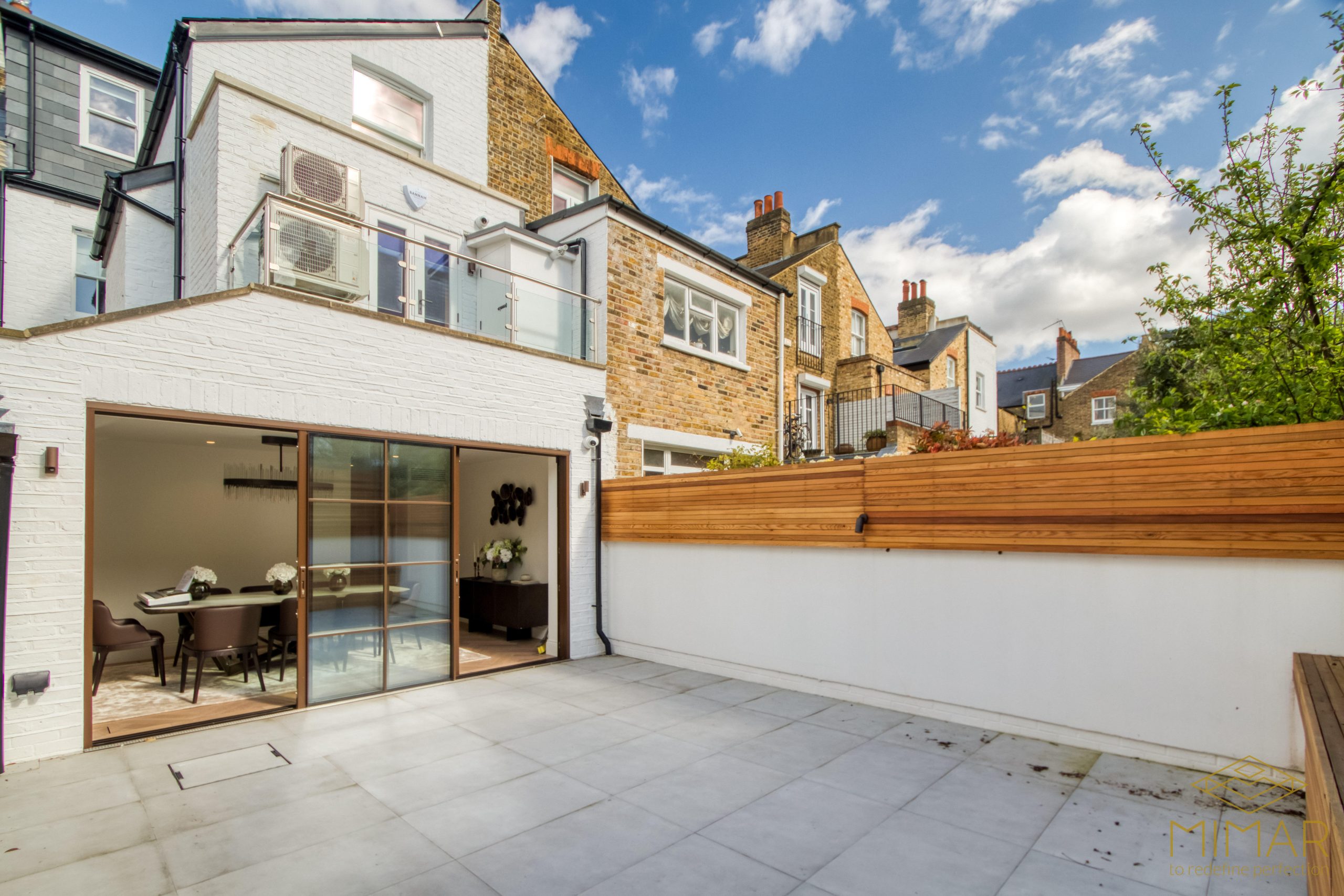
Perhaps the most common extension type in London, rear extensions expand your home into the garden, typically creating enlarged kitchen and dining spaces. These extensions are particularly popular for period properties where front alterations would face conservation restrictions.
Ideal for: Open-plan kitchen-diners, living areas with improved garden access
Benefits: Enhanced natural light (especially with roof lights or bi-fold doors), improved indoor-outdoor connection, relatively straightforward planning process
Considerations: Reduction of garden space, potential impact on natural light to existing rooms
Side Return Extension
This clever solution utilizes the narrow alleyway often found alongside London’s terraced and semi-detached houses. Building contractors frequently recommend side returns for properties where maximizing ground floor space without sacrificing the garden is a priority.
Ideal for: Widening kitchens, creating utility rooms, home offices or playrooms
Benefits: Preserves rear garden, creates wider, more practical rooms, often falls within permitted development
Considerations: Limited additional space compared to other options, potential party wall agreements
Wrap-Around Extension
Combining both rear and side return extensions, wrap-arounds create L-shaped additions that maximize ground floor space. These comprehensive extensions are popular with London homeowners undertaking significant home remodeling projects.
Ideal for: Creating substantial open-plan living spaces, dramatic kitchen transformations
Benefits: Maximizes available space, excellent opportunity for architectural statements, significant lifestyle enhancement
Considerations: Greater garden impact, typically requires planning permission, higher cost than single-direction extensions
Double-Storey Extension
Adding space on both ground and first floors, double-storey extensions represent significant house construction projects that can transform family homes. London building services often recommend this approach for growing families needing both living space and bedrooms.
Ideal for: Adding bedrooms/bathrooms alongside ground floor living space
Considerations: Almost always requires planning permission, more complex structural requirements, greater neighborhood impact
Over-Structure/Over-Garage Extension
Particularly valuable in space-constrained London neighborhoods, these extensions build above existing single-storey elements of your home, commonly garages or previous ground-floor extensions.
Ideal for: Adding bedrooms or home offices without reducing garden space
Benefits: No garden impact, efficient use of property footprint, often simpler planning process
Considerations: Structural assessment of existing building essential, may require strengthening of existing structures
Conservatory/Orangery/Glass Extensions
These light-filled spaces blend the boundary between home and garden, with varying ratios of glazing to solid construction. Modern versions feature high-performance glass and sophisticated climate control for year-round use.
Ideal for: Garden rooms, dining areas, relaxation spaces with connection to nature
Benefits: Abundant natural light, relatively quick installation, potential permitted development status
Considerations: Temperature regulation, potential for excessive solar gain, maintenance of glass elements
Loft Conversion
While technically different from ground-level extensions, loft conversions represent a crucial vertical expansion option for London homes, particularly where garden space is limited or precious.
Ideal for: Additional bedrooms, home offices, studios or bathrooms
Benefits: No garden impact, often falls within permitted development, cost-effective per square meter
When evaluating these options, consider how each extension type might affect natural light, garden access, and internal flow throughout your home. Professional building contractors can provide property-specific guidance on which extension types would best suit your London home’s architecture and your lifestyle needs.
Planning Your House Extension
Thoughtful planning forms the foundation of successful house extensions in London. Before engaging architects or building contractors, take time to thoroughly assess your current and future space requirements.
Assessing Your Space Needs
Begin by identifying specific issues with your current layout that an extension would solve. Are you lacking dedicated workspace for remote work? Is your kitchen too cramped for family meals? Do you need additional bedrooms for children or guests? Creating a prioritized list of spatial requirements helps establish clear objectives for your project.
Think beyond immediate needs to consider how your requirements might evolve over the next 5-10 years. Will children leave home? Are elderly parents likely to move in? Might you need adaptable space for changing work patterns? This future-focused approach ensures your investment delivers long-term value.
Key Planning Factors
Budget: Be realistic about available funds, remembering that London building costs typically exceed national averages. Establish both your ideal budget and maximum spending limit, including a 10-20% contingency for unexpected issues.
Timescale: Most London house extensions take 3-6 months from breaking ground to completion, with planning and design adding several months beforehand. Consider how this timeline aligns with important family events or professional commitments.
Disruption tolerance: Extensions create noise, dust, and temporary loss of facilities. Assess your family’s ability to withstand these disruptions, especially if working from home or have young children.
Long-term objectives: Clarify whether your priority is creating an ideal living environment for the foreseeable future or maximizing property value for eventual sale. While these goals often align, they can sometimes suggest different design approaches.
Early Professional Consultation
Consulting with building contractors early in the planning process helps transform abstract ideas into realistic proposals. Experienced London building services providers can:
Identify potential structural or planning constraints specific to your property
Suggest extension types that maximize value while minimizing complications
Provide ballpark cost estimates for different approaches
Explain how various building services will be integrated (plumbing, electrical, heating)
Outline the likely timeline from planning to completion
This preliminary guidance helps refine your vision before investing in detailed architectural plans or planning applications, potentially saving significant time and money by focusing on feasible options from the outset.
Planning Tip
Create a detailed scrapbook or digital collection of extension designs that appeal to you, noting specific elements like roof styles, window configurations, or interior layouts. This visual reference helps communicate your aesthetic preferences to designers and building contractors, ensuring your extension reflects your personal style.
Design Considerations
Thoughtful design transforms a basic house extension from a mere addition of square footage into a transformative enhancement of your London home. The most successful extensions balance aesthetic cohesion with practical functionality while maximizing light and space.
Harmonizing with Existing Architecture
Your extension should complement your home’s architectural character, either through sympathetic matching or deliberate contrast. In London’s conservation areas, planning authorities often favor extensions that maintain period features and materials. Even when pursuing contemporary design, consider how the extension’s proportions, roofline, and fenestration will integrate with the existing structure.
Building contractors experienced in London house construction can advise on locally appropriate materials and techniques that satisfy both aesthetic and regulatory requirements. For period properties, this might include matching brickwork, replicating cornicing details, or sourcing compatible roof tiles.
Interior Layout Planning
Effective extension design considers the entire home, not just the new space. Pay particular attention to:
Flow and circulation – How people will move between old and new spaces
Access points – Ensuring convenient connections to gardens, utilities, or storage
Proportions – Creating rooms with balanced dimensions and ceiling heights
Natural light – Preserving light to existing rooms while maximizing it in new spaces
Sight lines – Creating visual connections between spaces and to outdoor areas
Consider whether open-plan arrangements suit your lifestyle or if more defined spaces would better serve your needs. For many London homes, the ideal solution combines open areas for socializing with quieter, separate zones for work or relaxation.
Technical Performance
Modern house extensions offer an opportunity to significantly improve your home’s technical performance. Prioritize:
Energy efficiency – Exceed current building regulations with high-performance insulation, energy-efficient glazing, and airtight construction. This not only reduces running costs but future-proofs against tightening energy standards.
Ventilation – Incorporate passive ventilation strategies alongside mechanical systems to ensure healthy indoor air quality without excessive heat loss. This is particularly important for London properties where ambient air quality may be poor.
Natural light – Use roof lights, clerestory windows, and strategic glazing to maximize daylight penetration, reducing reliance on artificial lighting and creating uplifting, healthy spaces.
Acoustic performance – In London’s dense urban environment, consider how your extension’s design can minimize external noise intrusion through appropriate glazing specifications and insulation strategies.
Future Adaptability
Design your extension with flexibility in mind, allowing spaces to evolve as your needs change. Consider how rooms might serve multiple functions or be easily reconfigured. Non-load-bearing internal walls, pre-wired data points throughout, and standardized door openings all contribute to future adaptability.
When integrated with broader home remodeling plans, a well-designed extension should enhance the functionality and comfort of your entire property, not just add extra square footage. The most successful projects view the extension as an opportunity to resolve existing layout issues while creating new possibilities for living.
Regulations, Permits, and Structural Requirements in London
Navigating London’s complex regulatory landscape is a crucial aspect of any house extension project. The city’s dense urban fabric, historic building stock, and strict planning regime create particular challenges that require professional guidance.
Planning Permission and Permitted Development
Many smaller London house extensions can proceed under “Permitted Development Rights” without requiring full planning permission. However, these rights are frequently restricted in:
Conservation areas
For listed buildings
Areas of Outstanding Natural Beauty
Properties that have previously been extended
Even when permitted development applies, specific dimensional limitations restrict the height, depth, and width of extensions. These rules vary between different property types (detached, semi-detached, terraced) and can be modified by Article 4 Directions in certain London boroughs.
For clarity and security, many building contractors recommend obtaining a Certificate of Lawful Development from your local authority before proceeding with even apparently straightforward extensions. This provides formal confirmation that your project complies with permitted development rules.
Building Regulations
All house extensions must comply with Building Regulations, regardless of planning status. These cover crucial safety and performance aspects including:
Structural integrity
Fire safety
Energy efficiency (Part L)
Ventilation
Electrical safety
Drainage
Access provisions
Building control approval can be obtained either through your local authority or private approved inspectors. In London’s complex building environment, this process typically involves multiple site inspections throughout the construction phase.
Party Wall Agreements
London’s terraced and semi-detached housing means party wall issues are extremely common in extension projects. The Party Wall Act requires you to notify neighbors about works that might affect shared walls, boundaries, or adjacent foundations.
This process should begin at least two months before construction starts and may require appointment of party wall surveyors if neighbors raise concerns. Professional building contractors usually coordinate this process, though specialized party wall surveyors may be needed for complex cases.
Structural Considerations
London’s varied ground conditions and aging building stock create particular structural challenges for extension projects. Key considerations include:
Foundations – London clay soils can shrink and swell significantly with moisture changes, requiring deeper foundations than in many other parts of the UK. Proximity to Underground lines or historic features may further complicate foundation design.
Existing structure – Many London properties have undergone multiple alterations over decades or centuries. Assessing the capacity of existing structural elements to support new loads is essential, particularly when removing internal walls or extending upward.
Roofline integration – Especially in conservation areas, planning authorities pay close attention to how extension rooflines integrate with existing structures. Structural solutions must balance aesthetic requirements with practical waterproofing and loadbearing capacity.
Professional building services typically include structural engineering input for all but the simplest extensions. For complex projects, specialist basement or structural engineers may need to prepare detailed calculations and drawings for building control approval.
Regulatory Guidance
Always check if your property is listed or in a conservation area before planning an extension. The Federation of Master Builders recommends starting with your local Planning Portal to understand specific restrictions that may apply to your London property.
Choosing the Right Building Contractor in London
Selecting the appropriate building contractor for your London house extension is arguably the most critical decision you’ll make during the entire project. The right contractor brings technical expertise, project management skills, and quality craftsmanship that will determine both the process experience and the final result.
Essential Qualifications and Credentials
When evaluating London building contractors, look for:
Trade association membership – Reputable organizations like the Federation of Master Builders (FMB) or the National Federation of Builders require members to meet quality standards and provide consumer protection measures.
Appropriate insurance – Verify they hold public liability insurance (minimum £2 million coverage), employer’s liability insurance, and contractor’s all-risk insurance.
Local experience – Contractors familiar with London’s specific building stock, local authority requirements, and typical neighborhood concerns bring valuable expertise.
Relevant certifications – For specialized work, look for additional qualifications like Gas Safe registration or NICEIC certification for electrical work.
Evaluating Experience and Portfolio
Request examples of previous extension projects, ideally on properties similar to yours. A quality building contractor should provide:
Photographs showing before, during, and after stages of comparable projects
References from recent clients you can contact directly
Evidence of experience with your specific type of extension (e.g., side return, double-storey, etc.)
Examples of how they’ve solved problems similar to those your project might encounter
When reviewing portfolios, look beyond aesthetics to assess build quality, attention to detail, and integration with existing structures. The most impressive extensions seamlessly blend new with old while incorporating contemporary building techniques.
Comparing Quotes and Scope
Obtain detailed quotes from at least three contractors for accurate comparison. Professional quotes should include:
Itemized breakdown of costs by category
Clear specification of materials and quality standards
Timeline with key milestones and payment schedule
Explicit statement of what’s excluded from the quote
Terms for handling variations or unexpected issues
Be wary of quotes significantly lower than others – this often indicates corners being cut or potential for numerous “extras” to be added later. In London’s premium construction market, quality building services command appropriate fees, reflecting the skilled labor and careful project management required.
Communication and Chemistry
You’ll be working closely with your chosen building contractor for several months, so personal rapport matters. During initial meetings, assess:
Responsiveness to questions and concerns
Clarity of communication and willingness to explain technical details
Listening skills and receptiveness to your ideas
Professionalism in presentation and punctuality
Transparency about potential challenges
Essential Questions to Ask
Before making your final selection, ask prospective contractors:
“What similar extension projects have you completed in this London borough?”
“Who will supervise the project day-to-day, and how often will they be on-site?”
“What guarantees or warranties do you provide on workmanship?”
“How do you handle changes to the agreed scope?”
“What payment schedule do you propose, and how do you handle retention?”
“How will you minimize disruption to our daily life during construction?”
Take time to check references thoroughly, ideally visiting completed projects if possible. For substantial London extensions, this due diligence is essential to ensure you select a building contractor capable of delivering your vision to the highest standards.
The House Extension Process – From Concept to Completion
Understanding the typical progression of a house extension project helps set realistic expectations and allows for proper planning. While every project has unique elements, most London extensions follow a similar sequence of stages.
Initial Consultation and Feasibility (2-4 weeks)
The journey begins with preliminary discussions with building contractors and possibly architects to assess the feasibility of your ideas. During this stage:
Your property is evaluated for extension potential
Initial budget parameters are established
Planning constraints are identified
Conceptual ideas are explored
This exploratory phase may involve multiple professionals, including building contractors who can provide practical construction insight alongside architectural creativity. For London properties, early identification of conservation constraints or structural limitations saves valuable time and resources.
Design Development (4-8 weeks)
Once basic feasibility is confirmed, detailed design development begins. This typically involves:
Measured survey of your existing property
Development of sketch designs and layout options
3D visualizations or models of proposed extensions
Refinement based on your feedback
Initial structural considerations
Architects typically lead this phase, though some design-and-build contractors offer in-house design services. For complex or heritage-sensitive London projects, specialist conservation architects may be required.
Planning and Approvals (8-12 weeks)
With designs finalized, necessary approvals are sought:
Planning permission application (if required)
Certificate of Lawful Development (for permitted development)
Building Regulations drawings and calculations
Party Wall notifications and agreements
Any specialized permissions (listed building, conservation area)
London’s planning processes can be particularly stringent, especially in conservation areas or for listed properties. Professional building contractors often coordinate this process, working with planning consultants when necessary to navigate complex regulations.
Contractor Selection and Pre-Construction (4-6 weeks)
If you haven’t already selected a building contractor, this stage involves:
Preparing detailed tender documents
Obtaining and comparing quotes from multiple contractors
The main construction typically progresses through these stages:
Site preparation and groundworks (2-4 weeks)
Setting up site protection and security
Excavation for foundations
Pouring concrete footings and foundation structures
Installation of drainage systems
Structural work (4-8 weeks)
Erection of structural framework
Brickwork or external wall construction
Roof structure and weatherproofing
Creation of openings between existing house and extension
First fix (2-3 weeks)
Rough electrical wiring
Plumbing pipework
Heating systems
Ventilation ducting
Insulation and plastering (2-3 weeks)
Wall and roof insulation
Screed floors
Plasterboard installation
Plastering and skim coating
Second fix and finishes (4-6 weeks)
Door and window installation
Electrical fixtures and fittings
Bathroom and kitchen installation
Flooring and tiling
Decorating and final finishes
Throughout construction, regular site meetings with your building contractor help maintain quality control and address any issues promptly. In London’s compact urban environment, careful management of deliveries, waste removal, and neighbor relations is particularly important.
Completion and Handover (1-2 weeks)
The final stage includes:
Snagging (identifying and rectifying minor defects)
Final building control inspection and certification
System testing and commissioning
Thorough cleaning
Handover of operation manuals, warranties, and certificates
Final account settlement (often with retention sum held for agreed period)
For quality London building contractors, the relationship continues beyond handover with after-care service addressing any issues that emerge as you begin using your new space.
Extension Timeline Milestones
Design Approval
Planning Permission
Foundation Completion
Weathertight Structure
First Fix Complete
Plastering Finished
Final Handover
Integrating Extensions with Home Remodeling
A house extension presents the perfect opportunity to reconsider your entire home’s layout and functionality. Rather than treating the extension as an isolated project, integrating it with broader home remodeling creates cohesive, harmonious living spaces that function better as a whole.
Holistic Space Planning
When planning your London extension, consider how it might trigger beneficial changes throughout your property:
Improved circulation – Reconfiguring existing doorways or hallways to create natural flow between old and new spaces
Redistributed functions – Moving kitchens to extensions can free up original rooms for dining, studies, or playrooms
Enhanced natural light – Strategic removal of internal walls can allow light from extension glazing to penetrate deeper into existing spaces
Rationalized layouts – Opportunity to address awkward room proportions or impractical arrangements in the original house
Building contractors with experience in London’s housing stock can suggest how best to blend old and new elements, often finding solutions to long-standing issues with period properties through thoughtful integration.
Coordinated Design Elements
Visual continuity between extension and existing home creates a sense of coherence. Consider:
Consistent flooring materials that flow between spaces
Coordinated color schemes and decorative elements
Matching door styles, architraves, and skirting profiles
Unified lighting design and fixtures
Even when the extension adopts a deliberately contrasting architectural style, these interior details can create a harmonious transition between old and new sections of your home.
Upgrading Building Services
Extensions frequently trigger or enable upgrades to entire-house systems:
Heating – Extending your central heating system might present the ideal moment to upgrade to a more efficient boiler or introduce underfloor heating throughout the ground floor.
Electrical – Rewiring for the extension can be expanded to address outdated electrical systems in the existing house, improving safety and providing additional capacity for modern demands.
Plumbing – Water pressure issues can be resolved house-wide when integrating new plumbing for extension bathrooms or kitchens, potentially including water-saving fixtures throughout.
Data/AV – While walls and floors are open, comprehensive data cabling can be installed to support smart home technologies across the entire property.
Coordinating these upgrades with your building contractor often proves more cost-effective than treating them as separate projects, particularly given the disruption involved in accessing wall cavities or floor voids.
Real-World Integration Examples
Consider these common scenarios for London homes:
Rear extension with kitchen relocation – Moving the kitchen to a new rear extension allows the original kitchen to become a utility room, downstairs bathroom, or dining area, creating a practical sequence of connected spaces.
Side return with reconfigured ground floor – Widening a narrow kitchen through a side return extension creates space for removing walls between front and back reception rooms, transforming a traditional Victorian layout into an open, flowing arrangement.
Double-storey with loft conversion – Combining these creates opportunities for master suite relocations or dedicated children’s floors, completely reimagining the home’s bedroom hierarchy and bathroom arrangements.
Efficiency Benefits
Combining extension work with home remodeling offers practical advantages:
Single design process considering whole-house functionality
One planning application and building control approval
Consolidated disruption period rather than sequential projects
Potential cost savings on preliminaries, scaffolding, and site facilities
Consistent finishes applied throughout in one decorating phase
Working with a single building contractor for both extension and remodeling ensures coordinated scheduling and consistent quality standards across all aspects of the project.
Costs, Budgeting, and Value
Understanding the financial dimensions of house extensions in London helps ensure your project remains viable from conception to completion. While costs vary significantly based on specific circumstances, certain principles and benchmarks provide useful guidance.
Primary Cost Drivers
Several key factors determine the overall cost of your London house extension:
Size and type – Basic construction costs typically range from £1,500 to £3,500 per square meter in London, with single-storey extensions at the lower end and double-storey or basement extensions commanding premium rates.
Specification level – Finishes, fixtures, and fittings create enormous variation; basic specifications might use standard materials and off-the-shelf products, while high-end projects include bespoke elements, architectural glazing, and premium brands.
Structural complexity – Additional costs arise from complex structural work like removing load-bearing walls, integrating steel frameworks, or addressing challenging ground conditions common in London.
Site access and constraints – Limited access for materials and equipment, common in London’s terraced streets, can increase costs through requirements for specialized equipment or manual handling.
Professional fees – Architect fees (typically 8-12% of construction costs), structural engineers (1-2%), planning consultants, party wall surveyors, and project management services add 10-15% to total project costs.
Extension Type
Typical London Cost Range (2023)
Single-storey rear extension (30m²)
£60,000 – £120,000
Side return extension (15m²)
£40,000 – £75,000
Wrap-around extension (45m²)
£90,000 – £180,000
Double-storey extension (60m²)
£120,000 – £240,000
Over-garage extension (20m²)
£45,000 – £85,000
These figures represent construction costs including standard fixtures and finishes but exclude professional fees, VAT, and high-end specifications that can substantially increase the upper ranges.
Creating a Realistic Budget
Developing a comprehensive budget involves several steps:
Obtain detailed quotes from multiple building contractors based on preliminary designs
Add all professional fees (design, engineering, planning, project management)
Include statutory costs (planning fees, building control, party wall agreements)
Budget for fixtures, fittings, and appliances (kitchens, bathrooms, lighting)
Incorporate a contingency of 10-20% for unexpected issues
For London projects, the complexity of the building stock and stringent regulatory environment makes contingency planning particularly important. Older properties often conceal issues that only become apparent during construction, such as inadequate foundations, dampness, or outdated building services requiring upgrade.
Cost Control Strategies
Experienced building contractors can help manage costs through:
Early involvement – Input during design stages identifies cost-efficient construction methods
Value engineering – Suggesting alternative approaches or materials that maintain quality while reducing costs
Fixed-price contracts – Providing certainty for major construction elements
Phased approach – Structuring work to allow certain elements to be completed later if budget constraints emerge
Building in cost control milestones, where expenditure is reviewed against budget at key stages, helps prevent project drift and allows timely adjustments if necessary.
Return on Investment
Well-executed house extensions in London typically deliver strong returns:
Average value increase of 10-20% for quality extensions, potentially higher in prime areas
Strongest returns from extensions that add bedrooms, bathrooms, or create open-plan living spaces
Enhanced marketability through modernized layouts that appeal to contemporary lifestyles
Energy efficiency improvements that reduce running costs and improve EPC ratings
Beyond financial returns, consider the lifestyle value of tailored living space that precisely meets your needs, potentially for many years. For many London homeowners, this quality-of-life benefit justifies investment beyond purely financial calculations.
Budgeting Insight
When planning your extension budget, experienced contractors recommend allocating funds to quality elements that significantly impact daily experience – such as natural light sources, thermal comfort, and acoustics – while economizing on easily-upgraded finishes or decorative elements that can be enhanced later.
Managing Disruption and Living Through Construction
Construction inevitably causes disruption to daily life, but thoughtful planning can minimize the impact, particularly important in London where alternative accommodation can be prohibitively expensive. Understanding what to expect helps prepare practically and psychologically for the construction period.
Common Disruptions
House extensions typically involve:
Noise – Demolition, cutting, drilling, and general construction activities create significant noise, often starting early in the morning
Dust – Despite precautions, construction dust penetrates throughout the property, requiring regular cleaning
Reduced functionality – Temporary loss of kitchen, bathrooms, or access to certain areas
Limited privacy – Construction teams on-site throughout the day
Services interruptions – Occasional power, water, or heating outages during connections or modifications
External impact – Skips, scaffolding, material deliveries, and parking disruption
The extent of these disruptions varies with project scope – a small side return might allow continued occupation with minimal adaptation, while a whole-house renovation with extension might render the property temporarily uninhabitable.
Preparation Strategies
Before construction begins:
Discuss the construction sequence with your building contractor to understand critical disruption periods
Create a dedicated dust-free zone if possible, sealed with plastic sheeting and tape
Remove and store valuable or delicate items that might be damaged by dust or vibration
Establish clear access routes for builders that minimize impact on your living areas
Prepare temporary facilities like microwave cooking stations or washing arrangements
Inform neighbors about the project timeline and potential disruptions
In London’s dense neighborhoods, proactive communication with neighbors is particularly important, as construction activity inevitably affects adjacent properties.
Practical Coping Mechanisms
During construction:
Temporary kitchen – Create a functional setup with microwave, refrigerator, electric kettle, and portable hob in an unaffected room
Phased working – Ask your building contractor to complete one bathroom before demolishing another
Dust management – Request daily cleaning by the construction team and use air purifiers in living spaces
Communication schedule – Establish regular update meetings with your contractor to stay informed and address issues promptly
Alternative workspaces – If working from home, identify local coworking spaces or cafes for days when noise makes concentration impossible
Many London building contractors now offer enhanced “considerate construction” approaches specifically designed to minimize lifestyle disruption, recognizing that most clients continue to live on-site during works.
When to Consider Temporary Relocation
In certain scenarios, temporarily moving out becomes advisable:
Projects involving whole-house rewiring or plumbing replacement
Extensive structural work that compromises security or safety
Complete kitchen and bathroom simultaneous renovations
When households include very young children, elderly members, or those with respiratory conditions
During particularly invasive phases like demolition or floor screeding
Even when full relocation isn’t necessary, strategic scheduling of short breaks or weekend trips during the most disruptive phases can provide welcome relief. Some homeowners in London arrange to stay with family during the week but return at weekends when construction isn’t active.
Managing Expectations
Perhaps most importantly, maintain realistic expectations about the inevitable disruption. Construction is inherently messy, noisy, and disruptive – accepting this reality from the outset helps reduce stress. Focus on the end result rather than temporary inconvenience, and maintain open communication with your building contractor about any issues that arise.
Remember that quality building contractors understand the challenges of living through construction and will work with you to minimize impact while maintaining project momentum. Their experience managing similar projects in London homes provides valuable insight into practical mitigation strategies.
Common Mistakes to Avoid
Even well-planned house extensions can encounter problems when certain pitfalls aren’t anticipated. Being aware of these common mistakes helps you avoid costly errors and disappointment with the final result.
Planning and Design Mistakes
Underestimating budget requirements – Many homeowners start with unrealistic expectations about costs, particularly in London where construction expenses exceed national averages. This can lead to compromised quality, scaled-back ambitions, or even abandoned projects.
Neglecting natural light – Extensions that reduce light to existing rooms create gloomy, undesirable spaces. Always consider how new structures affect daylight penetration and compensate with roof lights, light wells, or strategic glazing.
Poor future-proofing – Designing solely for current needs without considering future adaptability limits long-term utility. Fixed layouts with numerous internal walls often prove less valuable than flexible open spaces that can evolve with changing requirements.
Imbalanced room proportions – Attempting to create too many rooms within limited extension space often results in awkwardly shaped or impractically sized areas. Sometimes fewer, more generously proportioned rooms provide better functionality.
Ignoring storage requirements – Extensions frequently focus on living space at the expense of storage, creating beautiful but ultimately impractical homes. Integrated storage solutions should be part of the initial design, not an afterthought.
Contractor Selection Issues
Choosing solely on price – Selecting the lowest bidder without scrutinizing experience, qualifications, and reputation often leads to quality issues, delays, and ultimately higher costs through remediation.
Inadequate contract documentation – Vague or incomplete contracts create ambiguity about scope, standards, and responsibilities, laying foundations for disputes and unexpected costs. Detailed, professionally prepared contracts protect all parties.
Poor communication structures – Failing to establish clear channels and regular updates with building contractors allows minor issues to escalate. Weekly site meetings and documented communication prevent misunderstandings.
Insufficient checking of credentials – Not verifying insurance coverage, trade association membership, or previous client satisfaction exposes homeowners to significant risks, from poor workmanship to liability for site accidents.
Project Management Oversights
Inadequate contingency planning – Failing to build financial and timeline buffers into plans leaves no margin for inevitable surprises, particularly in London’s older housing stock where hidden conditions frequently emerge during construction.
Changing scope mid-project – Significant design changes once construction begins typically incur disproportionate costs and delays. Resolve design questions during the planning phase, not on-site.
Neglecting neighbor relations – In London’s dense urban environment, maintaining positive relationships with neighbors is essential. Failure to communicate about construction impacts or address concerns promptly can lead to complaints and enforcement action.
Overlooking regulatory compliance – Proceeding without necessary approvals or failing to schedule required inspections can result in enforcement action, remedial costs, and complications when eventually selling the property.
Prevention Strategies
To avoid these common pitfalls:
Invest in professional design and planning from qualified architects familiar with London extensions
Obtain multiple detailed quotes based on comprehensive specifications
Research building contractors thoroughly through references, site visits, and credential verification
Establish clear communication protocols and regular progress reviews
Build realistic contingencies into both budget (15-20%) and timeline (20-25%)
Use formal contracts that clearly define all aspects of the project
Consider professional project management for complex extensions
Engage neighbors early and maintain regular communication throughout
Professional guidance from experienced building services providers helps navigate these potential problems. Their accumulated knowledge of London-specific challenges – from planning peculiarities to the quirks of period properties – provides valuable protection against common errors.
Real-World Extension Scenarios
Examining practical examples helps illustrate how different extension types address specific needs while navigating common constraints of London properties. These scenarios demonstrate the integration of design, building services, and construction techniques to create successful outcomes.
Victorian Terrace Rear Extension
Property: Mid-terrace Victorian house in North London
Challenge: Cramped, dark kitchen disconnected from garden
Solution: Single-storey rear extension with pitched roof and roof lights
The building contractor worked with the family to design a 4-meter rear extension that doubled the kitchen size while creating direct garden access. The extension featured:
Exposed brick interior wall preserving period character
Pitched roof with multiple roof lights maximizing natural illumination
Full-width bi-fold doors connecting to the garden
Polished concrete floor with underfloor heating
Kitchen reconfiguration incorporating island unit and dining space
Construction required careful management of party wall agreements with both neighbors and coordination of deliveries in the narrow terraced street. The family continued living in the property during construction, with a temporary kitchen set up in the dining room.
The completed project transformed not just the kitchen but the entire ground floor flow, with the original kitchen area becoming a utility room and downstairs WC – addressing another functional requirement within the same project.
Suburban Semi-Detached Side and Rear Extension
Property: 1930s semi-detached house in South London
Challenge: Growing family needing additional bedroom and enlarged living space
Solution: Two-storey side extension with single-storey rear element
Working with experienced building contractors, the homeowners developed a comprehensive plan to maximize their property’s potential:
Ground floor extension created open-plan kitchen-dining-living space
First-floor extension added master bedroom with ensuite
Existing bedroom converted to family bathroom and fourth bedroom
Integrated home remodeling reconfigured staircase and landing
The construction process involved complex structural work, including:
Removal of load-bearing walls with steel beam insertion
Integration of new roof structure with existing house
Installation of large-format sliding doors to garden
Complete rewiring and heating system upgrade throughout
The family relocated during the four-month construction period, returning to a transformed home that provided both the additional bedroom capacity needed and dramatically improved living spaces, including much better connection to the garden.
Conservation Area Glazed Extension
Property: Georgian townhouse in West London conservation area
Challenge: Adding contemporary space while respecting historic fabric
Solution: Minimalist glazed rear extension with minimal impact on original building
This sensitive project required specialist building contractors with conservation experience. The design featured:
Structural glass walls and roof minimizing visual impact
Steel frame concealed within glazing system
Minimal connection points to historic fabric
Subtle underfloor services avoiding penetrations of original walls
Limestone flooring transitioning from interior to exterior terrace
The construction process prioritized protection of the historic building, with:
Detailed method statements for all interfaces with existing structure
Hand excavation near original foundations
Custom-fabricated connection details
Conservation officer site visits at key stages
The completed extension created a light-filled dining area with uninterrupted garden views while maintaining the integrity of the Georgian architecture. This project demonstrated how contemporary additions can complement historic buildings through careful design and skilled execution.
Over-Garage Extension with Loft Conversion
Property: 1950s detached house in East London
Challenge: Creating home office space and guest accommodation without reducing garden
Solution: Combined over-garage extension and loft conversion
This comprehensive project maximized vertical space while preserving the garden:
First-floor extension over existing garage created dedicated home office
Full loft conversion with dormer added guest bedroom and bathroom
Existing house remodeled to improve circulation to new spaces
Coordinated heating, electrical and data systems throughout
The building contractor phased works to minimize disruption:
External garage structure reinforced and extended first
Loft conversion completed while first-floor extension was watertight
Internal connections made only when new spaces were nearly complete
This approach allowed the family to remain in the property throughout construction, with minimal impact on daily life. The completed project transformed a standard four-bedroom house into a flexible home with dedicated work space and accommodation for extended family visits.
Extension Insight
These examples highlight how successful extensions respond to specific lifestyle needs while respecting the character and constraints of different property types. Architects and building contractors note that the most successful projects take a holistic approach, considering how the extension integrates with the entire property rather than treating it as an isolated addition.
Conclusion
A well-executed house extension represents one of the most significant investments you can make in your London home – not just financially, but in terms of lifestyle enhancement and future flexibility. By expanding and reconfiguring your living space to precisely meet your needs, you create a home that works harmoniously with your daily routines while potentially adding substantial market value.
The journey from initial concept to completed extension requires careful planning, thoughtful design, regulatory navigation, and quality construction. Success depends on making informed decisions at each stage, particularly when selecting building contractors whose expertise will translate your vision into reality.
The most successful projects approach extensions holistically, viewing them not as isolated additions but as transformative elements that enhance the entire property. This integrated perspective – considering flow, light, proportion, and functionality – yields homes that work better at every level, from daily practicalities to aesthetic satisfaction.
Whether you’re considering a modest side return to enhance a terraced kitchen or planning a comprehensive two-storey addition to transform your family home, the fundamental principles remain consistent: thorough preparation, professional guidance, quality construction, and attention to detail throughout.
As London’s housing market continues to evolve, extensions offer a pragmatic response to changing needs without the upheaval of relocation. By investing in your current property, you not only create space tailored to your specific requirements but also contribute to the ongoing adaptation of London’s housing stock to contemporary lifestyles.
With careful planning and the right professional support, your house extension can deliver that rare combination of immediate lifestyle enhancement and long-term financial prudence – truly the best of both worlds for the discerning London homeowner.
Introduction to Loft Conversions Under Permitted Development
Transforming your loft into usable living space is one of the most effective ways to expand your home without sacrificing garden space. A loft conversion under permitted development offers a streamlined path to creating this additional space, allowing qualifying homeowners to bypass the full planning permission process that can be time-consuming, costly, and uncertain.
Permitted development for loft conversion refers to specific alterations that the government has pre-approved through legislation, primarily the Town and Country Planning (General Permitted Development) Order. This approach allows certain types of home improvements to proceed without the need for a formal planning application, provided they meet specific criteria.
Homeowners are increasingly interested in this route because it offers several compelling advantages: it eliminates planning application fees, avoids lengthy waiting periods for decisions, removes the risk of refusal, and sidesteps potential objections from neighbours that might derail a standard planning application.
In this comprehensive guide, we’ll explore exactly when loft conversions fall under permitted development rights, what specific rules and limitations apply, and the practical steps you need to take to ensure your project remains compliant. Whether you’re looking to create an extra bedroom, home office, or recreational space, understanding these regulations is essential for a smooth and successful loft conversion project in London or elsewhere in the UK.
Understanding Permitted Development Rights
Permitted development rights represent a significant simplification within the UK planning system. Instead of requiring every home alteration to go through full planning scrutiny, the government has pre-approved certain types of changes that homeowners can make without seeking specific permission each time.
At its core, permitted development refers to a set of predefined changes to houses that don’t require planning permission because they’re already authorized through legislation—specifically the Town and Country Planning (General Permitted Development) (England) Order 2015 (as amended). These rights essentially give homeowners a legal “green light” to make specific alterations without navigating the standard planning process.
The difference between permitted development and full planning permission is substantial. Full planning permission involves submitting detailed application forms, architectural drawings, design statements, and paying application fees. The process typically takes 8-12 weeks, involves public consultation where neighbours can object, and carries the risk of refusal or conditional approval with significant restrictions.
In contrast, loft conversion permitted development operates under a different principle: if your project meets all the specified criteria, you have automatic permission to proceed. No application forms, no waiting periods, no public consultations, and no risk of subjective refusals.
For loft conversions specifically, the relevant sections are primarily found under Class B (additions to the roof) and Class C (other alterations to the roof) of the Order. These sections outline precisely how much additional volume is permitted, what types of roof alterations are allowed, and various other parameters that determine whether your loft project can proceed under permitted development rights.
Legal Perspective
While permitted development rights create a simplified pathway, they are still legal entitlements with specific boundaries. Exceeding these boundaries, even unintentionally, can lead to enforcement action where you may be required to reverse unauthorized work at your own expense.
When Does a Loft Conversion Qualify as Permitted Development?
For a loft conversion to qualify under permitted development rights, it must adhere to several key criteria established in planning legislation. Understanding these requirements is essential before proceeding with any work.
The primary qualifying criteria for loft conversion permitted development include:
Volume limitations: The additional roof space created must not exceed 40 cubic metres for terraced houses or 50 cubic metres for detached and semi-detached houses (including any previous roof enlargements)
Height restrictions: The conversion must not extend beyond the highest part of the existing roof
Front-facing limitations: No extension is permitted beyond the roof slope of the principal elevation that faces a highway
Eaves preservation: The original eaves must be maintained or reinstated
Setback requirement: Any roof enlargements must be set back at least 20cm from the original eaves (measured along the roof plane)
No overhang: The enlargement cannot extend beyond the outside face of the original wall of the house
Materials matching: Materials used should be similar in appearance to the existing house
Types of loft conversions that typically qualify under permitted development include:
Rear dormers (often the most space-efficient option)
Roof light/Velux conversions that don’t alter the external roof profile
Combinations of these approaches, provided the total volume remains within limits
Conversely, several common alterations will typically push your project outside permitted development for loft conversion and trigger the need for full planning permission:
Front-facing dormers or extensions visible from the highway
Raising the height of the existing roof ridge
Projects exceeding the volume allowance (40m³ or 50m³)
Including a balcony, veranda, or raised platform
Side-facing dormers in certain contexts
Permitted Development Loft Criteria
Volume limits (40-50m³)
No higher than existing roof
No front highway extensions
20cm eaves setback
Materials match existing
No balconies/platforms
Property Types and Locations with Restricted Rights
While permitted development rights apply to many houses in London and across the UK, certain property types and locations have restricted or entirely removed rights. Understanding these exceptions is crucial before assuming your loft conversion qualifies under permitted development.
Property types where permitted development rights for loft conversions do not apply include:
Flats and maisonettes: These never have permitted development rights for loft conversions
Buildings converted to houses: If your house was previously something else (like a commercial building), it likely doesn’t have standard permitted development rights
Houses where rights have been removed: Previous planning permissions may have conditions that remove or restrict these rights
Locations with restricted permitted development rights include:
Conservation Areas: While loft conversions aren’t automatically excluded, there are additional restrictions, particularly regarding side or front dormers
Listed Buildings: Any alterations require Listed Building Consent, regardless of permitted development status
Areas of Outstanding Natural Beauty (AONBs): Additional restrictions apply
National Parks: More stringent rules limit what can be done under permitted development
The Broads: Special planning considerations apply
World Heritage Sites: May have specific restrictions
Article 4 Directions represent another important restriction. These are special orders issued by local authorities that withdraw specific permitted development rights in designated areas. Many London boroughs have implemented Article 4 Directions in sensitive locations to protect architectural character and heritage.
If your property is subject to an Article 4 Direction specifically removing roof alteration rights, you will need full planning permission even for works that would otherwise qualify as permitted development for loft conversion. This is particularly common in conservation areas and locations with distinct architectural character.
Always check with your local planning authority before proceeding, as they maintain maps showing conservation areas, Article 4 Directions, and other designations that may affect your permitted development rights.
Design and Size Limitations for Permitted Development Lofts
The design and size limitations for loft conversion permitted development are precisely defined in planning legislation. Understanding these boundaries is essential for keeping your project within permitted development parameters in London and beyond.
The fundamental volume limits are:
Terraced houses: Maximum additional roof space of 40 cubic metres
Detached and semi-detached houses: Maximum additional roof space of 50 cubic metres
These volume calculations include any previous roof enlargements carried out by you or previous owners
Height and position constraints include:
No part of the extension can be higher than the highest part of the existing roof
No extension is allowed beyond the roof slope of the principal elevation facing a highway
Roof enlargements must be set back at least 20cm from the original eaves (measured along the roof plane)
The original eaves must be maintained or reinstated
No extension can overhang the outer face of the wall of the original house
For hip-to-gable conversions (where a sloped roof is extended to create a vertical gable end), these are generally permitted under development rights for semi-detached and detached houses, provided they meet the volume and other constraints. However, in certain designated areas like conservation areas, restrictions may apply.
Materials used for the exterior must be similar in appearance to the existing house. This doesn’t necessarily mean identical, but they should harmonize with the current roof covering and overall appearance. This requirement aims to maintain visual cohesion and neighborhood character while allowing practical modern alternatives.
House Type
Maximum Volume Addition
Common Conversion Types
Terraced
40 cubic metres
Rear dormer, roof lights
Semi-detached
50 cubic metres
Hip-to-gable, rear dormer, combination
Detached
50 cubic metres
Hip-to-gable, rear dormer, wrap-around
It’s worth noting that these volume calculations can be complex and are a common source of misunderstanding. The volume refers to the additional space created by the extension, measured externally, and includes any previous roof enlargements. For accurate calculations, it’s advisable to consult with an architect or surveyor experienced in permitted development for loft conversion projects.
Windows, Rooflights and Privacy Considerations
Window placement and design are critical aspects of loft conversion permitted development, with specific rules designed to balance natural light requirements with neighbor privacy concerns.
For rooflights and dormer windows, permitted development generally allows:
Rooflights installed flush with the roof slope (like Velux windows)
Dormer windows on rear elevations (not facing a highway)
Side dormers, provided they’re not on elevations facing highways
However, there are important restrictions for side-facing windows:
Any side-facing windows must be obscure-glazed (frosted or patterned glass that prevents clear visibility)
These windows must be non-opening unless the opening parts are at least 1.7 meters above the floor of the room they serve
These requirements aim to prevent overlooking of neighboring properties
These window rules can significantly influence your loft conversion design. For example, a bedroom usually requires an escape window, which needs to be openable and clear-glazed for emergency exit. This often necessitates positioning such windows on the front or rear elevation rather than the sides of the property.
Practical window solutions that maintain permitted development status while maximizing light include:
Multiple rooflights on non-highway-facing slopes
Rear dormer with large windows or even French doors (without balconies)
Combination of front rooflights and rear windows to create cross-ventilation
High-level side windows that meet the 1.7m height restriction while still providing light and ventilation
While front rooflights are generally acceptable, front dormers typically require planning permission as they alter the front roof slope that usually faces a highway. This is one of the most common misconceptions about loft conversion permitted development rights in London and elsewhere.
Design Tip
When planning your window layout, consider the orientation of your property. South-facing rooflights will bring in significant sunlight (potentially requiring solar control glass), while north-facing windows provide consistent, glare-free natural light that’s ideal for home offices.
Impact on Neighbours and Street Appearance
Even though loft conversion permitted development rights allow you to proceed without formal planning permission, the impact on neighbors and the street scene remains an important consideration—both from a community relations standpoint and because certain aspects may still be subject to scrutiny.
While permitted development removes the formal neighbor consultation process that occurs with full planning applications, your project can still affect neighboring properties in several ways:
Overshadowing: Large rear dormers can cast shadows on adjacent gardens or windows
Overlooking: New windows might create actual or perceived privacy issues
Visual impact: Changes to the roofline can affect the character of adjoining properties, particularly in terraced rows
In London’s densely populated neighborhoods, these considerations take on added importance. Some local authorities may exercise what’s called “prior approval” checks for certain aspects of permitted development loft conversions. This limited form of scrutiny allows them to consider the design and external appearance of the development and its impact on the amenity of the area.
Design guidance generally emphasizes maintaining the character of the area through:
Using materials that match or complement the existing roof
Setting dormers back from the eaves, ridge, and sides to create a more visually balanced appearance
Positioning larger alterations to the rear where they have less visual impact on the street
Ensuring the scale and proportion of dormers don’t overwhelm the original roof
To reduce neighbor concerns while maintaining your permitted development rights:
Consider informally consulting neighbors before work begins—this courtesy can prevent misunderstandings
Position windows thoughtfully to minimize direct overlooking where possible
Consider dormer designs that are set in from party walls to reduce the sense of enclosure for adjoining properties
Use high-quality materials that enhance rather than detract from the appearance of your property
Maintain clear communication about the construction schedule to minimize disruption
Remember that while permitted development gives you certain rights, maintaining good relationships with neighbors brings its own rewards, especially in London’s close-knit communities.
Building Regulations for Loft Conversions
It’s crucial to understand that even when a loft conversion falls under permitted development for loft conversion rules, it must still comply with Building Regulations—a completely separate system of controls focused on safety, structural integrity, and energy efficiency.
Unlike planning permission (which may not be needed under permitted development), Building Regulations approval is mandatory for all loft conversions in London and throughout the UK. These regulations ensure your conversion is safe, structurally sound, and meets current standards.
Key areas covered by Building Regulations for loft conversions include:
Structural stability: The existing structure must be able to carry additional loads, potentially requiring new support beams, strengthened joists, or other structural work
Fire safety: Requirements include fire-resistant doors on all habitable rooms leading to the staircase, mains-powered smoke alarms, and suitable escape routes
Staircase safety: Stairs must meet minimum width requirements (usually 800mm), have appropriate headroom (typically 2m), and safe pitch angles
Energy efficiency: Roof insulation must meet current standards, typically requiring significant insulation between and below rafters
Sound insulation: Particularly important for party walls in terraced or semi-detached houses
Electrical safety: New electrical installations must meet current regulations and be certified
Ventilation: Adequate ventilation is required for moisture control and air quality
The process for Building Regulations approval typically involves:
Submitting a Building Notice or Full Plans application to your local building control department or an approved inspector
Paying the required fee
Having inspections at key stages of the work
Receiving a completion certificate once all work complies with the regulations
This completion certificate is essential documentation that you should retain, particularly when selling your property in the future. It provides evidence that your loft conversion was properly executed according to safety standards.
The distinction between planning permission (or permitted development) and Building Regulations is fundamental: planning relates to how the building looks, its impact on the surroundings, and land use; Building Regulations concern whether the building is constructed safely and to appropriate standards. Your project needs to satisfy both systems, even when permitted development rights apply.
When Full Planning Permission is Necessary
Despite the flexibility that permitted development rights provide, there are several scenarios where your loft conversion will require full planning permission. Understanding these boundaries helps you determine from the outset whether your project can proceed under permitted development or will need a formal planning application.
Common scenarios where loft conversion permitted development rights won’t apply include:
Exceeding volume limits: If your proposed conversion exceeds 40 cubic metres for terraced houses or 50 cubic metres for detached/semi-detached houses
Raising the roof height: Any design that elevates the existing roof ridge height or changes the roof profile facing the highway
Front-facing dormers: Dormers on the principal elevation facing a highway almost always require planning permission
Properties in designated areas: Houses in conservation areas, national parks, or areas of outstanding natural beauty have more restricted permitted development rights
Listed buildings: These require Listed Building Consent for any alterations, internal or external
Homes with removed rights: Properties subject to Article 4 Directions or with conditions removing permitted development rights
Including balconies or platforms: Adding a raised exterior platform always requires planning permission
Popular design choices that typically fall outside permitted development include:
Raising the entire roof to increase headroom throughout the loft
Roof terraces or balconies
Very large dormers that exceed volume allowances
The implications of proceeding without required planning permission are serious and can include:
Enforcement action requiring you to remove or alter the unauthorized work
Difficulty selling your property due to the lack of proper permissions
Potential fines and legal costs
The stress and expense of retrospective applications, which have lower approval rates
If your desired loft conversion doesn’t fit within permitted development parameters, applying for planning permission is the appropriate path forward. While this adds time and cost to your project, it opens up design possibilities that permitted development restrictions might otherwise prevent.
Essential Paperwork and Certificates
Even when your loft conversion qualifies under permitted development rights, securing the right documentation is crucial for legal certainty and protecting your property’s future value.
The most important document to obtain is a Lawful Development Certificate (LDC). While not technically mandatory for permitted development projects, this certificate provides formal confirmation from your local authority that your loft conversion is lawful and didn’t require planning permission.
Benefits of obtaining a Lawful Development Certificate include:
Legal certainty that your project complies with permitted development regulations
Documentation that will satisfy solicitors and buyers when selling your property
Protection against future changes in planning policy or interpretation
Peace of mind that your substantial investment is properly documented
The application process for a Lawful Development Certificate involves:
Completing an application form available from your local planning authority or the Planning Portal
Providing detailed drawings showing existing and proposed elevations and floor plans
Including a site location plan
Supplying evidence of compliance with permitted development criteria (e.g., volume calculations)
Paying the application fee (typically half the cost of a full planning application)
The local authority will process this application similar to a planning application, but they are only assessing whether the development is lawful under permitted development rights, not making a subjective planning judgment.
In addition to the LDC, you should maintain a file containing:
Building Regulations completion certificate
Any structural calculations
Party wall agreements (if applicable)
Electrical and gas safety certificates
Warranty information for the conversion
This documentation package will prove invaluable when eventually selling your property, as mortgage lenders and solicitors are increasingly thorough in their due diligence regarding home improvements.
Step-by-Step Planning Process for Homeowners
For London homeowners considering a loft conversion under permitted development rights, following a systematic approach will help ensure a smooth process from concept to completion.
Here’s a step-by-step planning process to guide you:
Initial feasibility assessment: Check basic eligibility using online tools like the Planning Portal’s interactive guides to determine if your property likely qualifies for permitted development for loft conversion
Property history research: Review your property’s planning history through your local authority’s online planning register to check for any conditions or Article 4 Directions that might restrict permitted development rights
Preliminary measurements: Take basic measurements of your existing roof space to estimate whether your intended conversion would fall within volume limitations
Consultation with planning officer: Consider booking a pre-application meeting or call with your local planning department to discuss your specific situation
Engage design professional: Hire an architect or architectural designer with experience in loft conversions to develop compliant drawings and accurate volume calculations
Structural assessment: Have a structural engineer evaluate your property to determine what structural modifications will be needed
Detailed design development: Work with your designer to finalize plans that maximize space while staying within permitted development parameters
Party wall considerations: If your work affects party walls (common in terraced and semi-detached houses), serve necessary party wall notices to neighbors
Building Regulations application: Submit either a Building Notice or Full Plans application to your local building control department or approved inspector
Apply for Lawful Development Certificate: Submit your application with detailed plans and supporting documentation
Contractor selection: Obtain quotes from experienced loft conversion specialists, checking references and previous work
Construction scheduling: Coordinate timing, particularly if you’ll continue living in the property during construction
Building control inspections: Ensure your contractor arranges for required inspections at key stages of the construction
Completion and certification: Obtain your Building Regulations completion certificate and file all documentation
Many local authorities in London and across the UK now offer online planning portals where you can check property constraints, view planning history, and even submit Lawful Development Certificate applications. These tools can provide valuable preliminary information before engaging professionals.
Remember that while permitted development rights simplify the planning aspect, they don’t reduce the need for careful design consideration, structural assessment, and compliance with Building Regulations. Taking a methodical approach from the outset helps avoid costly mistakes and ensures your loft conversion adds value to your home.
Common Mistakes and How to Avoid Them
When undertaking a loft conversion under permitted development rights, certain mistakes repeatedly cause problems for homeowners. Being aware of these common pitfalls can help you navigate your project more successfully.
Frequent misunderstandings about loft conversion permitted development include:
Assuming all houses have the same rights: Many homeowners don’t realize that permitted development rights vary based on property type, location, and planning history
Miscalculating volume: Incorrectly measuring the additional volume is perhaps the most common technical error, often because people forget to include previous extensions in calculations
Ignoring material appearance requirements: The requirement for materials of “similar appearance” is sometimes overlooked, leading to enforcement issues
Overlooking the impact of conservation areas: Many homeowners don’t realize that certain types of roof alterations (like side dormers) are not permitted development in conservation areas
Forgetting about building regulations: Some focus exclusively on planning/permitted development and neglect building regulations compliance
Assuming flat owners have permitted development rights: Flats and maisonettes do not have permitted development rights for loft conversions
Real-world enforcement examples from London boroughs include:
Enforcement notices requiring the demolition of oversized dormers that exceeded volume calculations
Mandatory removal of front-facing dormers installed without planning permission in conservation areas
Requirements to replace inappropriate modern materials with matching traditional ones in heritage contexts
Orders to remove unauthorized roof terraces created alongside loft conversions
To avoid these issues, take these precautionary steps:
Always check your property’s planning history and constraints before proceeding
Commission a professional survey and volume calculation rather than relying on estimates
Obtain a Lawful Development Certificate before starting work
Check for Article 4 Directions or other restrictions with your local authority
Keep photographic records of your property before work begins
Ensure your contractor understands and adheres to the permitted development criteria
The cost of getting it wrong can far exceed any savings from bypassing professional advice. Retrospective applications and remedial work are significantly more expensive than doing things correctly from the start.
Costs, Timelines and Practical Considerations
Understanding the financial implications and timeframes associated with the planning aspects of a loft conversion under permitted development can help you budget and schedule your project effectively.
Typical planning-related costs for a permitted development loft conversion in London include:
Architectural services: £1,000-£3,000 for permitted development designs, drawings, and volume calculations
Structural engineer: £500-£1,500 for initial assessment and calculations
Lawful Development Certificate application: Approximately £103 for householder applications (half the cost of a full planning application)
Building Regulations application: £500-£1,000 depending on the size and complexity of the conversion
Party Wall agreements: £700-£1,800 per affected neighbor if formal awards are required
These figures represent just the planning and approval costs, not the construction costs of the loft conversion itself.
The timeframe advantages of permitted development versus full planning are significant:
Process Stage
Permitted Development
Full Planning
Initial approval
None required before starting
8-12 weeks minimum
Lawful Development Certificate
8 weeks (can run parallel with early works)
N/A
Building Regulations
5-8 weeks for Full Plans Or immediate start with Building Notice
5-8 weeks for Full Plans Or immediate start with Building Notice
Total pre-construction time
5-8 weeks
13-20 weeks
Staying within permitted development for loft conversion parameters typically offers several practical advantages:
Faster project commencement with no waiting for planning approval
Greater certainty of outcome (no risk of subjective planning refusal)
No neighbor consultation requirement (though informal discussion is still recommended)
Lower administrative costs
Ability to make certain design changes during construction without planning implications (provided they still meet permitted development criteria)
For many London homeowners, the time savings alone make permitted development the preferred route where possible, as it can mean the difference between completing a loft conversion in summer months versus having to conduct major roof works during winter if planning delays push the schedule back.
Working with Professionals
While permitted development simplifies the planning process, professional expertise remains invaluable for ensuring compliance and achieving optimal results with your loft conversion in London.
Key professionals who can assist with your loft conversion project include:
Architect or architectural designer: Creates compliant designs, produces technical drawings, calculates volumes, and can oversee the project
Structural engineer: Assesses existing structure, designs necessary support systems, and produces calculations for Building Regulations
Planning consultant: Particularly valuable if your property is in a conservation area or has complex planning history
Party wall surveyor: Handles party wall matters if your loft conversion affects shared walls
Specialist loft conversion company: Offers design-and-build services, though their planning expertise may vary
Building control inspector: Either from the local authority or an approved inspector service
These professionals help interpret loft conversion permitted development rules by:
Accurately measuring and calculating roof volumes
Identifying potential compliance issues before work begins
Designing solutions that maximize space while staying within permitted development parameters
Preparing professional-quality drawings for Lawful Development Certificates
Navigating the specific requirements of your local authority
When selecting professionals for your permitted development loft conversion, ask potential candidates:
“How many loft conversions have you completed under permitted development in this borough?”
“How do you ensure volume calculations are accurate and defensible?”
“What’s your approach if the local authority questions whether a project falls under permitted development?”
“Are you familiar with the specific permitted development restrictions in conservation areas?” (if applicable)
While hiring professionals adds to your project cost, their expertise often saves money in the long run by avoiding costly mistakes, optimizing space utilization, and ensuring your loft conversion adds maximum value to your property.
Remember that different professionals have different specialties—an architect excels at spatial design and aesthetics, a structural engineer at technical safety, and a planning consultant at navigating complex planning rules. For most London loft conversions, at minimum, you’ll need architectural and structural engineering input even when proceeding under permitted development.
Summary and Conclusion
Loft conversions under permitted development rights offer London homeowners a valuable opportunity to expand their living space without the time, cost, and uncertainty associated with full planning applications. When your project meets the specific criteria—including volume limitations of 40-50 cubic metres, maintaining the existing roof height, using matching materials, and avoiding front-facing dormers—you can proceed with confidence.
The key boundaries of permitted development for loft conversion are clear: exceeding volume allowances, altering the front roof slope facing a highway, raising the roof height, or adding balconies will all trigger the need for full planning permission. Additionally, homes in conservation areas, listed buildings, or properties subject to Article 4 Directions have more limited permitted development rights.
Throughout this guide, we’ve emphasized several critical points:
Verify your property’s planning status before assuming permitted development rights apply
Obtain accurate volume calculations from a qualified professional
Secure a Lawful Development Certificate to document compliance
Remember that Building Regulations approval is still required regardless of planning status
Consider impacts on neighbors even when formal consultation isn’t required
Work with experienced professionals who understand the technical requirements
A well-planned loft conversion under permitted development can typically progress from design to completion more quickly than projects requiring full planning permission, often saving 8-12 weeks in the approval process alone. This efficiency, combined with the certainty of outcome when your project clearly meets permitted development criteria, makes it an attractive option for many homeowners.
Across the UK, a “renovation nation” trend is transforming the housing landscape. More homeowners than ever are choosing to update and improve their existing properties rather than relocate. This shift reflects evolving priorities: the desire for personalized living spaces, increased property value, and sustainability considerations, all while navigating rising housing costs and limited new build options.
Whether you’re contemplating a simple home refurbishment or a comprehensive property renovation, this guide will walk you through the end-to-end process and key options available to transform your living space.
Before diving in, it’s worth briefly distinguishing between renovation and remodeling. While often used interchangeably, renovation typically involves refreshing or updating existing elements of your home, while remodeling refers to changing the structure or layout of your space. Understanding this distinction will help clarify the scope and scale of your project from the outset.
Clarifying Goals and Vision for Your Renovation in London
Every successful home renovation begins with a clear vision. Before picking up a paintbrush or calling a contractor, take time to define what you want to achieve. Are you looking to create more space? Improve your home’s layout? Boost its resale value? Or simply update its aesthetics?
The key to satisfaction with your renovation project lies in distinguishing between needs and wants. Needs are essentials that address functional problems in your home, while wants are desirable features that improve comfort or aesthetics. Using SMART goals (Specific, Measurable, Achievable, Relevant, Time-bound) can help prevent scope creep and keep your project focused.
When establishing your renovation vision, consider your lifestyle needs (family size, work-from-home requirements), long-term plans (selling soon or staying put), and neighborhood norms (to ensure your improvements align with local property values). A comprehensive property renovation in London’s Kensington might focus on preserving period features while adding modern amenities, while a refurbishment in an up-and-coming area might prioritize contemporary styling to attract young buyers.
Renovation Tip
Create a vision board of inspiration images to help communicate your style preferences to designers and contractors. Digital platforms like Pinterest or Houzz can be invaluable for collecting and organizing ideas for your home renovations.
Assessing Your Current Property
Before plunging into a remodel or refurbishment, conducting a thorough assessment of your current property is crucial. This initial evaluation identifies potential issues early, preventing costly surprises mid-project and helping determine whether you’re looking at a light home refurbishment or a more extensive renovation.
A comprehensive property assessment typically reviews four key areas:
Layout: Traffic flow, space efficiency, natural light
Systems: Plumbing, electrical, heating/cooling
Finishes: Floors, walls, ceilings, fixtures
While homeowners can self-assess certain aspects using detailed checklists, professional inspections are recommended for critical elements like structural integrity, electrical systems, plumbing, or when purchasing an older property. Particular attention should be paid to damp issues, which are common in London’s older housing stock, and can significantly impact the scope and cost of your renovation.
The findings from your assessment will help determine whether your project falls into the category of light home refurbishment (primarily cosmetic updates) or a deeper property renovation or remodel (involving structural changes). This distinction is crucial for budgeting accurately and setting realistic expectations about timeframes and disruption.
Budgeting and Financial Planning for a Renovation
Realistic budgeting forms the cornerstone of any successful property renovation. Without careful financial planning, even the most inspired renovation concept can quickly become a stressful experience.
The first rule of renovation budgeting is to include a contingency fund—experts recommend setting aside 10-20% of your total budget to cover unexpected issues that may arise once work begins. This is particularly important when renovating older properties in London, where hidden problems behind walls or under floors are common.
For effective budget allocation, consider the following typical breakdown:
Budget Category
Typical Allocation
Notes
Labor
40-50%
Higher in London due to skilled trade shortages
Materials
25-35%
Quality varies significantly by price point
Permits & Fees
5%
More for listed buildings or conservation areas
Contingency
10-20%
Essential buffer for unexpected issues
Different types of home renovations come with varying cost implications. According to market data, kitchen renovations in London typically range from £10,000-£30,000 depending on the quality of fixtures and appliances, while bathroom overhauls cost between £5,000-£15,000. A comprehensive property renovation can start at £50,000 and easily reach six figures for larger homes.
When considering financing options, homeowners typically choose between savings, home equity loans, refinancing existing mortgages, or using 0% credit cards for smaller refurbishment projects. Each option has advantages and drawbacks, making it important to consult with a financial advisor before proceeding.
Finally, it’s crucial to balance renovation goals with potential return on investment. While kitchens and bathrooms typically yield a 50-70% return, more personal or niche renovations may not add equivalent value. The London property market has specific preferences, so understanding local buyer expectations can help prioritize renovation elements that maximize resale potential.
Planning, Design, and Scope Definition
Defining your project’s scope is essential for keeping your home renovations on track, both in terms of budget and timeline. Clear scope definition means identifying exactly which rooms will be involved, the level of finish you expect (from budget to luxury), and establishing a realistic timeline.
The design phase of your renovation involves making decisions about:
Layouts: How spaces will flow and function
Materials: Balancing durability, aesthetics, and cost
Styles: Creating a cohesive look that suits your taste
For simple refurbishment projects, many homeowners successfully use planning templates and basic software tools to organize their ideas. However, for more complex remodels involving structural changes, professional input becomes invaluable. Architects and interior designers bring not only creative vision but also technical knowledge of building regulations and structural possibilities.
Consider incorporating future flexibility into your designs, particularly if your needs may change in coming years. Modular solutions, multi-purpose rooms, or planning for potential extensions can extend the lifespan of your renovation investment. Similarly, taking a staged approach—renovating one room at a time—can make the process more manageable both financially and logistically.
Planning Tip
Create a detailed room-by-room inventory of all fixtures, materials, and finishes before starting your renovation. This document becomes invaluable when shopping for materials and communicating with contractors about your vision.
Renovation vs Remodel vs Refurbishment – Understanding Your Options in London
The terms renovation, remodel, and refurbishment are often used interchangeably, but understanding their distinctions helps clarify the scope, cost, and disruption level of your project.
Renovation typically involves updating existing elements of your home without major structural changes. This might include new paint, replacing fixtures, updating flooring, or modernizing outdated features. Renovations are ideal when the fundamental layout works but the space needs refreshing. In London, renovation projects often cost between £2,000-£20,000 and cause minimal disruption.
Remodel projects involve altering the structure or layout of your property. This might include removing walls to create open-plan spaces, adding extensions, or completely reconfiguring room layouts. Remodels transform how spaces function and generally cost upwards of £20,000, with significant disruption during construction. According to industry experts, remodeling projects typically take 2-3 times longer than renovations of similar-sized spaces.
Home refurbishment generally refers to cosmetic and surface-level improvements—essentially “refreshing” a space without major changes to functionality. This might include redecorating, new flooring, or updating fixtures. Refurbishments are the least invasive option, typically costing between £1,000-£10,000, and are particularly popular for rental properties or homes being prepared for sale.
Type
Typical Work
Cost Range (London)
Timeframe
Renovation
Updating existing elements, no major structural changes
Many successful property projects combine elements of all three approaches for efficiency and impact. For example, you might remodel the kitchen layout while simply renovating bathrooms and refurbishing bedrooms with new paint and fixtures.
Legal, Regulatory, and Safety Considerations
Navigating the legal and regulatory landscape is a crucial aspect of any property renovation in London. Before beginning work, it’s essential to check whether your project requires planning permission, building regulations approval, or other permits.
Planning permission is typically required for:
Extensions exceeding certain size limits (generally over 3-4 meters from the original building)
Major changes to external appearance
Changes to listed buildings
Alterations in conservation areas
Building regulations approval is needed for most structural work, regardless of whether planning permission is required. This ensures your renovations meet safety standards for structure, fire safety, ventilation, and energy efficiency. Failure to comply with building regulations can result in enforcement action, requiring you to rectify the work or even remove it entirely.
The scale of approvals needed generally correlates with the scope of your project. Cosmetic home renovations often require no formal approvals, while full remodels need comprehensive planning permission and building control oversight. London’s diverse mix of housing stock, from Victorian terraces to modern apartments, means regulations can vary significantly depending on your property type and location.
Safety considerations should be paramount throughout your renovation. Electrical work must comply with Part P of Building Regulations and should be completed by a certified electrician. Similarly, structural modifications should be approved by a structural engineer, and all gas work must be carried out by Gas Safe registered professionals.
If you live in a conservation area or a property with listed status, additional restrictions may apply to what changes you can make, particularly to exteriors. Similarly, if you live in a leasehold property, you’ll likely need permission from the freeholder before undertaking significant renovations.
Choosing the Right Professionals for Your London Property Renovation
Selecting the right team can make the difference between a smooth renovation and a stressful one. For significant home renovations, you may need several types of professionals:
General Contractors: Oversee the entire project and coordinate subcontractors
Architects/Designers: Create plans and ensure aesthetic cohesion
Specialists: Including plumbers, electricians, carpenters, and plasterers
Structural Engineers: Essential for projects involving load-bearing modifications
When evaluating professionals for your property renovation, look for credentials such as membership in professional bodies (like Checkatrade or the Federation of Master Builders), comprehensive insurance coverage, and a portfolio of similar projects. For London-specific expertise, professionals familiar with the unique challenges of the capital’s housing stock—from period features to party wall agreements—will be invaluable.
Once you’ve selected your team, clear contracts are essential. These should specify scope, timeline, payment schedule, and how variations to the original plan will be handled. Regular communication is crucial throughout the project—many successful renovations use dedicated project management apps to keep everyone informed and document decisions.
Hiring Tip
Ask potential contractors for references from clients whose projects were completed at least a year ago. This gives insight into not just the quality of the initial work but how well it has stood the test of time.
DIY vs Professional Work in Home Renovations
The decision between DIY and professional work depends on your skills, available time, and the nature of the renovation tasks. While taking on certain aspects yourself can save money, it’s important to recognize which elements of home renovations are suitable for DIY and which demand professional expertise.
Tasks generally considered DIY-friendly include:
Painting and decorating
Minor tiling projects
Simple flooring installation (laminate, vinyl)
Cabinet hardware replacement
Basic landscaping
Tasks that typically require professional skills include:
Electrical work (legally mandated in many cases)
Plumbing beyond simple fixture replacement
Structural modifications
Gas installations or modifications
Complex tiling or flooring
The trade-offs between DIY and professional work extend beyond cost savings. DIY projects often take significantly longer and may not achieve the same quality as professional work. While you might save 20-30% on labor costs, this needs to be weighed against time investment, tool purchases, and potential for costly mistakes.
A balanced approach that many homeowners find effective is to hire professionals for specialized, critical, or structural work, then take on finishing touches like painting or decorating themselves. This partial DIY approach can be particularly effective in larger property renovations, allowing you to control costs while ensuring quality where it matters most.
Remember that DIY work still needs to comply with relevant building regulations, particularly for structural, electrical, or plumbing modifications. Improper work can void insurance policies and cause complications when selling your property.
The Step-by-Step Renovation Process in London
Understanding the typical sequence of a renovation project helps set realistic expectations about timelines and disruption. While every property renovation is unique, most follow a similar pattern:
Pre-construction (2-4 weeks): Finalizing designs, obtaining permits, selecting materials, and securing contractors. This phase involves planning and paperwork rather than physical changes.
Demolition (1-2 weeks): Removing unwanted elements such as old fixtures, flooring, or wall coverings. This is typically dusty and noisy, making it one of the most disruptive phases.
Rough work (2-6 weeks): Installing or modifying structural elements, plumbing, electrical systems, and HVAC. This is when the “bones” of your renovation take shape behind the scenes.
Finishes (2-4 weeks): Adding drywall, plastering, painting, installing fixtures, cabinetry, flooring, and other visible elements. This is when your space begins to look like the finished product.
Cleanup and inspection (1 week): Final touches, thorough cleaning, and official inspections. This phase transitions the space from a construction site to a livable home.
The timeline and disruption level vary significantly based on project scope. Small home refurbishments might take just 1-4 weeks with minimal impact on daily life, while full property renovations can extend to 3-12 months with major disruptions to normal routines.
London renovations often face unique challenges that can affect timelines, including parking restrictions for deliveries, limited working hours in residential areas, and the complexities of working in older buildings with non-standard dimensions and hidden surprises. Planning for these contingencies in advance helps keep projects moving smoothly.
Renovation Timeline
Pre-construction: 2-4 weeks
Demolition: 1-2 weeks
Rough work: 2-6 weeks
Finishes: 2-4 weeks
Cleanup: 1 week
Design Themes, Materials, and Functionality
Creating a cohesive design across your home renovations enhances both aesthetic appeal and property value. Whether you’re undertaking a full property renovation or a focused remodel, consistency in color schemes, materials, and styling creates a polished, professional result.
When selecting materials and finishes, consider the balance between:
Durability: How well materials will withstand daily use and time
Maintenance requirements: The ongoing care needed to keep elements looking their best
Energy efficiency: How choices impact heating, cooling, and lighting costs
Sustainability: Environmental impact of materials and production methods
In London’s property market, certain design choices consistently add value. Neutral color palettes with strategic accents appeal to the broadest range of potential buyers. Smart home technology—from heating controls to security systems—increasingly features on buyers’ wish lists. Quality fixtures in kitchens and bathrooms typically yield the strongest return on investment, with potential property value increases of 5-10% for well-executed renovations.
Consider how your design choices will age over time. Trend-driven design elements may feel dated quickly, while classic approaches tend to maintain appeal longer. This is particularly relevant in London’s period properties, where blending contemporary functionality with heritage character often creates the most desirable results.
Design Tip
If budget constraints mean prioritizing certain areas, focus on spaces where quality is most noticeable—typically kitchens, bathrooms, and main living areas. Secondary spaces can use more cost-effective solutions without significantly impacting overall impression.
Common Challenges and How to Overcome Them
Even the most meticulously planned home renovations encounter challenges. Being aware of common pitfalls can help you navigate them effectively when they arise.
Scope creep—the gradual expansion of project goals beyond the original plan—is perhaps the most prevalent issue in property renovation. This often happens incrementally (“while we’re at it, let’s also…”) but can increase costs by 20-50% and extend timelines significantly. Combat this by documenting your original scope clearly and evaluating any proposed changes against your budget and timeline before approving them.
Under-budgeting is another frequent challenge, particularly when contingency funds are inadequate or omitted entirely. Industry experts recommend maintaining a contingency of at least 15% for renovations and 20% for remodels involving structural work or older properties.
Poor planning—including unrealistic timeframes or scheduling dependencies—can cascade into delays across an entire project. Mitigate this risk by using detailed project templates, building buffer time into your schedule, and ensuring materials are ordered well in advance of when they’re needed.
When unexpected issues are discovered during a renovation (such as rot, outdated wiring, or asbestos), the best approach is to pause, consult relevant professionals, and reassess your plan. While this may feel like a setback, addressing these issues properly is invariably less expensive than dealing with their consequences later.
Communication breakdowns between homeowners, contractors, and subcontractors frequently lead to misunderstandings and mistakes. Establish clear communication channels from the outset, document all decisions in writing, and schedule regular progress meetings to keep everyone aligned.
Living Through a Renovation in London
The practical realities of daily life during a renovation require careful consideration. The impact varies widely depending on project scope—a full house remodel creates substantially more disruption than a focused home refurbishment.
Typical disruptions include:
Noise and dust throughout the property
Limited or no access to certain rooms
Temporary loss of utilities (water, electricity, heating)
Reduced privacy with contractors present
Limited cooking facilities during kitchen renovations
Homeowners typically have two options: stay in the property during works or relocate temporarily. Staying in place is more economical but requires flexibility and tolerance for disruption. For major renovations in London, temporary accommodation costs (hotels, Airbnb, or short-term rentals) should be factored into your budget if you choose to relocate.
If staying during the renovation, consider these strategies to minimize disruption:
Sequence work strategically (leaving kitchen functional until last possible moment)
Create sealed work zones using plastic sheeting and tape
Establish a dust management protocol with contractors
Set up temporary kitchen facilities in another room
Schedule noisy work during times when you’re typically out
London’s compact living spaces can make living through renovations particularly challenging. Many London homeowners find creative solutions like working from cafés during the day, using neighbors’ facilities temporarily, or even scheduling renovation work during planned holidays.
After the Renovation
The final phase of any property renovation is ensuring everything is completed to standard and properly documented. Before making final payments, conduct a thorough inspection and create a “snag list” of items needing attention. Common snags include uneven paint, imperfect tiling, non-functioning fixtures, or incomplete cleanup.
Once these items are addressed, collect and organize all relevant documentation:
Building control certificates and approvals
Electrical and gas safety certificates
Warranties for new appliances, materials, and workmanship
Before and after photographs (valuable for insurance and potential future sale)
Final receipts and proof of payment
Establishing a maintenance plan helps protect your investment in home renovations. This might include scheduling routine checks of new systems, understanding care requirements for specialty materials, and budgeting for ongoing maintenance costs.
Consider updating your home insurance after significant renovations to ensure your coverage reflects the improved value of your property. Similarly, if you’ve increased your home’s square footage or made substantial improvements, you may need to notify your local council for council tax purposes.
After-Renovation Tip
Create a digital “home manual” with all warranties, maintenance schedules, paint colors, and contractor contacts. This becomes invaluable for future maintenance or if you eventually sell the property.
How Renovation Fits into Broader London Trends
Individual home renovations connect to wider trends reshaping London’s housing landscape. The “renovation nation” phenomenon reflects shifting priorities toward improving existing properties rather than building new ones, driven by sustainability concerns, limited developable land, and the unique character of London’s historic housing stock.
Property renovation and home refurbishment projects increasingly emphasize energy efficiency, with improvements like enhanced insulation, smart heating systems, and high-performance windows. These updates not only reduce environmental impact but also deliver tangible financial benefits—studies indicate that proper insulation alone can cut energy bills by around 20%.
As remote and flexible working becomes more established, renovations increasingly focus on creating functional home offices, multi-purpose spaces, and better indoor-outdoor connections. London’s premium on space makes clever remodeling that maximizes functionality particularly valuable.
The preservation and thoughtful modernization of period properties—from Victorian terraces to converted warehouses—continues to be a hallmark of London’s renovation landscape. Projects that successfully blend heritage character with contemporary convenience command premium prices in the capital’s competitive property market.
Conclusion
Embarking on a property renovation journey requires careful planning, realistic budgeting, and informed decision-making. Whether you’re considering a light home refurbishment, a targeted remodel, or a comprehensive renovation, the principles outlined in this guide provide a roadmap for success.
Remember that the most successful home renovations balance three key elements: clear goals that reflect your lifestyle needs, realistic budgets that include contingency planning, and quality professional support where needed. By approaching your project systematically—assessing your property thoroughly, defining your scope clearly, and selecting the right team—you can transform your living space while managing costs and minimizing stress.
As part of the UK’s “renovation nation” trend, your property investment contributes to the sustainable use of existing housing stock while creating a home that better meets your needs. Whether you’re updating a London terrace, renovating a suburban semi, or refurbishing an urban apartment, the satisfaction of seeing your vision realized makes the renovation process ultimately rewarding.
With this comprehensive guide as your foundation, you’re well-equipped to navigate the complexities of home renovations and enjoy the benefits of your transformed living space for years to come.
A hip to gable loft conversion represents one of the most transformative home improvement projects available to London homeowners. This specialized conversion takes an underutilized attic space beneath a sloped hip roof and dramatically expands it by replacing one or more sloping sides with a vertical wall—called a gable end. The result is a spacious, practical living area where previously there was just cramped storage space.
For properties with hipped roofs—a common feature in London’s semi-detached houses and bungalows built between the 1930s and 1950s—this conversion unlocks tremendous potential that other loft conversion types simply cannot match. Where the sloping sides of a traditional hipped roof severely limit headroom and usable floor space, a hip to gable conversion creates vertical walls and a higher ceiling, transforming awkward attic space into valuable living area.
This comprehensive guide will explore exactly what a hip to gable loft conversion entails, the variations available, key benefits, planning considerations specific to London properties, costs, and practical advice to help you determine if this conversion type is right for your home. Whether you’re looking to create additional bedrooms, a luxurious master suite, a home office, or simply increase your property’s value, a hip and gable loft conversion offers compelling advantages worth considering.
What Is a Hip to Gable Loft Conversion?
To understand the hip to gable loft conversion process, we first need to clarify the structural elements involved. A traditional hipped roof slopes downward on all sides of the property, creating a pyramid-like shape with the ridge at the top. While architecturally pleasing, this design inherently limits usable attic space because the sloping sides reduce headroom significantly as you move away from the central ridge.
In contrast, a gable end is a vertical triangular wall that extends from the eaves to the ridge of the roof. Properties with gable ends typically have much more usable loft space because the vertical walls provide full headroom right to the edges of the building.
A hip to gable loft conversion (also called a hip to gable end loft conversion) transforms a hipped roof by extending the ridge line and replacing one of the sloping sides with a vertical gable wall. This structural modification dramatically increases both the headroom and floor area within the loft space, making it suitable for conversion into proper living accommodation.
Hip to Gable Conversion Basics
Extends ridge line
Creates vertical wall
Increases headroom
Expands floor space
Transforms roof profile
Utilizes existing structure
The terminology around these conversions can sometimes be confusing. You may hear variations like “hip to gable attic conversion” or “hip and gable loft conversion”—these all refer to essentially the same structural transformation. The term “hip and gable” specifically indicates that the finished roof will contain both hip elements (on the remaining sides) and the new gable end.
This conversion type is particularly well-suited to specific property types in London. Semi-detached houses, end-of-terrace properties, and detached homes with hipped roofs are ideal candidates. The conversion works by extending the existing ridge line to create a new triangular gable end wall where previously there was a sloping hip. Specialist loft conversion companies accomplish this by building up the bottom of the side slope, maintaining structural integrity while creating significantly more internal space.
It’s worth noting that mid-terraced houses are typically not suitable for hip to gable conversions as they lack the necessary hip end roof structure. However, most other property types with hipped roofs can benefit tremendously from this conversion style.
Types of Hip to Gable Loft Conversions in London
The hip to gable conversion concept can be implemented in several configurations depending on your property’s structure and your space requirements. Understanding the variations available will help you determine which approach best suits your London home.
Standard Hip to Gable Conversion
The most straightforward approach is a single-sided hip to gable conversion. This involves replacing just one sloping hip (typically at the side of the property) with a vertical gable wall. This configuration works well for semi-detached and end-of-terrace properties in London, where one side of the roof adjoins a neighboring property while the other is exposed. The conversion extends the ridge line and creates a vertical end wall, substantially increasing the usable floor area.
Double Hip to Gable Conversion
For detached properties in London with hipped roofs on both ends, a double hip to gable conversion replaces both sloping hips with vertical gable walls. This maximizes the potential space gain and creates a more symmetrical external appearance. This approach is particularly effective for bungalows or detached houses where the goal is to create multiple rooms or a very spacious single area.
Hip to Gable with Rear Dormer
Many London homeowners combine a hip to gable conversion with a rear dormer extension to maximize both headroom and floor space. This combination creates a vast, box-shaped room that’s ideal for luxurious master suites or multiple bedrooms with an en-suite bathroom. The hip to gable element transforms the side profile while the rear dormer extends the back, resulting in a comprehensive loft transformation that maximizes the potential living space.
This combined approach is particularly popular in London where property prices make maximizing every square meter essential. The resulting space often features excellent natural light from both gable-end windows and dormer windows or French doors.
Hip to Gable Attic Conversion for Bungalows
Bungalows with hipped roofs present an exceptional opportunity for hip to gable attic conversions. By converting a single-story bungalow’s roof space, homeowners can effectively double their living space without extending the property’s footprint. In London’s crowded neighborhoods where garden space is precious, this upward expansion offers substantial benefits compared to ground-floor extensions.
The hip to gable end loft conversion is particularly transformative for bungalows, often creating enough space for multiple bedrooms and bathrooms on a new floor level. Given the relatively low starting point of bungalow roofs, these conversions frequently incorporate dormer windows to maximize headroom.
Property Suitability Tip
Before committing to a hip to gable loft conversion, have a specialist assess your property’s specific roof structure. Some London properties built in conservation areas or with unusual roof configurations may require modified approaches or additional planning considerations.
Key Benefits of Hip to Gable Conversions
A hip to gable loft conversion delivers multiple compelling advantages that make it one of the most popular home improvement projects for suitable London properties. Understanding these benefits will help you evaluate whether this conversion type aligns with your goals.
Dramatic Space Increase
The primary benefit is the substantial gain in usable living space. A hip to gable conversion can add an extra 2 meters of head space and typically increases living area by at least 20m². This transformation turns restrictive attics into large, practical living areas with straight walls and good headroom throughout most of the space.
Regular-Shaped, Functional Rooms
Unlike simpler loft conversions that work within the existing roof profile, a hip and gable loft conversion creates box-shaped rooms with vertical walls. This makes the space significantly more functional for furniture placement and interior design. The straight walls and increased headroom enable creative layouts not possible with sloped ceilings, allowing for standard furniture and fixtures without customization.
Versatile Use Options
The additional space created by a hip to gable attic conversion offers remarkable versatility. Depending on your needs, the new space can accommodate:
Additional bedrooms (typically 1-2 extra bedrooms)
A master suite with walk-in wardrobe and en-suite bathroom
A spacious home office or studio
A children’s playroom
A teenage retreat or guest accommodation
A home gym or yoga studio
Significant Property Value Enhancement
In London’s competitive property market, a well-executed hip to gable conversion can add 10-20% to your property’s value. This makes it one of the highest-return home improvements available, often paying for itself when the property is eventually sold. The added square footage and improved functionality make properties significantly more attractive to potential buyers, particularly in markets with high housing demand.
Enhanced Exterior Aesthetics
Beyond the interior benefits, a hip to gable conversion often improves the property’s external appearance by creating a more substantial and balanced roofline. The transformation creates a more imposing visual profile and can improve aesthetic uniformity within neighborhoods, particularly benefiting semi-detached properties where neighboring homes may already have similar conversions.
Improved Natural Light
The new vertical gable end can accommodate standard windows, adding extra light sources and pleasant views. Combined with rear dormer windows or skylights, this dramatically increases natural light in the space, creating bright, welcoming rooms that feel spacious and airy.
Energy Efficiency Gains
Modern hip to gable conversions incorporate high-performance insulation, energy-efficient windows, and contemporary building techniques that can improve your home’s overall thermal efficiency. These improvements often reduce energy consumption and lower heating bills while creating a more comfortable living environment year-round.
Garden Space Preservation
Unlike ground-floor extensions that consume precious garden space, hip to gable loft conversions expand your living area without reducing outdoor space—a significant advantage in London where garden space is highly valued. This makes the conversion an eco-friendlier choice that maintains your property’s external footprint while maximizing internal space.
Comparing with Other Loft Conversion Types
Understanding how hip to gable conversions compare to other loft conversion styles will help you determine which option best suits your London property and specific requirements.
Conversion Type
Best For
Space Gained
Relative Cost
Hip to Gable
Semi-detached, end-of-terrace, detached with hipped roof
Substantial (adds floor space and headroom)
Medium-high
Dormer Only
Properties with adequate existing headroom
Moderate (adds headroom but not floor area)
Medium
Mansard
Conservation areas, terraced houses
Maximum possible
Highest
Rooflight/Velux
Properties with adequate existing space
Minimal (no structural changes)
Lowest
Hip to Gable vs. Dormer Conversions
While dormer conversions add headroom by extending vertically from a sloped roof, they don’t fundamentally alter the roof structure. In contrast, hip to gable end loft conversions transform the entire roof profile to create more usable floor area and headroom. For properties with hipped roofs, a dormer alone often doesn’t create sufficient space, making hip to gable (or a combination of both) a more effective solution.
Hip to Gable vs. Mansard Conversions
Mansard conversions replace the entire roof structure with a nearly vertical wall and a flattened top, maximizing internal space. While mansards create slightly more space than hip to gable conversions, they involve more extensive structural changes, typically cost significantly more, and often require planning permission. Hip to gable conversions generally offer a better balance of space gained versus cost and complexity for suitable properties.
Hip to Gable vs. Rooflight Conversions
Rooflight (Velux) conversions simply add windows to the existing roof without changing its structure. While this is the most affordable option, it creates no additional headroom or floor space. Hip to gable conversions are substantially more expensive but deliver dramatically more usable space, making them a better long-term investment for properties with hipped roofs.
Combination Approaches
Many London homeowners opt for a combination of hip to gable with rear dormers to maximize space gain. This approach transforms the side profile with the hip to gable conversion while extending the rear with a dormer, creating a comprehensive solution that maximizes potential living space from the existing roof structure.
Planning Permission and Building Regulations in London
Navigating the planning landscape is a crucial aspect of any hip to gable loft conversion project in London, where regulations can vary by borough and property location.
Permitted Development Rights
In many cases, hip to gable loft conversions in London fall under permitted development rights, meaning they don’t require full planning permission. However, this depends on several factors:
Your property type and location
Whether your home is in a conservation area
If your property is listed
Whether you’ve already used up your permitted development allowance with previous extensions
Even when permitted development rights apply, you’ll need to adhere to specific criteria regarding height, materials, and window placements. Professional guidance is essential as the rules can be complex and vary by London borough.
Building Regulations Compliance
All hip to gable conversions must comply with building regulations regardless of planning permission requirements. These regulations cover critical aspects including:
Structural stability
Fire safety (including escape routes)
Staircase specifications
Energy efficiency and insulation standards
Sound insulation
Electrical safety
For London properties, building regulations compliance is particularly stringent, and you’ll need professional architectural plans and building control approval before and during the construction process.
Party Wall Agreements
For semi-detached or terraced properties in London, hip to gable loft conversions typically require party wall agreements with adjoining neighbors. These legal documents protect both parties during construction work that affects shared walls or boundaries. The process involves:
Serving formal notice to neighbors
Obtaining consent or appointing party wall surveyors
Creating a legally binding agreement
Documenting the condition of neighboring properties before work begins
Structural Considerations
Hip to gable conversions involve significant structural changes that require professional assessment. Key structural considerations include:
Existing roof structure evaluation
Load-bearing capabilities of supporting walls
Foundation assessment
New structural beam calculations
Given London’s varied housing stock, from Victorian terraces to 1930s semi-detached homes, professional structural engineering input is essential to ensure the conversion is safe and compliant with all regulations.
The Hip to Gable Conversion Process
Understanding the typical process and timeline for a hip to gable loft conversion will help you plan effectively and know what to expect during your project.
Initial Assessment and Design (2-4 weeks)
The process begins with a professional survey of your property to assess feasibility and identify any structural challenges. This is followed by architectural design work that considers both the structural requirements and your vision for the space. During this phase, you’ll work with architects or designers to:
Develop floor plans and elevations
Consider window placements and natural light
Plan the staircase location and design
Decide on room layouts and uses
Specify materials and finishes
Planning and Approvals (4-8 weeks)
With designs finalized, the next stage involves securing necessary permissions and approvals:
Submitting for planning permission (if required) or obtaining a certificate of lawful development
Applying for building regulations approval
Arranging party wall agreements with neighbors
Securing any other required permissions specific to your London location
The timeline for this phase varies depending on your local borough’s processing times and whether any revisions or additional information are required.
Contractor Selection and Preparation (2-4 weeks)
With approvals in place, you’ll select a suitable contractor through a tendering process and prepare for construction:
Obtaining detailed quotes from multiple contractors
Checking references and previous hip to gable projects
Finalizing the construction schedule and payment schedule
Arranging for temporary accommodations if necessary
Preparing the property (clearing the loft space, protecting furnishings)
Construction Phase (8-12 weeks)
The construction of a hip to gable loft conversion typically follows these stages:
Scaffolding and roof protection – Ensuring the property remains weatherproof during construction
Structural modifications – Removing the hip section and constructing the new gable end
Roof alterations – Extending the ridge line and installing new rafters
Floor reinforcement – Strengthening the existing ceiling joists to serve as floor joists
First-fix services – Installing electrical wiring, plumbing, and heating systems
Insulation and boarding – Applying high-performance insulation and plasterboard
Staircase installation – Constructing the new access staircase
Second-fix services – Installing sockets, switches, radiators, and bathroom fixtures
Plastering and decoration – Finishing walls and ceilings
Final finishing – Flooring, painting, and final touches
Inspection and Completion (1-2 weeks)
The final phase involves inspection by building control, addressing any minor issues (snagging), and obtaining completion certificates. Once these are in place, your new hip to gable loft conversion is ready to use.
Project Management Tip
Weekly progress meetings with your contractor are essential for maintaining momentum and addressing any issues promptly. This is particularly important in London where logistical challenges like restricted access or parking limitations can affect timelines.
Costs and Financial Considerations
Understanding the financial aspects of a hip to gable loft conversion will help you budget effectively and assess the return on investment.
Typical Cost Ranges in London
Hip to gable loft conversions in London generally range from £35,000 to £60,000, depending on several factors:
Property size – Larger properties require more materials and labor
Complexity – Unusual roof structures or difficult access increase costs
Specification level – Premium fixtures, fittings, and finishes add to the budget
Additional features – En-suite bathrooms, custom built-in furniture, or specialized lighting
Location within London – Central London projects typically cost 10-15% more than outer boroughs
Cost Breakdown
To help you understand where your budget will be allocated, here’s a typical cost breakdown:
Element
Percentage of Total Cost
Structural work and roofing
30-35%
Windows and dormers (if included)
10-15%
Staircase installation
5-10%
Insulation and plastering
10-15%
Electrics and plumbing
10-15%
Bathroom installation (if included)
10-15%
Finishing (painting, flooring, etc.)
10-15%
Professional fees and planning
5-10%
Additional Costs to Consider
Beyond the core conversion costs, budget for:
Architectural fees – £1,500-£3,000 for designs and plans
Structural engineer fees – £800-£1,500 for calculations and specifications
Building regulations fees – £500-£1,000 for inspections and certificates
Party wall agreements – £700-£1,000 per affected neighbor
Planning permission – £206 (if required)
Contingency budget – 10-15% of the total project cost for unexpected issues
Return on Investment
In London’s property market, a well-executed hip to gable loft conversion typically adds 10-20% to your property’s value. This significant increase often means the project pays for itself when the property is eventually sold. The return is typically higher in areas with premium property values and where space is at a premium.
Financing Options
Most London homeowners fund hip to gable conversions through:
Mortgage refinancing – Releasing equity from your property
Home improvement loans – Specific financing for renovation projects
Savings – Personal funds allocated for home improvements
Staged payment plans – Arrangements with contractors for phased payments
Value Maximization Tip
To maximize return on investment, focus on creating versatile spaces that appeal to a wide range of potential future buyers. A well-designed bathroom and quality finishes typically deliver the best returns.
Common Questions About Hip to Gable Conversions
Addressing frequent homeowner concerns will help you approach your project with confidence and realistic expectations.
How disruptive is the construction process?
A hip to gable loft conversion is less disruptive than many other major renovations because most of the work is conducted from scaffolding outside the property or within the loft space itself. Most homeowners continue living in their property throughout the project. The most disruptive phases are:
The initial structural work (1-2 weeks) when the roof is partially open
Staircase installation (2-3 days) which connects to existing living areas
First-fix electrical work which may require power shutdowns
A good contractor will minimize disruption by carefully scheduling work and maintaining clean, safe working practices.
Will I need to move out during the conversion?
Most London homeowners remain in their properties during hip to gable conversions. However, if you have young children, work from home, or are particularly sensitive to noise and disruption, you might consider alternative arrangements during the most intensive 2-3 week period of structural work.
How will the conversion affect my neighbors?
Impact on neighbors is a significant consideration, particularly in London’s closely spaced housing. Key neighbor considerations include:
Noise disruption during working hours (typically 8am-5pm weekdays)
Scaffolding that may partially extend over or near their property
Shared party wall considerations for semi-detached or terraced homes
Potential privacy impacts from new windows
Clear communication with neighbors before and during the project is essential for maintaining good relationships. Formal party wall agreements protect both parties’ interests when structural work affects shared walls.
How do I choose a reliable contractor?
For London hip to gable loft conversions, look for contractors who:
Specialize in loft conversions rather than general builders
Have specific experience with hip to gable attic conversions
Provide references and examples of similar completed projects in your area
Hold appropriate insurance and guarantees
Are members of relevant trade associations
Have good reviews and ratings online
Provide detailed, transparent quotes
Always meet contractors in person, visit previous projects if possible, and never pay the full amount upfront. A staged payment schedule tied to completion milestones offers protection for both parties.
What are the potential drawbacks or limitations?
While hip to gable conversions offer numerous benefits, they do have some limitations:
Not suitable for all properties – Mid-terraced houses typically cannot have this conversion type
Exterior appearance change – The property’s profile will be permanently altered
Significant investment – Higher upfront cost than simpler conversion types
Construction complexity – More involved structural work than dormer-only conversions
Potential planning hurdles – Some London boroughs or conservation areas have specific restrictions
Discuss these considerations with your architect or conversion specialist to determine if the benefits outweigh any potential drawbacks for your specific property and circumstances.
Real-World Examples and Applications
Examining real-world applications of hip to gable loft conversions helps illustrate their potential and versatility in London homes.
Case Study 1: 1930s Semi-Detached Home in North London
A family in Finchley transformed their three-bedroom 1930s semi-detached house by adding a hip to gable loft conversion with a rear dormer. The project converted an unusable attic space into a spacious master bedroom with en-suite bathroom and built-in wardrobes, adding approximately 26m² of living space. The conversion included a new staircase rising from the first-floor landing and two large skylights in addition to the gable-end window.
This transformation allowed the growing family to remain in their beloved neighborhood rather than relocating to a larger property. The conversion cost approximately £45,000 but increased the property’s value by an estimated £90,000-£100,000, representing an excellent return on investment while providing the additional space the family needed.
Case Study 2: Bungalow Hip to Gable Attic Conversion in East London
A retired couple in Wanstead converted their single-story bungalow using a hip to gable attic conversion combined with dormers. This transformation created an entire new floor comprising two bedrooms and a shower room. The previously unused roof space was transformed into approximately 35m² of living area, effectively doubling the property’s usable space.
The project enabled the owners to accommodate visiting family and create a home office without sacrificing their garden with a ground-floor extension. The construction cost approximately £50,000 but added an estimated £120,000 to the property’s value in this desirable East London location, while also future-proofing the home for the owners’ changing needs.
Case Study 3: End-of-Terrace Hip to Gable End Loft Conversion in South London
A professional couple in Clapham converted the loft of their Victorian end-of-terrace property with a hip to gable end loft conversion. The project transformed the cramped attic into a luxurious home office and occasional guest bedroom with an adjoining shower room. The new space featured a large gable-end window offering views across London and creating a light-filled workspace.
This conversion allowed both homeowners to work remotely several days per week, eliminating long commutes and improving their work-life balance. The project cost approximately £40,000 but significantly enhanced both the property’s livability and its market appeal in an area where dedicated home office space commands a premium.
These case studies demonstrate how hip and gable loft conversions can address various needs and property types across London, from family homes requiring additional bedrooms to properties being adapted for home working or multigenerational living.
Conclusion: Is a Hip to Gable Conversion Right for You?
A hip to gable loft conversion represents one of the most transformative home improvements available to London homeowners with suitable properties. By replacing sloping hip roof sections with vertical gable walls, this specialized conversion dramatically increases usable space, creating regular-shaped rooms with good headroom throughout.
The hip to gable attic conversion is particularly valuable in London’s competitive property market, where space comes at a premium and moving costs are substantial. With the potential to add 10-20% to your property’s value, these conversions often represent an excellent return on investment while delivering immediate lifestyle benefits.
The hip and gable loft conversion offers remarkable versatility, creating space for additional bedrooms, luxurious master suites, home offices, or multi-purpose living areas. Combined with modern insulation and energy-efficient features, these conversions not only expand your home but can also improve its overall performance and comfort.
While the process involves significant structural work and investment, most hip to gable end loft conversions can be completed within 10-14 weeks with relatively manageable disruption. For semi-detached, end-of-terrace, and detached properties with hipped roofs, this conversion style typically offers the optimal balance of space gained versus cost and complexity.
If you’re considering a hip to gable conversion for your London property, the next steps should include:
A professional assessment of your property’s structural suitability
Initial architectural concepts to visualize the potential space
Obtaining detailed quotes from specialist loft conversion companies
With careful planning and professional execution, a hip to gable loft conversion can transform your London home, creating valuable additional living space that enhances both your lifestyle and your property’s market position for years to come.
Introduction: Navigating London’s New Build Market
In a city as dynamic and ever-evolving as London, the property market presents buyers with countless options, each with its own unique appeal and challenges. Among these, new build homes represent a significant and growing sector that attracts various buyer profiles, from first-time purchasers to seasoned investors.
The term “new build homes London” refers to newly constructed residential properties across the capital that are sold directly by developers and have never been previously occupied. These properties encompass a diverse range of options, from sleek high-rise apartments to spacious family homes within planned communities, all sharing the distinction of being fresh to the market.
This comprehensive guide aims to equip potential buyers with the insights needed to navigate and select among the various new build options available in London’s competitive property market. We’ll explore everything from market dynamics and property types to locations, benefits, drawbacks, and practical steps for making an informed purchase decision.
Throughout this guide, we’ll pay particular attention to new build developments London offers across its many boroughs, as well as the variety of London new build apartments that form a significant portion of the market. Whether you’re a first-time buyer, an investor looking to expand your portfolio, or a downsizer seeking modern convenience, understanding the nuances of this market segment is essential for making a sound investment in your future.
What Counts as a New Build Home in London
In the UK property market context, the term “new build” has a specific definition that buyers should understand before embarking on their property search. A new build property is one that has been newly constructed or converted for first-time residential occupancy. This encompasses not only properties that have just been completed but, according to some mortgage lenders’ definitions, can include units up to 1-2 years old, providing they haven’t been previously lived in.
The scope of what constitutes new build homes London offers can be broken down into three main categories:
Brand new units – Properties that have just been completed and are ready for immediate occupation
Recently completed schemes – Developments finished within the last 1-2 years with available units
Off-plan purchases – Properties bought during the planning or construction phase, before completion
Within new build developments London presents a diverse range of property types, each with distinct characteristics. London new build apartments typically form the majority of new build stock and are usually arranged in high-rise or low-rise blocks. These apartments are almost universally sold as leasehold properties, with lease terms typically extending to 99+ years.
Beyond apartments, new build options include townhouses, terraced homes, and occasionally detached properties within larger developments. Unlike apartments, houses are sometimes available as freehold purchases, giving buyers more control over their property.
What truly sets new builds apart from older or period properties are several distinctive characteristics. New builds conform to the latest construction standards, featuring superior insulation, modern safety regulations, and energy-efficient designs. Their layouts tend to favor contemporary preferences, with open-plan arrangements and integrated technology solutions being commonplace.
While period properties often boast character features and potentially larger room sizes, they typically require more maintenance and lack the energy efficiency standards of modern construction. New builds offer a blank canvas with warranties and the latest amenities but may come with a price premium and occasionally smaller living spaces compared to older equivalents.
Key Insight
When comparing new and period properties, remember that newer isn’t automatically better—it depends entirely on your priorities. New builds excel in energy efficiency and low maintenance, while period homes often offer more space and architectural character. Consider what matters most for your lifestyle before making a decision.
Overview of the London New Build Market
The London new build market operates with its own distinct dynamics, influenced by economic factors, government policies, and changing buyer preferences. Understanding these patterns can help potential purchasers make more informed decisions about when and where to buy.
Current trends in new build homes London show a market in transition. Following the 2024 General Election, there was a noticeable easing in demand, with offers down by approximately 50% in June-July 2024 compared to the previous year, and viewings reduced by around 10%. However, recovery signs were evident in spring 2024, with offers increasing by 9% and viewings up by 17%, supported by both domestic and international buyers responding to base rate cuts, according to Knight Frank research.
Supply constraints remain a significant feature of the market. Despite housing targets doubling to 80,000 units, actual delivery has remained static at 30,000-35,000 homes per year. Interestingly, the number of unsold completed homes has dropped by 50% in Outer London to just 1,030 by Q2 2024, while planning approvals have declined by 35%. This imbalance between supply and demand continues to support pricing in many areas.
New build developments London offers range from large master-planned communities that may include mixed uses (residential, retail, and office space) to small boutique schemes. For instance, developments like The Clay Yard in Hampstead have seen strong demand, with 75% of its 102 apartments sold off-plan, demonstrating continued appetite for well-located new builds.
The market attracts a diverse range of buyer profiles:
First-time buyers – Often utilizing schemes like First Homes, which offer discounts of 30-50%
Investors – Attracted by strong rental demand and the appeal of energy-efficient properties to tenants
Downsizers – Seeking lower maintenance and modern conveniences
International purchasers – Returning to the market post-COVID, particularly in prime central locations
London New Build Market
Supply Constraints
Diverse Buyer Profiles
Price Premiums
Energy Efficiency Appeal
Location Variations
Development Size Range
Types of New Build Homes in London
The variety of new build properties in London caters to different lifestyles, budgets, and investment objectives. Understanding these different categories helps buyers target their search more effectively.
The main categories of new build homes in London include:
London New Build Apartments
These represent the majority of new build stock in the capital and include:
Studios and one-bedroom apartments (particularly popular with first-time buyers and investors)
Two and three-bedroom apartments (appealing to young professionals and small families)
Apartments are typically sold as leasehold properties with terms of 99+ years and may include ground rent obligations. They often form part of developments with shared amenities that enhance the living experience but add to service charges.
New Build Family Homes
Although less common in central areas, new build houses can be found in outer London boroughs and include:
Terraced houses within planned developments
Semi-detached properties
Occasionally, detached houses in premium developments
These properties are better suited to households requiring more space and sometimes come with private gardens, offering a different lifestyle proposition to apartments.
Mixed-Use Schemes
Increasingly popular in urban regeneration areas, these developments combine:
Residential units (typically apartments)
Retail spaces at ground level
Office accommodation and sometimes leisure facilities
The amenities and services offered vary significantly across these types. London new build apartments often feature concierge services, on-site gyms, communal gardens, and co-working spaces, especially in premium developments. Houses typically provide private outdoor spaces but fewer shared facilities.
Property Type
Lifestyle Fit
Budget Considerations
Apartments
Singles/couples, city commuters, convenience-focused
Higher price per square foot, ongoing service charges, developer incentives common
Family Homes
Households with children, space-prioritizing buyers
More space for money, lower ongoing costs, potentially freehold
Premium for convenience, potential rental yield from location, shared amenity fees
The suitability of each type varies according to lifestyle needs and financial circumstances. Apartments typically suit urban professionals and young buyers who prioritize central locations and amenities over space, accepting higher per-square-foot costs in exchange for convenience. Family homes cater to those needing more space and are often found in lower-density, outer areas where land costs allow for more generous proportions.
For investors, mixed-use developments in vibrant areas can offer strong rental prospects, though this comes with higher service charges for the convenience of integrated amenities. Understanding these trade-offs is essential when navigating the new build market.
Key Locations for New Build Developments in London
London’s new build activity spans across central, inner, and outer zones of the capital, with each area offering distinct advantages in terms of lifestyle, connectivity, and investment potential. Understanding these geographical variations is crucial for buyers targeting specific lifestyles or investment returns.
Central London
Prime central areas continue to see boutique new developments, often replacing commercial buildings or through careful infill between period properties. These locations appeal primarily to:
Affluent international buyers
City professionals prioritizing minimal commutes
Investors focused on prestige addresses
Developments here command significant premiums but offer unmatched access to London’s financial districts, cultural attractions, and transport hubs.
Inner London Regeneration Zones
Some of the most substantial new build activity occurs in inner London areas undergoing regeneration:
Riverside developments along the Thames
Former industrial areas being transformed into residential communities
Areas benefiting from transport improvements such as Crossrail
These locations often offer better value than established prime areas while providing good connectivity and upcoming amenities.
Outer London Family-Oriented Areas
The outer boroughs have seen growing demand, with Knight Frank reporting a significant 50% drop in unsold completed homes to just 1,030 by Q2 2024. These areas typically offer:
More space for money
A greater proportion of houses versus apartments
Appeal to families and first-time buyers priced out of more central zones
The popularity of outer London locations has been boosted by changing work patterns following the pandemic, with more buyers willing to accept longer but less frequent commutes in exchange for more space.
Location Insight
When evaluating locations, consider not just current amenities but future infrastructure projects. Areas with planned transport improvements or major regeneration schemes often experience above-average price growth as developments progress and the area’s profile rises.
Examples illustrating the price/space trade-offs across different London zones include:
Central/Inner London (e.g., Hampstead’s Clay Yard development) – Compact London new build apartments with premium pricing, where buyers accept space constraints for proximity to amenities and shorter commutes.
Outer London – Larger new build houses offering better space/value ratios but requiring longer journey times to central areas.
These location choices ultimately represent different lifestyle priorities, with buyers making personal decisions about the balance between space, convenience, and budget.
Benefits of Choosing New Build Homes in London
New build properties offer several compelling advantages over older housing stock, which explains their continued popularity despite price premiums. These benefits span practical, financial, and lifestyle considerations.
Energy Efficiency and Lower Running Costs
One of the most significant advantages of new build homes London offers is their superior energy performance:
Better insulation standards and modern materials
Energy-efficient heating systems and appliances
Higher EPC ratings translating to lower utility bills
These features not only reduce monthly outgoings but also align with growing environmental concerns and increasingly stringent regulatory requirements. According to Druce, new builds typically achieve EPC ratings of A or B, compared to D or below for many older properties.
Warranties and Reduced Maintenance
New build properties come with warranties that protect buyers from structural defects:
10-year structural warranties from providers like NHBC
Developer guarantees on fixtures and fittings
Lower maintenance requirements in the initial years
This provides peace of mind and more predictable costs compared to period properties, which may require immediate or ongoing renovation work.
Modern Design and Technology Integration
New builds reflect contemporary living preferences:
Open-plan layouts suited to modern lifestyles
Integrated smart home technology
Purpose-designed spaces for remote working
These features enhance daily living and often include better sound insulation and air quality management compared to older properties.
Safety and Building Standards
New build developments London offers must comply with the latest regulations:
Current fire safety standards
Enhanced security measures
Post-2023 environmental regulations
This regulatory compliance provides additional security and future-proofing that older properties may lack unless extensively renovated.
Financial and Practical Advantages
The purchase process for new builds often comes with unique benefits:
Developer incentives such as stamp duty contributions or furniture packages
Chain-free purchases eliminating dependency on other transactions
Access to schemes like First Homes, offering significant discounts to eligible buyers
These practical advantages can make the buying process smoother and more flexible compared to purchasing older properties.
Drawbacks and Common Concerns with New Build Properties
Despite their many advantages, new build properties come with certain drawbacks and considerations that buyers should weigh carefully before committing to a purchase. Understanding these potential issues helps set realistic expectations and make informed decisions.
Premium Pricing
One of the most cited disadvantages of new builds is their cost:
Higher price per square foot compared to equivalent older properties
The “new build premium” which, like a new car, can depreciate initially before recovering
Additional costs for upgrades beyond standard specifications
This premium pricing means buyers typically get less space for their budget compared to purchasing older properties in the same area.
Space Considerations
New build homes, especially London new build apartments, often feature:
Smaller room dimensions than period equivalents
More efficient but compact layouts
Less storage space unless specifically designed
For buyers accustomed to the generous proportions of period properties, this can represent a significant compromise.
Snagging Issues
Despite warranties and quality controls, new builds frequently present minor defects:
Finish issues like imperfect paintwork or uneven tiling
Small functional problems with fixtures and fittings
Settlement cracks as buildings “bed in”
While developers should address these through snagging processes, resolving them can be time-consuming and occasionally frustrating.
Ongoing Costs
New build properties, particularly in larger developments, come with continuing financial obligations:
Service charges for maintenance of communal areas and facilities
Ground rent payments for leasehold properties
Management fees for estate upkeep in larger developments
These costs can add significantly to monthly outgoings, particularly in developments with extensive amenities.
Variations Between Property Types
The nature and impact of these drawbacks varies between property categories:
Apartments typically face higher service charges and leasehold restrictions
Houses may offer freehold ownership with fewer ongoing charges but at higher purchase prices
Conducting thorough site visits to assess build quality
Reviewing snagging lists from earlier phases of developments
Comparing square footage values across different properties
Calculating total ownership costs including all charges before purchase
Developer Reputation
Research the developer’s track record thoroughly before committing. Established developers with strong reputations for quality and after-sales service often deliver better long-term value despite potentially higher initial prices.
How to Evaluate a New Build Development
Thoroughly assessing new build developments before purchase is crucial to ensure you’re making a sound investment. This evaluation process should consider multiple factors beyond just the property itself, extending to the development as a whole and its wider context.
Developer Reputation Assessment
The reputation and track record of the developer is perhaps the single most important factor in evaluating new build developments London offers:
Research completed projects by the same developer
Read reviews and feedback from previous buyers
Check if they’ve won industry awards for quality or customer service
Investigate how they’ve handled warranty claims and after-sales care
Developers with strong reputations typically deliver better build quality and more responsive after-sales service.
Build Quality Examination
During site visits and show home tours, pay close attention to:
Quality of materials and finishes used throughout
Consistency of workmanship in less visible areas
Soundproofing between units (request a quiet moment to assess)
Functionality of fixtures and fittings
Don’t hesitate to open cupboards, test taps, and look closely at joins and finishes, as these details reveal much about overall quality standards.
Amenities and Facilities Assessment
Evaluate whether the development’s amenities align with your lifestyle needs:
Assess the practical value of offered facilities versus their cost in service charges
Consider whether amenities like gyms and lounges are adequately sized for the number of units
Check opening hours and usage policies for shared facilities
Remember that impressive amenities may look good during viewings but add to ongoing costs if you won’t use them regularly.
Long-Term Area Plans
A development’s context and future prospects significantly impact its value:
Research local authority plans for the surrounding area
Investigate planned infrastructure improvements
Consider potential view changes from future developments nearby
Assess the area’s regeneration trajectory
Local planning departments and property experts can provide insights into area development plans that might affect your property’s future value.
Site Visit Strategies
When visiting show homes or completed units:
Assess natural light levels at different times of day if possible
Test for noise from adjacent roads, railways, or flight paths
Evaluate storage provisions against your needs
Test all fixtures, switches, and features
Note any issues for potential snagging lists
Visit at different times and days to get a complete picture of the environment.
Comparative Analysis
To gauge value and quality effectively:
Compare multiple new build homes London offers in similar price brackets
Analyze floorplans for space efficiency and usability
Contrast specifications and standard inclusions across developments
Compare service charge levels for similar amenity offerings
This comparative approach provides context for assessing whether a particular development represents good value within the market.
Financial Considerations When Buying New Build Homes
The financial aspects of purchasing new build properties differ significantly from buying older homes, with unique considerations around pricing, deposits, mortgages, and ongoing costs. Understanding these elements is essential for budgeting accurately and avoiding unexpected expenses.
Pricing Structures
New build pricing follows certain patterns across London:
Apartments command higher prices per square foot, particularly in central locations
Houses offer more space for money but are typically found in outer zones
Premium pricing applies to upper floors with better views or penthouses
Early purchasers in phased developments often secure better prices than later buyers
Location remains the primary price determinant, with significant variations between central, inner, and outer London boroughs.
Deposits and Mortgage Considerations
New build purchases have specific financial requirements:
Typical off-plan purchases require 10% deposits upon exchange
For phased payments on off-plan, additional deposits may be required at construction milestones
Some lenders impose special criteria for new build mortgages
Mortgage offers typically have six-month validity periods, potentially creating timing challenges for off-plan purchases
Specialist mortgage brokers familiar with new build transactions can navigate these complexities. Some lenders have specific restrictions for new builds, with certain institutions defining “new” as properties up to 1-2 years old.
Incentives and Schemes
Developers often offer financial incentives to attract buyers:
Stamp duty contributions or coverage
Furniture packages or upgrades to specifications
Government-backed schemes like First Homes offering 30-50% discounts to eligible buyers
Part-exchange arrangements for existing homeowners
While these incentives can be valuable, buyers should always calculate their true value and consider whether they align with personal needs.
Ongoing Costs
The full cost of ownership extends beyond the purchase price:
Ground rent for leasehold properties (though reforms are changing these structures)
Service charges for communal area maintenance and amenities
Estate management fees in larger developments
Council tax, which may be in higher bands for new properties
Requesting detailed breakdowns of all ongoing charges is essential for accurate budgeting. Service charges particularly can increase over time, so understanding how they’re calculated and capped is important.
Negotiation Tip
While headline prices may seem fixed, developers often have flexibility on extras, upgrades, or incentives. Late in sales cycles or during slower market periods, greater negotiation room typically exists. Ask about future phase pricing too—if it’s set to increase, your current purchase may appreciate faster.
Buying Off-Plan vs Buying a Completed New Build
The decision between purchasing a property off-plan or buying a completed new build represents one of the most significant choices in the new build market. Each approach offers distinct advantages and challenges that buyers should carefully consider.
Understanding Off-Plan Purchases
Buying “off-plan” in the context of new build homes London means committing to purchase a property during the planning or construction phase, before it’s completed. This process typically involves:
Reviewing architectural plans, computer-generated images, and specification documents
Visiting marketing suites with sample finishes and sometimes partial mock-ups
Reserving with a fee, then exchanging contracts with a deposit (usually 10%)
Waiting through the construction period until completion and handover
This approach requires buyers to envision the finished product based on limited information and trust in the developer’s delivery.
Benefits of Off-Plan Purchases
Off-plan buying offers several potential advantages:
Securing units at lower entry prices before potential value appreciation during construction
First choice of units, aspects, and floors within a development
Opportunity to customize finishes, layouts, and specifications (developer dependent)
Longer time to arrange finances and sell existing properties
In rising markets, off-plan purchases can deliver significant equity gains between exchange and completion. For example, Knight Frank reports that schemes like Hampstead’s Clay Yard sold 75% off-plan, demonstrating buyer confidence in the value proposition despite construction not being complete.
Risks of Off-Plan Purchases
However, buying off-plan comes with unique challenges:
Construction delays extending expected completion dates
Uncertainty about final quality and adherence to marketed specifications
Potential market value changes during the construction period
Mortgage offer validity periods potentially expiring before completion
These risks are particularly relevant for London new build apartments in high-rise developments, where construction complexity can increase the likelihood of delays.
Advantages of Completed New Builds
Purchasing a finished property offers different benefits:
Immediate or short-term occupation possibilities
Ability to see, touch and experience the actual property
Greater certainty about quality, specifications, and views
Simpler mortgage arrangements with standard timelines
This approach appeals to buyers who value certainty and immediate gratification over potential price advantages.
Buyer Experience Variations
UK buyers have traditionally shown preferences for completed or nearly completed properties, largely due to the desire to see what they’re buying. However, market data suggests this is changing, with domestic buyers increasingly confident in off-plan purchases when developer reputation is strong. The buyer experience differs significantly:
Off-plan buyers face a longer journey with more uncertainty but potentially greater rewards
Completed property buyers enjoy a faster, more certain process but may pay premium prices
The choice ultimately depends on risk appetite, timeline flexibility, and personal preferences regarding customization versus certainty.
Legal and Regulatory Checks
The legal aspects of purchasing new build properties involve several specific considerations beyond those encountered when buying older homes. Thorough due diligence in this area protects buyers from potential issues that could affect property rights, costs, or quality.
Key Legal Documents
When purchasing new build homes London offers, several essential documents require careful review:
Lease deeds – For apartments and some houses, checking lease length (ideally 999 or at least 125+ years), ground rent terms, and service charge provisions
Planning permissions – Ensuring all aspects of the development have proper authorizations
Building control approvals – Confirming compliance with building regulations
Warranties – Typically 10-year structural warranties from providers like NHBC, Premier Guarantee, or LABC
Reservation agreements – Outlining deposit protection and completion timelines
Having these documents reviewed by a solicitor experienced in new build transactions is essential to identify any unusual or onerous terms.
Covenants and Restrictions
New build developments often come with specific rules that affect how you can use your property:
Restrictions on alterations or extensions
Rules about external appearances and modifications
Limitations on business use or subletting
Regulations governing use of communal areas
Understanding these restrictions before purchase prevents surprises that might conflict with your intended use of the property.
Management Companies and Shared Facilities
Larger developments with shared amenities require particular scrutiny:
Structure and governance of management companies
Service charge calculations and capping mechanisms
Sinking fund provisions for long-term maintenance
Rules governing shared facility usage and access
These aspects are especially important in new build developments London offers with extensive amenities, as they directly impact ongoing costs and living experience.
Building Safety and Compliance
Recent regulatory changes make building safety documentation crucial:
Fire safety certificates and strategy documents
External wall system (EWS1) forms for taller buildings
Cladding specifications and compliance certifications
Energy Performance Certificates (EPCs)
These documents have become increasingly important following regulatory changes in the wake of the Grenfell tragedy and subsequent building safety reforms.
Legal Protection
Ensure your solicitor has specific experience with new build purchases. Standard conveyancing procedures may miss nuances particular to new developments, such as phased completion arrangements or developer obligations to finish common areas and infrastructure.
Practical Tips for Choosing the Right New Build Home
Beyond understanding market dynamics and legal considerations, practical decision-making strategies help ensure your chosen property meets your current and future needs. These approaches help buyers filter options and identify the best value within their budget.
Decision Framework
A structured approach to decision-making should consider:
Lifestyle needs – How the property accommodates your daily routine, hobbies, and social patterns
Commuting requirements – Travel times to work, education, or frequently visited locations
Budget realities – Purchase price plus ongoing costs within your financial comfort zone
Future plans – How long you intend to stay and whether the property can adapt to changing circumstances
This framework helps prioritize features and locations that align with your personal circumstances rather than being swayed by marketing or trends.
Comparative Property Assessment
When comparing different new build options, pay particular attention to:
Floorplan efficiency – Usable space versus overall square footage, avoiding awkward layouts or wasted areas
Orientation and natural light – Direction facing, window sizes, and potential overshadowing from nearby buildings
Noise considerations – Proximity to roads, railways, flight paths, or commercial areas
The differences between London new build apartments and houses are particularly relevant here. Apartments typically offer more compact, efficient spaces with potential noise from neighbors, while houses provide more separation but often at greater distance from central amenities.
Negotiation Strategies
Even in a developer-led market, negotiation opportunities exist:
Research recent sales within the development to understand pricing patterns
Time purchases strategically—late-cycle purchases often benefit from developer incentives to complete sales
Consider requesting specification upgrades rather than price reductions
Be prepared to walk away if terms don’t meet your requirements
Developers have different priorities at different stages of a project’s sales cycle. Early sales may focus on achieving pre-set prices, while later sales might prioritize clearing remaining inventory.
Timing Considerations
The timing of your purchase within a development’s lifecycle matters:
Early buyers get choice of units but face longer waits and greater uncertainty
Mid-cycle purchasers benefit from seeing early completions while still having decent selection
Late-cycle buyers might secure incentives but have limited choices and potentially higher prices
Understanding where a development stands in its sales and construction timeline helps gauge your negotiating position and the likely experience ahead.
Future-Proofing Your Purchase
A new build home represents not just a place to live but also a significant financial investment. Considering how the property and its surroundings might evolve over time helps ensure it maintains or increases in value while continuing to meet your needs.
Assessing Long-Term Potential
Several factors influence a property’s future prospects:
Resale value drivers – Features that maintain broad appeal (e.g., good proportions, flexible spaces, quality finishes)
Rental demand indicators – Proximity to employment centers, universities, or transport hubs that sustain tenant interest
Adaptability – How easily the property can be modified for changing needs or technologies
Energy efficiency has become increasingly important for future value, with research indicating strong rental demand for properties meeting higher environmental standards as regulations and energy costs evolve.
Regeneration and Infrastructure Improvements
Area development can significantly impact property values:
Research local authority masterplans and regeneration frameworks
Monitor major transport infrastructure projects that might improve connectivity
Consider educational improvements, new retail offerings, or cultural venues planned nearby
The substantial reduction in unsold completed homes in Outer London, down 50% to just 1,030 by Q2 2024, signals strong demand in areas undergoing regeneration or benefiting from improved transport links.
High EPC ratings reduce running costs and meet tightening rental standards
Adaptability for future low-carbon heating systems becomes increasingly valuable
Sustainable materials and construction methods improve long-term durability
As environmental regulations become more stringent, properties already meeting higher standards typically require less costly retrofitting and maintain better marketability. You can learn more about the latest sustainability features in new builds across London and what to look for when assessing eco-friendly developments.
Technology Readiness
Modern infrastructure within the property affects its future-readiness:
High-speed internet connectivity throughout
Smart home wiring and systems that can be upgraded
Provision for electric vehicle charging
These technological elements are increasingly expected as standard rather than as premium features.
Investment Perspective
When evaluating long-term potential, look beyond the property itself to the developer’s track record with previous projects. Developments that have matured well, with stable or improving service charge structures and well-maintained common areas, often indicate better long-term investment prospects.
Summary and Conclusion
Navigating the London new build market requires balancing multiple considerations, from practical living needs to financial implications and future prospects. This guide has covered the essential aspects buyers should understand before committing to a purchase in this specialized segment of the property market.
The key considerations when choosing new build homes London offers balance modern advantages against potential drawbacks:
Advantages include energy efficiency, warranties, contemporary design, and lower initial maintenance
Trade-offs involve premium pricing, potentially smaller spaces, and ongoing service charges
Variations exist between types and locations, with London new build apartments offering different lifestyle propositions from houses in planned communities
Understanding the full spectrum of new build developments London provides enables more informed choices. From central luxury apartments to outer London family homes, the market offers options for diverse buyer profiles and priorities.
The decision-making process should follow a structured approach:
Define your requirements (location, space, amenities, budget)
Research developments and developers thoroughly
Visit multiple properties and compare objectively
Conduct comprehensive legal and practical due diligence
Consider long-term implications and future value
Negotiate terms that align with market realities
By applying these evaluation steps to your search process, you can navigate the complexities of the new build market with greater confidence and clarity.
Whether you’re drawn to the convenience and efficiency of London new build apartments or the space and flexibility of houses within new developments, the same principles of careful assessment apply. The right choice balances immediate appeal with long-term practicality, matching your lifestyle needs with sound investment fundamentals.
In a market as dynamic as London’s, staying informed about trends, regulations, and area developments remains important even after purchase. The city’s constant evolution means that property values and desirability continue to shift, rewarding buyers who have conducted thorough research and made choices aligned with both current needs and future potential.
Loft conversions have become increasingly popular among London homeowners looking to maximise living space without the hassle and expense of relocating. By transforming unused roof space into functional rooms, you can increase your property’s value by up to 20-25% while gaining that extra bedroom, home office, or recreational space your family needs.
However, before you start knocking down walls and installing windows, it’s crucial to understand whether your project falls under permitted development for loft conversion or requires full planning permission. This distinction can save you significant time, money, and potential legal complications.
In this comprehensive guide, we’ll explore exactly what loft conversion under permitted development means, helping you determine whether your project can proceed without the full planning application process. We’ll focus primarily on rules for properties in London and throughout England, noting regional variations where relevant.
What Is Permitted Development for Loft Conversions?
Permitted development rights are provisions within UK planning legislation that allow certain home improvements to be carried out without the need to apply for planning permission. These rights exist because such improvements are deemed to have minimal impact on neighbours or the surrounding environment.
Specifically, loft conversion permitted development falls under Class B of the Town and Country Planning (General Permitted Development) (England) Order 2015 (as amended). This legislation grants automatic rights to convert loft spaces, provided the conversion adheres to strict criteria and limitations.
When your loft conversion satisfies these conditions, you can proceed without the lengthy process of obtaining full planning permission—saving you time, application fees, and potential design modifications that might be required by the planning department.
Adding roof windows (rooflights) that don’t project beyond the existing roofline
Installing rear dormers that don’t exceed specified volume limits
Creating hip-to-gable extensions on semi-detached or detached houses
Conversely, scenarios that would typically require full planning permission include:
Extensions that exceed the permitted volume allowance
Front-facing dormers visible from the highway
Projects on listed buildings or in conservation areas
Loft conversions for flats or maisonettes
Types of Loft Conversions and Their Relevance to Permitted Development in London
Different styles of loft conversion have varying implications for permitted development status. Understanding these distinctions will help you choose an approach that maximises your chances of avoiding full planning requirements.
Rooflight Conversion
The simplest and least invasive type involves installing roof windows without altering the existing roof structure. These conversions are most commonly allowed under loft conversion permitted development as they don’t change the exterior appearance significantly. They’re particularly suitable for London properties in conservation areas where preserving street appearance is paramount.
Dormer Conversion
Dormers extend vertically from the roof slope, creating additional headroom and floor space. Rear dormers are generally permitted if they stay within volume limits, while side dormers may be acceptable if they’re not visible from the highway. Full-width dormers are permitted but must not exceed certain proportions of the original roof plane. In London boroughs, particularly those with historic streetscapes, rear dormers are significantly more likely to qualify for permitted development than those visible from the front.
Hip-to-Gable Conversion
This type extends the sloped side of a roof (the hip) outward to create a vertical wall (the gable), maximising internal space. It’s typically allowed under permitted development for semi-detached and detached houses, provided it meets other criteria. This option is popular in London’s suburban areas where semi-detached properties are common.
Mansard Conversion
Featuring a flat top and sloping sides at approximately 72 degrees, mansard conversions create maximum space but substantially alter the roof’s appearance. They often require planning permission as they typically exceed permitted development parameters. These are common in certain London boroughs (particularly in terraced Georgian and Victorian properties) but usually need planning consent. To understand why many homeowners still choose this option, see this guide to the advantages of mansard loft conversions.
L-Shaped Dormer
Found on properties with an existing rear extension, these combine rear and side dormers into an L-shape. Due to their size and complexity, they frequently exceed volume allowances, requiring planning permission. In London’s densely built environment, these are increasingly popular but rarely qualify as permitted development.
Loft Conversion Types
Rooflight (Most PD-friendly)
Rear Dormer (Often PD-compliant)
Hip-to-Gable (Usually PD-compliant)
Side Dormer (Sometimes PD-compliant)
L-Shaped Dormer (Rarely PD-compliant)
Mansard (Almost never PD-compliant)
Remember that even for styles typically allowed under permitted development, specific design details and measurements must comply with regulations. No style is automatically guaranteed permitted development status.
Key Criteria for Loft Conversion Permitted Development
For a loft conversion under permitted development to be lawful, it must adhere to several specific conditions. Understanding these criteria is essential for planning your project successfully in London and beyond.
Maximum Volume Allowances
The most fundamental restriction relates to the additional volume created:
Terraced houses: Maximum 40 cubic metres
Semi-detached and detached houses: Maximum 50 cubic metres
Importantly, these limits include any previous roof extensions to your property, even those completed by previous owners. In London’s compact housing market, where many properties have already been modified, checking the history of your home is particularly crucial.
Height Restrictions
Your conversion must not raise the height of the existing roof ridge. Additionally:
No part of the extension can be higher than the highest part of the existing roof
Any dormer must not exceed the height of the original roofline
This ensures the conversion integrates with the existing roofscape, a particularly important consideration in London’s diverse architectural landscape.
Positioning Requirements
The position of new elements is strictly regulated:
No extensions are permitted on the principal elevation if it fronts a highway
Side-facing windows must be obscure-glazed and non-opening unless the opening parts are more than 1.7 metres above the floor
Dormers or roof extensions must be set back at least 20cm from the eaves (except for hip-to-gable extensions)
Materials and Appearance
Materials used for the exterior must be similar in appearance to the existing house. This requirement helps maintain aesthetic coherence in London’s neighbourhoods, where architectural consistency often defines local character.
Prohibited Features
The following elements are not permitted under loft conversion permitted development:
Verandas, balconies, or raised platforms
Any alteration that extends beyond the plane of the existing roof slope on the principal elevation facing a highway
London-Specific Consideration
In many London boroughs, particularly those with significant historical architecture, Article 4 Directions may further restrict permitted development rights. Always check with your local authority before proceeding, as these can override national permitted development rights.
Properties Where Permitted Development May Not Apply
Certain types of properties and locations have restricted or no loft conversion permitted development rights. In London, with its high concentration of protected buildings and areas, these exceptions are particularly relevant.
Property Types with No Permitted Development Rights
Flats and Maisonettes: Unlike houses, these properties have no permitted development rights for loft conversions. Any conversion requires full planning permission.
Listed Buildings: Properties on the National Heritage List require listed building consent for any alterations, including loft conversions, regardless of size.
Designated Areas with Restricted Rights
Properties in the following designated areas have more limited permitted development rights:
Conservation Areas: London has over 1,000 conservation areas where stricter controls apply. In these areas, no material alterations to the roof slope facing the highway are permitted under PD.
Areas of Outstanding Natural Beauty (AONBs): While less common in London, properties in AONBs face additional restrictions.
National Parks: Not applicable to London, but relevant for those in surrounding counties.
World Heritage Sites: Areas like Maritime Greenwich in London have special protections.
Properties with Removed Rights
Your specific property might have had its permitted development rights removed or restricted through:
Article 4 Directions: Local authorities can use these to withdraw permitted development rights in specific areas. Many London boroughs employ these to maintain architectural character.
Planning Conditions: Previous planning permissions for your property may have included conditions that remove or restrict future permitted development rights.
Prior Enlargements: If previous extensions have already used up the permitted volume allowance, no further development is permitted without planning permission.
The implications for homeowners in these situations are significant. Full planning applications involve greater scrutiny, longer timeframes (typically 8-10 weeks), application fees, and the possibility of refusal. In London’s more sensitive areas, design expectations are particularly high, often requiring specialist heritage input.
Common Design and Measurement Considerations in London
Beyond the basic regulatory requirements, several design and measurement factors influence whether your project qualifies as a permitted development for loft conversion.
Volume Calculations
Calculating roof volume precisely is crucial, particularly in London where properties often have complex roof forms:
Measure the external dimensions of your proposed extension
Include any existing additions when calculating the total
Consider using an architect or surveyor to make accurate calculations, as errors could invalidate your permitted development rights
Roofline and Street Scene Impact
In London’s characterful neighbourhoods, preserving the street scene is particularly important:
Consider how visible your conversion will be from public areas
Remember that front-facing elements visible from highways are generally not permitted
For corner properties, both street-facing elevations may be considered “principal elevations”
Boundary Considerations
In London’s densely populated areas, boundary issues require careful attention:
Side-facing windows overlooking neighbouring properties must be obscure-glazed
Consider the impact of overshadowing on adjacent properties
Be aware that even permitted development projects may require party wall agreements with neighbours
Internal Considerations
While these don’t affect permitted development status directly, they influence feasibility:
Minimum head height of 2.2m is typically needed for usable space (though not a planning requirement)
Staircase positioning must comply with building regulations
Structural support for new floors may require internal modifications
Design Element
Permitted Development Requirement
Maximum volume addition (terraced)
40 cubic metres
Maximum volume addition (semi/detached)
50 cubic metres
Maximum ridge height
No higher than existing roof
Setback from eaves
At least 20cm (except hip-to-gable)
Distance of side windows from floor
1.7m if clear-glazed/opening
Building Regulations vs Permitted Development
It’s essential to understand that planning rules (including permitted development) and building regulations are entirely separate systems with different requirements.
While loft conversion under permitted development may not require planning permission, it will always require compliance with building regulations. These regulations ensure that all construction work meets safety, energy efficiency, and accessibility standards.
Key Building Regulation Areas for Loft Conversions in London
Structural Integrity: Ensuring the existing structure can support additional weight and that new structural elements are properly designed.
Fire Safety: Creating adequate fire escape routes, installing fire doors, and providing smoke alarms. In London’s taller or converted properties, these requirements can be particularly stringent.
Insulation and Energy Efficiency: Meeting current thermal performance standards—important in London’s drive to reduce carbon emissions.
Sound Insulation: Especially important in London’s terraced houses and semi-detached properties.
Staircase Design: Ensuring safe access with proper headroom, width, and rise/going measurements.
Ventilation: Providing adequate airflow, particularly in bathrooms or shower rooms included in the conversion.
Even when your loft conversion permitted development rights mean you don’t need planning permission, you must submit a building regulations application to your local authority’s building control department or an approved inspector. This involves:
Submitting detailed plans before work begins
Paying the relevant fee
Scheduling inspections during key construction phases
Obtaining a completion certificate once the work meets all requirements
The Planning Portal provides a comprehensive overview of both planning and building regulations requirements, helping London homeowners navigate these parallel systems effectively.
Documentation and Confirmation of Permitted Development
When proceeding with a loft conversion under permitted development, gathering the right documentation is crucial, particularly in London where property values make legal certainty especially important.
Essential Documentation
To confirm your project qualifies as permitted development, prepare:
Detailed architectural drawings showing existing and proposed layouts
Precise measurements and volume calculations
Photographs of the existing property
Property history documentation, including any previous extensions
Lawful Development Certificate (LDC)
While not mandatory, obtaining a Lawful Development Certificate is strongly recommended for London properties. This certificate:
Provides legal confirmation that your conversion complies with permitted development rights
Protects against future enforcement action
Simplifies property sales by reassuring prospective buyers
May be required by mortgage lenders
To apply for an LDC:
Submit an application to your local authority (fees typically range from £103 for householder applications to half the equivalent planning application fee)
Include all relevant documentation proving compliance with permitted development criteria
Before proceeding, verify whether your property has any restrictions on permitted development rights by:
Reviewing the planning history (available from your local authority)
Checking the property’s title deeds for covenants
Contacting your local planning department to confirm whether any Article 4 Directions apply
Reviewing previous planning permissions for conditions that might restrict permitted development rights
London-Specific Document Tip
In London’s conservation areas, even when permitted development rights apply, it’s advisable to prepare a heritage statement explaining how your conversion respects the character of the area. While not required for permitted development, this can be helpful if questions arise later.
Working with Professionals and the Local Authority in London
Successfully navigating permitted development for loft conversion often requires professional input, particularly in London’s complex planning environment.
Role of Architects and Designers
A qualified architect or designer can:
Create designs that maximize space while remaining within permitted development limits
Identify potential issues before work begins
Prepare accurate drawings and calculations for building regulations approval
In London, where space is at a premium and property values are high, professional design input often pays for itself through better use of space and higher-quality outcomes.
Planning Consultants and Local Authority Input
Even for permitted development projects, consulting with planning professionals can be valuable:
Planning consultants can provide definitive advice on whether your project qualifies for permitted development
Many London boroughs offer pre-application advice services (for a fee)
Early consultation can identify potential issues before you invest in detailed plans
Structural Engineers and Building Control
These professionals ensure your project meets technical requirements:
Structural engineers calculate load-bearing requirements and design appropriate supports
Building control officers or approved inspectors verify compliance with building regulations
For London’s older housing stock, structural input is particularly important due to non-standard construction methods often encountered
When to Seek Professional Help
Professional assistance is particularly advisable for:
Properties in conservation areas or other sensitive locations
Cases where previous extensions have already been made
While simpler projects like straightforward rooflight installations might require less professional input, most London loft conversions benefit from expert guidance to navigate the capital’s stringent regulations and maximize property value.
Typical Pitfalls and How to Avoid Them
Several common mistakes can cause a project to fall outside loft conversion permitted development rights, particularly in London’s complex planning environment.
Exceeding Volume Allowances
This is the most common reason for projects losing permitted development status:
Always include precise volume calculations for both existing and proposed structures
Remember to count any previous extensions, even those completed by former owners
Consider setting your design slightly under the maximum (e.g., 38m³ for terraced houses) to allow for construction tolerances
In London’s terraced housing, where the 40m³ limit applies to many properties, careful measurement is especially critical.
Inappropriate Dormer Positioning
Front dormers visible from highways nearly always require planning permission:
Focus on rear and sometimes side elevations for dormers
For corner properties, be aware that both street-facing sides may be considered “principal elevations”
In London’s conservation areas, even side dormers may be problematic if visible from public areas
Non-Compliant Materials or Features
Using inappropriate materials or adding certain features can invalidate permitted development rights:
Ensure exterior materials match the existing house
Avoid balconies, verandas, or raised platforms
Remember that Juliet balconies with inward-opening doors may be acceptable, but actual balconies are not
What to Do If Work Has Started Incorrectly
If you discover your conversion doesn’t comply with permitted development rules after work has begun:
Stop work immediately to prevent further enforcement risk
Consider applying for retrospective planning permission
If necessary, be prepared to modify the design to comply with planning requirements
In worst-case scenarios, non-compliant elements may need to be removed
In London, where planning enforcement is often rigorous, addressing issues promptly is particularly important. The consequences of proceeding without proper permissions can include enforcement notices requiring remedial work or even demolition.
Step-by-Step Overview of the Planning Stage for a Permitted Development Loft Conversion in London
Check whether your property has permitted development rights
Review whether any Article 4 Directions apply in your London borough
Confirm whether your property is in a conservation area or is listed
Research previous extensions that might count toward volume allowances
2. Define Requirements and Budget
Determine your space needs and functional requirements
Establish a realistic budget, including contingency
Consider the impact on your property’s value—particularly important in London’s competitive market
3. Develop Initial Designs
Work with an architect or designer to create plans that maximize space while complying with permitted development limits
Consider multiple design options to find the optimal solution
Ensure drawings include precise measurements and volume calculations
4. Verify Compliance
Review designs against permitted development criteria
Consider seeking informal advice from your local authority’s planning department
Apply for a Lawful Development Certificate for legal certainty
5. Prepare for Building Regulations
Develop detailed construction drawings
Submit building regulations application
Arrange structural calculations if required
6. Notify Relevant Parties
Inform your buildings insurance provider
Consider party wall agreements if working near boundaries
Discuss the project with neighbors as a courtesy
Loft Conversion Planning Process
Property Assessment
Requirements Definition
Design Development
PD Compliance Check
Building Regulations Submission
Neighbor Notification
Construction Preparation
In London, where properties often have complex planning histories and local regulations vary by borough, thorough preparation during this planning stage is particularly important for avoiding costly delays and modifications later.
FAQs About Loft Conversion Under Permitted Development
Can I convert my loft if I live in a flat in London?
No, flats and maisonettes do not have permitted development rights for loft conversions. You will need to apply for full planning permission. Additionally, if you don’t own the freehold of the building, you’ll need the freeholder’s permission.
Do I need my neighbour’s permission for a loft conversion under permitted development?
For the permitted development itself, no. However, if your work involves the party wall, you are legally required to serve a Party Wall Notice and potentially enter into a Party Wall Agreement. In London’s terraced and semi-detached housing, this is frequently necessary.
Can I add a dormer at the front of my house in London?
Generally not if it faces a highway. Front dormers typically require full planning permission. Rooflights on the front are permitted under PD rights if they don’t project more than 150mm from the roof plane and are at least 1.7m above floor level.
What happens if my loft conversion slightly exceeds the permitted development volume limit?
Even a small excess would technically take your project outside permitted development rights, requiring full planning permission. There’s no “tolerance” built into the regulations. In London, where enforcement is often strict, proceeding without proper permission can lead to enforcement action requiring modification or removal. For more on where the line is between PD and full consent, see this guide on whether you need planning permission for your loft conversion.
Can permitted development rights vary between different London boroughs?
The national legislation applies consistently, but local authorities can modify these rights through Article 4 Directions. These vary between boroughs, so it’s essential to check with your specific local authority.
If my property is in a conservation area in London, can I still use permitted development rights for a loft conversion?
Yes, but with greater restrictions. In conservation areas, no roof alterations are permitted on the principal elevation facing a highway. Rear dormers may still be possible under permitted development if they meet all other criteria.
Do I need to notify the council before starting a loft conversion under permitted development?
While not strictly required, it’s highly advisable to apply for a Lawful Development Certificate. For building regulations, you must submit an application before work begins.
How do I calculate the volume of my proposed loft conversion?
Measure the external dimensions of the proposed addition (length × width × height), including the thickness of the walls. For complex shapes, break them down into simpler components and add them together. In London’s varied housing stock, professional measurement is often worth the investment.
Conclusion
Understanding the rules surrounding loft conversion permitted development is essential for any homeowner considering this popular home improvement. With property prices in London continuing to rise, maximizing your existing space through a loft conversion can offer an excellent return on investment while providing the additional room your household needs.
The good news is that many loft conversion projects can proceed as permitted development, avoiding the time and expense of a full planning application. However, this is only possible when your project strictly adheres to the volume limits, height restrictions, positioning requirements, and other criteria outlined in this guide.
Before starting any work, we strongly recommend:
Thoroughly checking your property’s status and planning history
Getting professional design input to maximize space while staying within permitted development limits
Applying for a Lawful Development Certificate to confirm and document your project’s compliance
Preparing for building regulations approval, which is required regardless of planning status
Remember that even a loft conversion under permitted development represents a significant investment in your property. Taking the time to get the planning stage right will help ensure your project proceeds smoothly, remains lawful, and adds maximum value to your home.
With careful planning and attention to the specific requirements outlined in this guide, your London loft conversion can transform your living space while avoiding the complications of a full planning application—creating a valuable addition to your home that you’ll enjoy for years to come. For further inspiration on maximising compact spaces, explore these creative ideas for small loft conversions, and if you’re unsure whether your project needs consent, read more about when you need planning permission for loft conversions.
Introduction: The Essential Guide to House Refurbishment in London
Home refurbishment in London represents a significant investment in both time and money, yet it’s an increasingly popular choice for property owners looking to transform their living spaces without relocating. Whether you’re considering updating a flat in a post-war block, breathing new life into a Victorian terraced house, or undertaking a full London house refurbishment to modernize your family home, this comprehensive guide will walk you through every crucial step of the process.
House refurbishment in London comes with its own unique set of challenges and opportunities. From navigating the capital’s complex planning regulations to managing higher costs and finding specialists familiar with London’s diverse housing stock, the journey requires careful planning and informed decision-making. This guide aims to equip you with the knowledge needed to approach your refurbishment project with confidence, whether you’re refreshing a single room or completely transforming your London property.
What Does Home Refurbishment in London Actually Mean?
When discussing house refurbishment in London, it’s important to understand exactly what this term encompasses, as it’s often confused with renovation, restoration, or simple redecoration. While there’s some overlap between these terms, they represent different approaches to improving a property.
London house refurbishment typically falls into three main categories:
Light cosmetic updates: This includes painting, new flooring, updating fixtures and fittings, and minor repairs. These projects generally don’t require planning permission and can be completed relatively quickly.
Partial refurbishments: These focus on specific areas like kitchen or bathroom overhauls, which might involve some structural changes but are limited in scope to particular rooms or functions.
Full structural refurbishments: Comprehensive projects involving significant layout changes, complete rewiring, plumbing upgrades, and substantial modernization throughout the property.
Unlike simple redecoration, refurbishing house projects in London generally imply comprehensive updates aimed at improving functionality, comfort, energy efficiency, and ultimately, property value. It differs from renovation, which may add entirely new space (like extensions), and restoration, which focuses on preserving or reinstating historical features in older or listed buildings.
Key Distinction
A full London house refurbishment typically works within the existing envelope of the building to modernize and optimize the space, while renovation often involves adding new structural elements or additional space.
Why London House Refurbishment Is Unique
House refurbishment in London presents unique challenges and considerations that set it apart from similar projects elsewhere in the UK. The capital’s distinctive property landscape significantly influences the scope, cost, and approach to refurbishment projects.
London’s diverse housing stock includes:
Victorian and Edwardian terraces (particularly prevalent in zones 2-4)
Post-war blocks of flats (common in many boroughs)
Ex-council blocks (often with specific structural considerations)
New builds (which may have different refurbishment needs)
Each property type brings its own set of considerations. For example, refurbishing house projects in Victorian terraces typically require party wall agreements with neighbors, while flats often face leasehold restrictions that limit structural changes.
London-specific constraints that impact refurbishment include:
Space limitations: London’s premium on space means clever design solutions are essential.
Shared walls and buildings: Many properties share structural elements with neighbors.
Leasehold vs freehold: Leasehold properties often require permission for substantial works.
Conservation areas: Many London neighborhoods have strict rules about external changes.
Borough-specific planning rules: Requirements vary significantly between London’s 32 boroughs.
Access challenges: Limited parking, narrow streets, and restricted working hours can complicate logistics.
These factors collectively increase project complexity, extend timelines (with permission processes adding months), and drive up costs, which can be 15-20% higher in central and north London compared to outer boroughs or national averages for similar work.
Clarifying Your Goals and Scope
Before embarking on any house refurbishment in London, it’s crucial to clearly define what you hope to achieve. This early clarity will guide every subsequent decision, from budgeting to hiring professionals and establishing timelines.
Start by considering your primary motivations:
Creating more usable space within existing boundaries
Improving layout and flow between rooms
Enhancing energy efficiency and reducing bills
Modernizing outdated features and systems
Increasing property value for future sale or rental
Adapting the home for changing family needs
Once you’ve identified your priorities, you can better decide whether your project requires a light refresh or a full London house refurbishment. A helpful approach is to create a room-by-room assessment, listing elements that need addressing in each space.
Refurbishment Goals
Functional Improvement
Aesthetic Update
Space Optimization
Energy Efficiency
Value Enhancement
Lifestyle Adaptation
Within your assessment, categorize items as:
Must-haves: Essential elements that address primary concerns (e.g., fixing structural issues, updating dangerous wiring, solving damp problems)
Nice-to-haves: Desirable improvements that enhance quality of life but could be postponed if budget constraints arise (e.g., luxury finishes, smart home technology)
This categorization helps maintain focus on priorities when inevitable decisions about scope and budget arise during your refurbishment journey. It also provides a framework for phasing work if you decide to spread your home refurbishment in London across multiple stages.
Budgeting for Home Refurbishment in London
Accurate budgeting is crucial for any successful house refurbishment in London, where costs typically exceed national averages due to higher labor rates, material costs, and logistical challenges. Understanding the financial landscape helps set realistic expectations and avoid mid-project surprises.
Project Type
Typical London Cost Range (2025)
Full House (3-bed)
£56,586–£93,868+
Kitchen Refurbishment
£15,000–£30,000
Bathroom Refurbishment
£6,000–£12,000
Complete Electrical Rewire
£5,000–£10,000
Structural Alterations
£2,000–£10,000+
Several London-specific factors drive these higher costs:
Premium labor rates for skilled tradespeople in the capital
Higher material costs and delivery charges
Expenses for scaffolding and access solutions in densely built areas
Parking permits and restrictions affecting deliveries and waste removal
Limited working hours due to noise restrictions in residential areas
Building type premiums (period properties typically cost more to refurbish)
When planning your London house refurbishment budget, follow this allocation framework:
50-60% for construction works and materials
10-15% for contingency (essential in older London properties)
10% for professional fees and permissions
Remaining funds for finishes, fixtures, and furnishings
To ensure you’re getting fair value, obtain at least three detailed quotes for your house refurbishment London project. Look for itemized breakdowns rather than single-figure estimates, and be wary of quotes significantly below the average—these often lead to quality compromises or later “variations” that inflate the final bill.
For detailed insights into London refurbishment costs, it’s worth consulting specialist resources that provide borough-specific pricing guidance, as costs can vary by 10-15% between different parts of the capital.
Permissions, Regulations and Legal Considerations in London
Navigating the regulatory landscape is one of the most challenging aspects of home refurbishment in London. The capital’s complex planning framework, conservation priorities, and building regulations require careful attention to avoid costly delays and potential enforcement action.
Key permissions to consider include:
Planning Permission: Required for structural changes, extensions, or alterations that materially affect the building’s appearance. In conservation areas or for listed buildings, even minor external changes may require consent.
Permitted Development Rights: Allow certain works without formal planning permission, though these rights are often restricted in London, particularly in conservation areas and for flats.
Building Regulations Approval: Mandatory for most structural, electrical, and plumbing works to ensure safety and compliance with energy efficiency standards.
Listed Building Consent: Essential for any works to listed properties, with strict requirements for materials and methods.
Party Wall Agreements: Legally required when work affects shared walls, boundaries, or foundations—particularly relevant in London’s terraced housing.
Freeholder Consent: Leaseholders typically need permission from freeholders or management companies for significant internal alterations.
London’s boroughs vary significantly in their interpretation and enforcement of planning rules. For example, Kensington and Chelsea, Westminster, and Camden tend to have more stringent requirements than outer boroughs, particularly regarding conservation and design. Always check your specific borough’s local plan before planning your house refurbishment in London.
Professional Tip
Many London refurbishment projects benefit from a pre-application consultation with the local planning department. Though there’s usually a fee, this investment can save thousands by identifying potential issues before formal applications.
The success of your London house refurbishment largely depends on assembling the right team of professionals. London’s property market has created a sophisticated ecosystem of specialists familiar with the capital’s unique challenges.
Key professionals to consider include:
Architects: Essential for complex refurbishments, they provide design expertise, planning application support, and can oversee project delivery. Look for RIBA-registered architects with portfolios featuring London properties similar to yours.
Structural Engineers: Crucial when removing walls, altering layouts, or addressing structural issues. Seek chartered engineers with experience in London’s diverse building types.
Interior Designers: Help maximize space and functionality—particularly valuable in London’s smaller properties where every square foot counts.
Project Managers: Coordinate multiple contractors, manage timelines, and control budgets. In complex London refurbishments, their fee (typically 10-15% of project cost) often pays for itself through efficiencies.
Specialist Contractors: For house refurbishment London projects, experienced main contractors can manage the entire process, though you may need specialists for particular elements (e.g., period restoration).
When evaluating refurbishment contractors for your London project, look for:
Specific experience with your property type (Victorian, Edwardian, post-war, etc.)
References from similar projects in your borough
Appropriate insurance (including public liability and professional indemnity)
Relevant accreditations (e.g., Gas Safe, NICEIC for electrics, FMB membership)
Detailed contracts specifying scope, timelines, payment schedules, and warranties
Clear communication about how they’ll manage site constraints typical in London
Industry experts recommend obtaining at least three comparable quotes and setting up staged payments tied to completion milestones rather than calendar dates. This protects you from paying for incomplete work while giving contractors appropriate cash flow.
The Step-by-Step Process of London House Refurbishment
Understanding the sequential nature of house refurbishment in London helps manage expectations and plan logistics, particularly important in the capital where delays can cascade through a project.
Initial assessment and design concepts: Evaluate the property’s condition, identify structural issues, and develop preliminary designs aligned with your goals.
Surveys and investigations: Commission specialized surveys (structural, damp, electrical, asbestos) to uncover hidden issues common in London’s aging housing stock.
Planning and permissions: Submit applications for planning permission, building regulations approval, party wall agreements, and other consents—allowing 8-12 weeks for this process in London.
Detailed design and specification: Develop comprehensive plans, including material specifications, finishes, and technical details to ensure accurate quotes.
Contractor selection: Obtain multiple quotes, check references, and select professionals with relevant London experience.
Scheduling and site setup: Establish timelines, arrange logistics (including parking suspensions and neighbor notifications), and prepare the site with appropriate protection.
Strip-out and structural work: Remove existing elements and complete major structural alterations, often the most disruptive phase.
First fix: Install hidden elements including electrical wiring, plumbing pipework, heating systems, and ventilation ducts.
Second fix: Fit visible elements including kitchens, bathrooms, doors, sockets, switches, and decorative features.
Finishes and snagging: Complete decorative works and address any defects or incomplete items before final sign-off.
London-specific challenges that affect this process include:
Restricted working hours (typically 8am-6pm weekdays, 8am-1pm Saturdays in most boroughs)
Limited parking and access for deliveries and waste removal
Coordination with neighbors for shared access or party wall matters
Extended timelines for planning decisions in conservation areas
Experienced London contractors recommend building these constraints into project timelines from the outset, with realistic buffers for the inevitable delays that occur in complex London house refurbishment projects.
Common Refurbishment Projects in London Homes
While every house refurbishment in London is unique, certain projects are particularly common in the capital’s housing stock, each with specific considerations worth understanding.
Kitchen Refurbishments
Kitchen refurbishments represent the most popular home improvement in London, with costs typically ranging from £15,000 to £30,000 depending on size and specification. London-specific considerations include:
Space optimization in typically smaller London kitchens
Ventilation solutions in period properties and flats
Plumbing challenges in older buildings with outdated systems
Potential for creating open-plan kitchen-diners in terraced houses
For maximum value, focus on quality appliances, durable surfaces, and smart storage solutions that make the most of limited space.
Bathroom Refurbishments
London bathroom refurbishments typically cost £6,000-£12,000 and present unique challenges:
Working within compact spaces common in London properties
Navigating plumbing constraints in older buildings
Creating en-suites from existing bedrooms where space permits
Incorporating efficient ventilation in properties where external walls are limited
Wetrooms and space-efficient fixtures are particularly popular in London homes where maximizing floor area is crucial.
Living Area Refurbishments
Many London house refurbishment projects focus on reconfiguring living spaces to improve flow and functionality:
Creating open-plan arrangements in terraced houses by removing internal walls
Improving natural light in properties with narrow floor plans
Installing efficient heating systems in period properties with poor thermal performance
Adding bespoke storage to maximize usable space
Whole-Property Refurbishments
Comprehensive London house refurbishment projects combine multiple elements to transform entire properties. These projects typically:
Balance restoration of period features with modern convenience
Address all major systems (electrical, plumbing, heating)
Improve energy performance while respecting architectural character
Reconfigure layouts to suit contemporary living patterns
Case studies show that thoughtful whole-house refurbishments can add significant value—a recent Islington terrace refurbishment project added approximately £120,000 to the property’s value against an investment of £70,000.
Space-Saving Tip
In London’s compact homes, bespoke joinery that combines multiple functions (e.g., storage stairs, media walls with integrated storage, window seats with drawers) offers exceptional return on investment by maximizing usable space.
Structural Changes and Layout Reconfiguration
Structural alterations often form the heart of substantial house refurbishment in London, creating the open, flowing spaces that modern living demands while working within the constraints of period properties.
Common structural changes in London refurbishments include:
Removing internal walls to create open-plan kitchen-dining-living spaces, particularly popular in Victorian and Edwardian terraces
Reconfiguring room layouts to add additional bathrooms or create master suites
Adding or relocating staircases to improve circulation or access loft conversions
Installing larger openings or glazed doors to connect internal spaces with gardens or terraces
Creating new openings in load-bearing walls to improve flow between rooms
Structural interventions in London homes require particular care due to:
The complex load paths in older buildings, which may have been modified over decades
Party wall considerations when altering elements shared with neighboring properties
The presence of non-standard construction methods in different eras of London housing
Limited access for installing new structural elements in dense urban settings
For most structural changes, you’ll need:
A structural engineer to design appropriate supporting elements
Building regulations approval for the structural work
Party wall agreements if the work affects shared walls or foundations
Contractors experienced in structural work in London’s historic buildings
Party wall matters are particularly significant when refurbishing house projects in London’s terraced and semi-detached properties. The Party Wall Act requires formal notices to neighbors and potentially the appointment of surveyors to protect all parties’ interests.
Energy Efficiency and Modernisation in London Refurbishments
Energy efficiency improvements have become a cornerstone of London house refurbishment projects, driven by rising energy costs, environmental awareness, and increasingly stringent building regulations. For London’s predominantly older housing stock, this presents both challenges and opportunities.
Key energy efficiency measures in London refurbishments include:
Insulation upgrades: Adding insulation to solid walls (typically via internal or external systems), lofts, floors, and roofs
Window enhancements: Installing double or triple glazing sympathetic to period properties, or upgrading existing windows with draught-proofing
Heating system modernization: Replacing inefficient boilers with condensing models or heat pumps, installing smart controls, and upgrading radiators
Ventilation improvements: Adding mechanical ventilation with heat recovery to improve air quality while maintaining thermal efficiency
Renewable technologies: Incorporating solar panels, air source heat pumps, or battery storage where appropriate
The distinct challenges of London properties include:
Conservation restrictions limiting external changes in many areas
Solid wall construction that requires specialized insulation approaches
Limited space for new technologies like heat pumps
The need to balance thermal performance with moisture management in historic buildings
Home refurbishment in London increasingly incorporates smart home technology, including:
Integrated lighting, heating, and security systems
Remote monitoring and control via smartphones
Energy management systems that optimize consumption
Electric vehicle charging points, now increasingly requested in refurbishment briefs
These improvements not only reduce running costs but also future-proof properties against tightening energy performance regulations. For London homeowners, this is increasingly important as the capital moves toward zero-carbon targets that may impact property values and saleability.
Practical Tips on Planning, Timelines and Living Arrangements
Realistic planning is essential for navigating the complexities of house refurbishment in London, particularly regarding timelines, logistics, and living arrangements during works.
Typical Timeframes
London refurbishment projects generally take longer than similar projects elsewhere due to logistical challenges, permissions processes, and the complexity of working with older buildings:
Kitchen or bathroom refurbishments: 2-6 weeks
Partial house refurbishments: 6-12 weeks
Full London house refurbishment: 3-12 months (with period properties and structural work at the longer end)
Add 2-3 months for planning and permission processes before construction begins
Living Arrangements
Deciding whether to remain in the property during refurbishment depends on several factors:
Project scope: Minor works might allow continued occupation of parts of the property, while full refurbishments typically require moving out
Property size: In London’s typically smaller homes, living alongside works is particularly challenging
Family situation: Households with young children, elderly members, or those working from home may find it impractical to remain during works
Budget implications: Temporary accommodation adds significant cost in London, where short-term rentals command premium rates
If you decide to move out, budget for 3-6 weeks longer than the projected timeline to account for delays.
Practical Logistics
London refurbishment projects require careful management of:
Noise restrictions: Most London boroughs limit construction noise to 8am-6pm weekdays and 8am-1pm Saturdays
Neighbor relations: Proactive communication with neighbors about timelines, potential disruption, and site contact details is particularly important in London’s dense housing
Trade access: Arrange parking suspensions (requiring 7-10 days’ notice to the council) for deliveries and skips
Waste removal: Regular waste clearance is essential in London’s limited-space sites
Parking permits: Tradespeople may need temporary parking arrangements in controlled zones
Construction management experts recommend appointing a single point of contact (either yourself or a project manager) to coordinate with neighbors, council officials, and other stakeholders throughout the project.
Common Mistakes to Avoid When Refurbishing a House in London
London house refurbishment projects come with pitfalls that can derail budgets, timelines, and ultimately, satisfaction with the finished result. Being aware of these common mistakes can help you navigate your project more successfully.
Underestimating Costs
London’s premium pricing for materials and labor frequently catches homeowners by surprise. This is compounded by the tendency of refurbishment projects to uncover hidden issues in older properties.
Prevention strategy: Add a minimum 10-15% contingency to your budget, with 20% advisable for period properties. Obtain detailed quotes rather than estimates, and ensure your contract includes clear processes for approving variations.
Neglecting Permissions and Regulations
Proceeding without proper planning permission, building regulations approval, or party wall agreements is a common mistake that can result in enforcement action, costly retrospective applications, or disputes with neighbors.
Prevention strategy: Research requirements early, consult professionals about your specific property and borough, and factor permission timelines into your project schedule. The cost of planning consultants often pays for itself by preventing costly mistakes.
Insufficient Contingency for Discoveries
London’s old buildings frequently conceal issues like rot, damp, outdated wiring, asbestos, or inadequate foundations that only become apparent once work begins.
Prevention strategy: Commission thorough surveys before finalizing budgets, and maintain a flexible approach to timelines. Experienced contractors recommend allowing extra time and budget specifically for addressing unforeseen conditions in properties over 50 years old.
Choosing Contractors Based Solely on Price
The lowest quote for refurbishing house projects often results in cut corners, quality compromises, or a stream of expensive “extras” that eventually exceed higher initial quotes.
Prevention strategy: Prioritize contractors with verifiable experience in similar London properties, check multiple references, and ensure quotes are truly comparable in terms of specifications, materials, and inclusions.
Poor Project Sequencing
Tackling works in the wrong order is a common error, such as decorating before resolving damp issues or installing kitchens before dusty structural work is complete.
Prevention strategy: Develop a detailed project program with your contractor, highlighting dependencies between different trades and elements. In particular, ensure “first fix” elements like wiring and plumbing are complete and tested before proceeding to decorative finishes.
Maximising Value and Return on Investment
Strategic approach to home refurbishment in London can significantly enhance property value beyond the cost of works. Understanding which improvements deliver the best returns helps prioritize investments, especially important in London’s varied property market.
Highest value-adding refurbishments in London typically include:
Kitchen modernizations: Contemporary, well-designed kitchens consistently return 5-10% above costs in most London postcodes
Additional bathrooms: En-suites and second bathrooms add significant value, particularly in family homes
Layout improvements: Creating open-plan living spaces or better flow between rooms adds perceived value beyond the construction cost
Energy efficiency upgrades: Increasingly valued by buyers concerned about running costs and environmental impact
Creating multi-functional spaces: Home offices, utility rooms, and flexible living areas have gained significant premium since the pandemic
The value-enhancement calculation differs for different property owners:
Owner-occupiers should balance personal enjoyment with potential resale value, prioritizing improvements that enhance daily living
Landlords should focus on durability, low maintenance, and features that maximize rental appeal and income
Investors need to analyze local ceiling values to avoid over-specification that won’t be reflected in sales prices
London house refurbishment projects should align with local market expectations. For example:
In prime central London, high-specification fixtures, home automation, and luxury finishes typically return their investment
In family-focused outer boroughs, practical improvements like additional bedrooms, improved gardens, and off-street parking often add more value
In up-and-coming areas, being an early adopter of quality improvements can capture neighborhood value growth
Property experts note that comprehensive refurbishments typically add more value than the sum of individual improvements—a recent case study showed a £70,000 whole-house refurbishment in Islington added approximately £120,000 to the property’s value by creating a coherent, modern home while preserving period character.
Conclusion and Next Steps
Successful house refurbishment in London demands thorough planning, realistic budgeting, regulatory compliance, and skilled professional support. This guide has walked through the essential considerations for transforming your London property, from initial concept to finished project.
Key takeaways include:
Understanding the unique challenges of London properties and planning accordingly
Setting clear goals and priorities before commencing work
Budgeting realistically for London’s premium costs (£56,000+ for a full house refurbishment)
Navigating the permissions landscape specific to your borough and property type
Choosing professionals with relevant London experience
Planning for appropriate timescales (3-12 months for comprehensive projects)
Avoiding common pitfalls through proper preparation and contingency planning
Focusing investments on improvements that add both livability and value
As you contemplate your home refurbishment in London, consider starting with these practical next steps:
Conduct a thorough property assessment to identify issues and opportunities
Create a detailed wish list, separating essential needs from desirable extras
Research planning and building regulation requirements specific to your property
Obtain initial professional advice to develop realistic budgets and timescales
Collect references and examples of similar successful London house refurbishment projects
Whether you’re planning a focused update to a specific area or embarking on a comprehensive London house refurbishment, the key to success lies in thorough preparation, realistic expectations, and assembling the right team. With proper planning and professional support, your refurbishing house project can transform your London property into a home that combines the character of the capital’s rich architectural heritage with the comfort, efficiency, and style that modern living demands.
This website uses cookies
We use cookies to anonymously analyse traffic on our website and to ensure its proper functioning. You consent to our Cookies Policy and Terms of Use if you continue to use Mimar.co.uk website. It’s finePlease stop
Privacy & Cookies
Privacy Overview
This website uses cookies to improve your experience while you navigate through the website. Out of these, the cookies that are categorized as necessary are stored on your browser as they are essential for the working of basic functionalities of the website. We also use third-party cookies that help us analyze and understand how you use this website. These cookies will be stored in your browser only with your consent. You also have the option to opt-out of these cookies. But opting out of some of these cookies may affect your browsing experience.
Necessary cookies are absolutely essential for the website to function properly. This category only includes cookies that ensures basic functionalities and security features of the website. These cookies do not store any personal information.
Any cookies that may not be particularly necessary for the website to function and is used specifically to collect user personal data via analytics, ads, other embedded contents are termed as non-necessary cookies. It is mandatory to procure user consent prior to running these cookies on your website.