Kitchen Remodeling Tips: Revitalize Your Home’s Heart

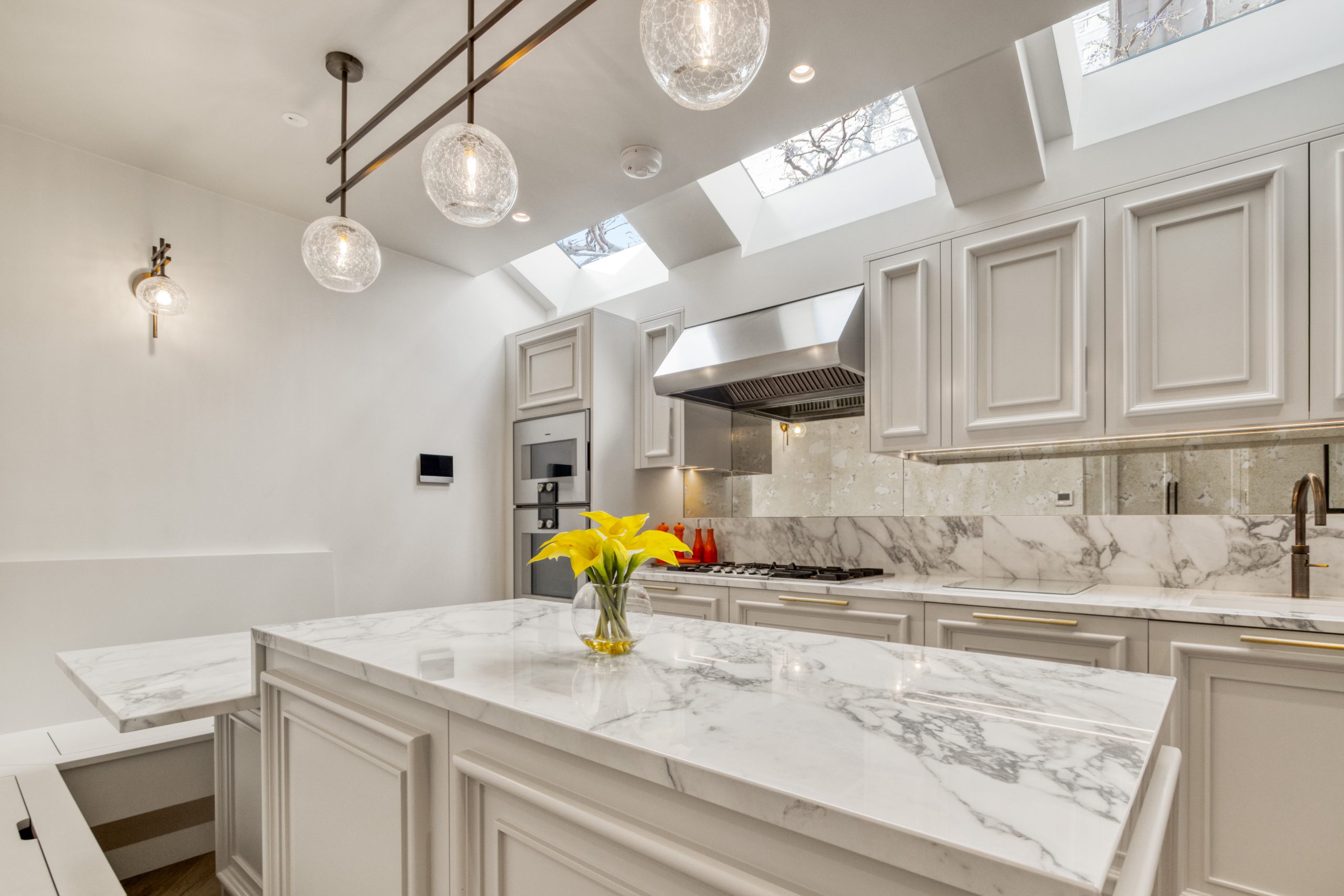
A modern kitchen with white marble countertops and island, integrated appliances, and pendant lighting under skylights.
Estimated Reading Time: 12 minutes

The Heart of Your Home: Why Kitchen Remodeling Matters

The kitchen has evolved far beyond its utilitarian origins to become the true heart of the modern London home. It’s where culinary creativity unfolds, family gatherings naturally gravitate, and countless memories are made over shared meals and conversations. As our lifestyles and design preferences change, kitchens that once served previous generations admirably can begin to feel outdated, inefficient, or simply uninspiring.

A thoughtfully executed kitchen renovation or complete remodeling project offers the opportunity to transform this vital space into something that better reflects your lifestyle, enhances your property’s value, and brings genuine joy to everyday living. Whether you’re considering a modest refresh or a comprehensive kitchen transformation, the investment you make in this space typically delivers some of the highest returns – both in terms of quality of life and financial appreciation.

For London homeowners in particular, where property values remain resilient and competition in the housing market is perpetually robust, a well-designed kitchen can be the defining feature that distinguishes your home. With urban spaces often at a premium, smart kitchen design becomes even more crucial for maximizing both functionality and aesthetic appeal.

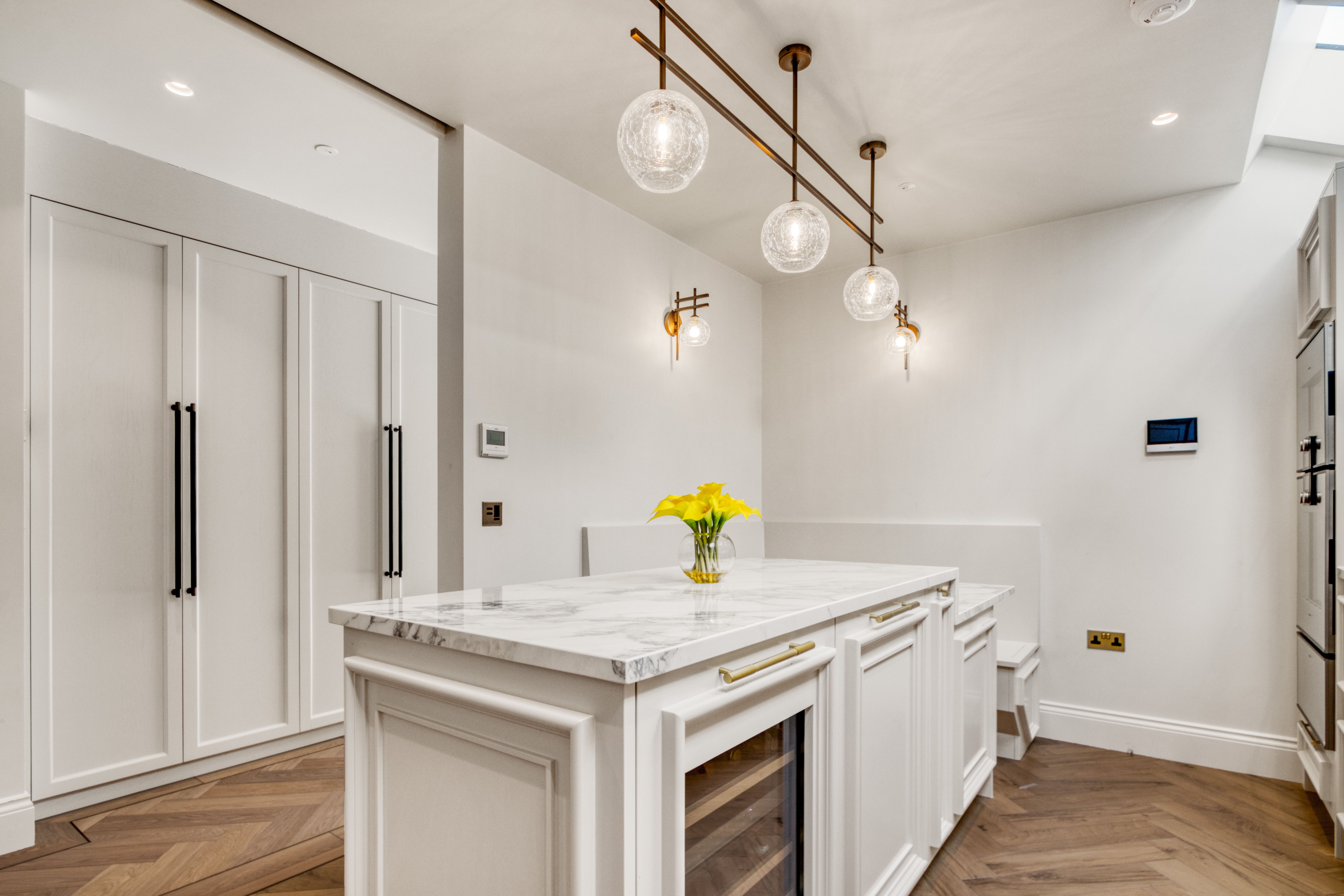
A modern kitchen with a marble island, sleek cabinetry, pendant lighting, and integrated appliances.

Did You Know?

According to property experts, a high-quality kitchen remodel can recoup 70-80% of its cost in added home value, making it one of the most financially sound home improvements you can undertake.

Renovation vs. Remodeling: Understanding the Distinction

While often used interchangeably in casual conversation, kitchen renovation and kitchen remodeling represent distinctly different approaches to home improvement. Understanding these differences is crucial for planning your project scope, budget, and timeline effectively.

Kitchen Renovation typically refers to surface-level updates that refresh the appearance of your kitchen without altering its fundamental structure or layout. Think of renovation as giving your kitchen a facelift rather than reconstructive surgery. This approach might include:

  • Repainting walls and cabinets
  • Updating cabinet hardware
  • Replacing countertops or backsplashes
  • Installing new flooring over the existing subfloor
  • Upgrading light fixtures
  • Swapping outdated appliances for newer models (without requiring new plumbing or electrical work)

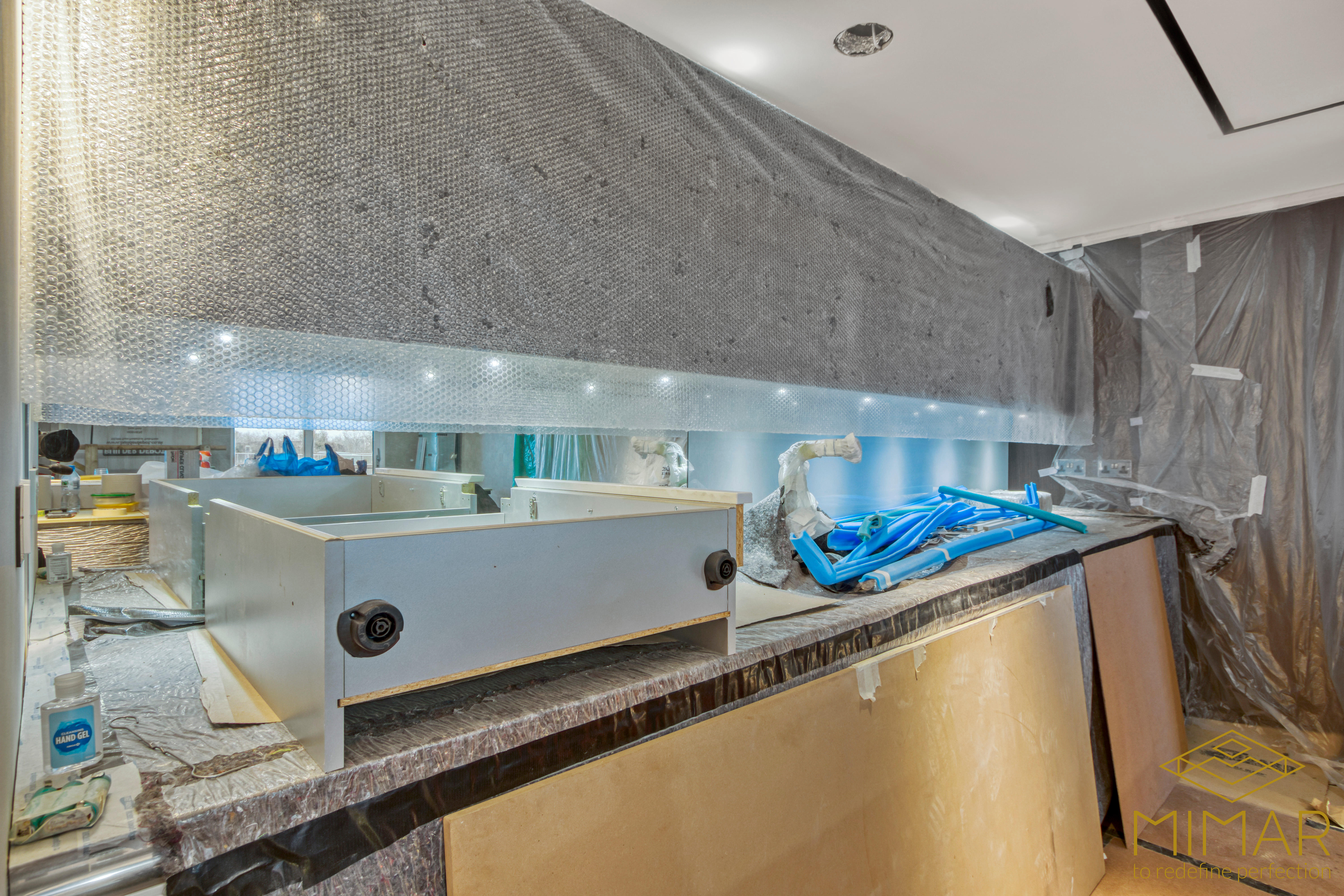
A kitchen under renovation with cabinets partially constructed, protective covering, and new installations in progress.

Renovations generally require less time, involve fewer contractors, and come with more predictable budgets. They’re ideal for kitchens with functional layouts that simply need cosmetic updates.

Kitchen Remodeling, by contrast, involves more substantial structural changes to your kitchen’s layout, functionality, or infrastructure. A true remodel might include:

  • Removing or adding walls to create an open-plan space
  • Relocating plumbing fixtures or gas lines
  • Reconfiguring the entire kitchen layout
  • Installing new windows or doors
  • Adding a kitchen island or breakfast bar where none existed
  • Completely replacing cabinetry with new configurations
  • Upgrading electrical systems to accommodate new lighting or appliances

Remodeling projects typically require professional design services, building permits, and multiple specialized contractors. While they demand greater investment, they also offer the opportunity for transformative changes that can completely reimagine how you experience your home.

As The Installation Centre explains, the choice between renovation and remodeling should be guided by your goals, budget constraints, and the current functionality of your kitchen space.

Key Benefits of Kitchen Remodeling in London Homes

Investing in a kitchen remodeling project delivers multiple advantages that extend well beyond aesthetic improvements. Here’s why London homeowners continue to prioritize kitchen transformations:

Enhanced Functionality and Workflow

Many London kitchens, especially in period properties, were designed for different era’s cooking and living patterns. Modern kitchen remodeling allows you to optimize workflow with the classic “kitchen triangle” (sink, stove, refrigerator) arrangement or contemporary zoned approaches that better accommodate multiple cooks and activities. Smart storage solutions can eliminate clutter and make everyday cooking more efficient.

Increased Property Value

In London’s competitive property market, an outdated kitchen can significantly impact salability and value. Estate agents consistently report that kitchens and bathrooms most heavily influence buyers’ decisions. A stylish, well-designed kitchen can often return 70-80% of remodeling costs through increased property value – sometimes more in sought-after London neighborhoods.

Improved Energy Efficiency

Older kitchens frequently harbor energy-inefficient appliances, poor insulation, and outdated lighting. A comprehensive kitchen transformation offers the perfect opportunity to incorporate energy-saving induction cooktops, efficient refrigerators, LED lighting, and improved ventilation systems. These upgrades not only reduce utility bills but also align with London’s increasing focus on sustainable living practices and eco-friendly refurbishments.

Personalized Design Expression

Your kitchen should reflect your personal taste and lifestyle needs. Remodeling allows you to create a space that genuinely represents your aesthetic preferences while accommodating your specific cooking habits, entertaining style, and family requirements. From minimalist contemporary designs to classic shaker styles, the kitchen becomes an expression of your home’s character. To explore how you can achieve truly luxurious and personalized results, discover the essence of bespoke interior design in London.

Better Storage Solutions

London properties often struggle with space constraints. Modern kitchen design offers innovative storage options that maximize every available centimeter – from ceiling-height cabinetry to specialized organizers for awkward corners. These solutions eliminate clutter and make even compact kitchens feel more spacious and functional.

Improved Safety and Accessibility

Older kitchens may present safety concerns through outdated electrical systems, poor lighting, or impractical layouts. Remodeling provides the opportunity to address these issues while also incorporating universal design principles that ensure your kitchen remains accessible and comfortable for family members of all ages and abilities.

Kitchen Remodeling Benefits
Enhanced Functionality
Increased Property Value
Energy Efficiency
Personalized Design
Improved Storage
Better Accessibility

Kitchen Transformation Ideas for Every Budget

Kitchen remodeling encompasses a spectrum of possibilities, from modest updates to comprehensive overhauls. Here are inspiring ideas across different investment levels to help you envision your own kitchen transformation:

Budget-Friendly Kitchen Updates (£2,000-£5,000)

Even with limited funds, you can make impactful changes to refresh your kitchen’s appearance:

  • Cabinet refacing or repainting – Transform the look of existing cabinetry with new doors or a professional paint finish
  • Updated hardware – Replace dated handles and knobs with contemporary alternatives
  • New backsplash – Install metro tiles or peel-and-stick options for instant visual impact
  • Countertop overlays – Cover existing surfaces with quartz or granite overlays
  • Statement lighting – Replace outdated fixtures with pendant lights over islands or dining areas. For further ways to improve efficiency, consider upgrading to energy-efficient LED lighting and other sustainable options.
  • Open shelving – Remove selected upper cabinets and install floating shelves for a more open feel

Mid-Range Kitchen Renovations (£8,000-£20,000)

With a moderate budget, you can undertake more substantial updates that significantly enhance both function and style:

  • New cabinetry – Replace all cabinets while maintaining the existing layout
  • Quality countertops – Upgrade to solid quartz, granite, or sustainable composite surfaces
  • Appliance upgrades – Install energy-efficient, integrated appliances
  • Flooring replacement – Update to durable porcelain tile, engineered wood, or luxury vinyl
  • Minor layout adjustments – Make modest changes to improve workflow without relocating plumbing
  • Feature island – Add a small island or peninsula if space permits

Comprehensive Kitchen Transformations (£25,000-£60,000+)

For those seeking a complete kitchen transformation, a higher investment allows for transformative changes:

  • Full structural reconfiguration – Remove walls to create open-plan living
  • Custom cabinetry – Install bespoke storage solutions tailored to your specific needs
  • Luxury materials – Incorporate natural stone, handmade tiles, or premium hardwoods
  • High-end appliances – Install professional-grade cooking equipment and smart appliances
  • Architectural features – Add skylights, larger windows, or glass doors to enhance natural light
  • Designer lighting schemes – Implement layered lighting with task, ambient, and accent options
  • Premium conveniences – Incorporate boiling water taps, wine fridges, or integrated coffee systems

Remember that costs in London typically run 10-15% higher than national averages due to the premium on skilled labor and logistics challenges in the capital. Working with experienced kitchen designers can help you maximize value at any budget level. For those interested in integrating renewable energy or enhancing insulation as part of their project, explore how to obtain free loft insulation and other affordable energy-saving options for your home.

London’s kitchen design scene continues to evolve, blending international influences with practical considerations for urban living. Here are the most compelling kitchen trends shaping home remodelling projects across the capital:

Multifunctional Islands

No longer just prep stations, today’s kitchen islands serve as dining areas, workspaces, and social hubs. Look for islands with varied counter heights, integrated appliances, and clever storage. In smaller London flats, compact islands with wheels provide flexibility for different household needs.

Statement Sustainability

Eco-conscious materials have moved from niche to mainstream. Reclaimed wood, recycled glass countertops, and cabinet fronts made from innovative sustainable composites allow for environmentally responsible kitchen transformation without compromising style. For tips on choosing the best sustainable materials for your home, see Mimar’s guide to sustainable living and eco-friendly refurbishments in London.

Broken-Plan Layouts

While open-plan living remains popular, “broken-plan” designs—using partial walls, different floor levels, or glass dividers—create distinct zones while maintaining visual connection between spaces. This approach offers particular advantages in London’s period conversions, where completely open layouts might feel overwhelming.

Dark, Dramatic Palettes

Bold navy, forest green, and even black cabinetry continue to gain popularity, often paired with warm metallic accents in brass or copper. These richer tones create sophisticated, cocooning environments that feel simultaneously classic and contemporary.

Mixed Material Finishes

Contemporary London kitchens increasingly feature thoughtful combinations of materials—perhaps timber cabinets alongside painted units, or porcelain countertops transitioning to brass dining surfaces. This layered approach adds visual interest and personality.

Smart Kitchen Technology

Integrated technology has become expected rather than exceptional. From refrigerators with inventory management to voice-controlled lighting and taps, smart features streamline cooking and entertaining while saving energy.

Statement Backsplashes

Dramatic, full-height backsplashes in veined marble, patterned tile, or textured glass serve as the kitchen’s focal point. These vertical surfaces provide opportunity for artistic expression without overwhelming the space.

Design Tip

While trends offer inspiration, the most successful kitchen renovations balance current styles with timeless elements that will feel fresh for years to come. Consider incorporating trendy elements in easily updatable features like paint colors or hardware rather than permanent fixtures.

Essential Planning Steps for a Successful Kitchen Remodel

A methodical approach to planning your kitchen remodeling project can help avoid costly mistakes and ensure the final result aligns with your vision. Follow these key steps for a smooth renovation journey:

Define Your Vision and Needs

Before consulting professionals or selecting materials, clarify what’s driving your kitchen transformation. Are you seeking more efficient storage? Better flow for entertaining? Updated aesthetics? Create a prioritized list of must-haves versus nice-to-haves, and collect inspiration images that represent your style preferences. If you want to maximize the results of your project, learn more about how working with architects can help unlock your kitchen’s full potential in London.

Establish a Realistic Budget

Determine your comfortable spending limit, then add a 15-20% contingency for unexpected issues—particularly important in London’s older properties where surprises behind walls are common. Be transparent about your budget with designers and contractors, as this helps them recommend appropriate solutions.

In London, comprehensive kitchen remodels typically range from £300-£1,000 per square foot depending on specification level and complexity. Industry experts recommend allocating your budget approximately as follows:

Element Percentage of Budget
Cabinetry and hardware 30-35%
Installation labor 20%
Appliances 15-20%
Countertops 10-15%
Flooring 7-10%
Fixtures and lighting 5-7%
Walls and ceilings 5%
Design fees 4-8%

Assemble Your Professional Team

For comprehensive kitchen remodeling, consider engaging:

  • Kitchen designer – Brings specialized knowledge about ergonomics, materials, and efficient layouts
  • Architect – Essential for structural changes, extensions, or complex spatial reconfigurations
  • General contractor – Coordinates trades and manages timeline
  • Specialists – Plumbers, electricians, and cabinetmakers with specific expertise

In London, look for professionals with experience navigating the challenges of period properties and familiar with local building regulations, particularly for conservation areas or listed buildings. If you’re looking for guidance on choosing the right architect or benefits of the architect-led process, check out expert tips for working with architects on London refurbishments.

Develop Detailed Plans

Comprehensive plans should include:

  • Scaled floorplans showing the proposed layout
  • Elevation drawings of all walls
  • Specific locations for electrical outlets, lighting, and plumbing
  • Detailed specifications for all materials and finishes
  • Appliance dimensions and installation requirements

These detailed plans form the foundation for accurate quotes and help prevent costly misunderstandings during construction. To ensure the most positive experience, prioritize effective communication between architect, client, and builder throughout your kitchen remodeling journey.

Secure Necessary Permissions

London kitchen renovations may require several types of approval:

  • Planning permission – Typically needed for extensions or external alterations, particularly in conservation areas
  • Building regulations approval – Required for structural changes, electrical work, and alterations to ventilation
  • Party wall agreements – Necessary when work affects shared walls with neighbors
  • Listed building consent – Essential for any alterations to listed properties

For a detailed checklist on approvals, site surveys, insurance, and builder verification, review the practicalities of putting all the pieces of your project together before you start.

Create a Realistic Timeline

A typical London kitchen remodeling project progresses through these phases:

  • Design and planning: 4-8 weeks
  • Permitting: 4-12 weeks (longer for complex or listed properties)
  • Ordering materials: 4-12 weeks (custom cabinetry and some appliances have long lead times)
  • Construction: 3-12 weeks depending on scope

Allow additional time for unexpected delays, particularly given London’s busy contractor schedules and potential supply chain challenges. Minimizing inconvenience, noise, and disruption is also key—get tips on how to reduce build inconvenience and keep your household running smoothly during the process.

Maximizing Space and Workflow in London Kitchens

London properties often present unique spatial challenges, from compact footprints in modern flats to awkward configurations in period conversions. Thoughtful design strategies can help maximize both functionality and perceived spaciousness in your kitchen transformation:

Optimize the Kitchen Triangle

The classic work triangle—connecting sink, cooking area, and refrigerator—remains fundamental to efficient kitchen design. Ideally, these elements should form a triangle with sides totaling between 3.5 and 7.5 meters, allowing smooth movement without excessive travel. In smaller London kitchens, compact appliances and careful placement can help achieve this balance.

Embrace Vertical Storage

London’s typically high ceilings offer valuable storage potential. Consider:

  • Floor-to-ceiling cabinetry that maximizes every centimeter
  • Pull-out pantry systems that offer accessibility without wasted space
  • Open shelving for frequently used items and visual interest
  • Above-cabinet storage for seasonal or rarely used items

Incorporate Space-Efficient Appliances

Many manufacturers now offer slimline or combination appliances designed specifically for urban kitchens:

  • 45cm dishwashers instead of standard 60cm models
  • Combination microwave-ovens
  • Refrigerator drawers that can be installed under counters
  • Induction hobs that can be installed flush with countertops

Design Multi-Functional Elements

In space-constrained London kitchens, elements that serve multiple purposes deliver exceptional value:

  • Islands with integrated dining areas
  • Pull-out work surfaces for occasional tasks
  • Bench seating with hidden storage
  • Movable kitchen carts that provide additional work space when needed

Maximize Natural Light

Bright, light-filled spaces feel larger and more inviting. Consider:

  • Removing upper cabinets on window walls
  • Installing glass-fronted cabinets that don’t absorb light
  • Adding skylights where structural conditions allow
  • Using glass splashbacks to reflect light
  • Incorporating glass doors or internal windows between adjoining spaces

These strategies can transform even the most challenging London kitchen spaces into highly functional, welcoming environments that enhance your daily living experience. If you’re planning an energy upgrade as well as a renovation, investigate options such as affordable loft insulation and insulation grants in London for further benefits.

Navigating Common Kitchen Remodeling Challenges

Kitchen remodeling projects, particularly in London properties, can present various challenges. Being prepared for these potential obstacles can help you navigate them more effectively:

Budget Overruns

Challenge: Costs exceeding initial estimates are among the most common remodeling frustrations.

Solution: Build a 15-20% contingency into your budget from the beginning. Clearly identify your priorities so if cuts become necessary, you can preserve the elements most important to you. Consider phasing the project if necessary—perhaps completing structural work and essential elements first, then adding higher-end finishes later.

Unexpected Structural Issues

Challenge: London’s aging housing stock often conceals surprises behind walls—from outdated wiring to dampness issues or structural weaknesses.

Solution: Commission a thorough survey before finalizing plans, particularly in older properties. Work with contractors experienced in London’s typical building styles, whether Victorian terraces, Edwardian semis, or mid-century blocks. It’s also wise to confirm builder experience, insurance, and certifications prior to starting construction.

Extended Timelines

Challenge: Kitchen renovations frequently take longer than initially projected, particularly when supply chain issues affect material availability.

Solution: Build buffer time into your schedule and order long-lead items (custom cabinetry, specialty appliances) as early as possible. Consider setting up a temporary kitchen elsewhere in your home to minimize disruption.

Limited Access in London Properties

Challenge: Narrow staircases, restricted parking, and tight streets can complicate deliveries and construction logistics in many London neighborhoods.

Solution: Discuss access limitations with contractors before work begins. Some situations may require selecting materials that can be brought in through existing doorways or windows, or planning for some on-site fabrication.

Permit and Planning Delays

Challenge: London’s planning departments can move slowly, particularly for properties in conservation areas or with listed status.

Solution: Submit applications well in advance of your desired start date. Consider consulting with planning specialists who understand local requirements and can streamline the approval process. Learn more about the importance of permissions and surveys at the practicalities of project preparation.

Neighbor Concerns

Challenge: In London’s dense housing environment, neighbor objections or party wall issues can cause delays.

Solution: Communicate proactively with neighbors about your plans. Engage a party wall surveyor early if your project affects shared walls. Consider scheduling noisy work during reasonable daytime hours to maintain good relationships. For advice on maintaining positive relationships and minimizing disruption, see how to reduce inconvenience and mess during building works.

Professional Insight

For complex kitchen transformations in London homes, hiring a project manager can be worth the additional cost. They coordinate trades, manage deliveries, and address problems promptly—particularly valuable if you can’t be on-site regularly during construction. For consistent progress and peace of mind, effective communication between all parties is essential.

Kitchen Transformation Success Stories

Nothing inspires confidence in kitchen remodeling like seeing successful transformations. Here are examples of how London homeowners have overcome common challenges to achieve remarkable kitchen renovations:

Victorian Terrace: From Compartmentalized to Connected

In a Notting Hill Victorian terrace, owners faced the classic challenge of a narrow, isolated kitchen disconnected from living spaces. By removing a non-load-bearing wall and reconfiguring the rear extension with crittal-style doors to the garden, they created a light-filled kitchen that flows seamlessly into dining and outdoor areas. Clever storage solutions, including a pantry tucked under existing stairs, maximized functionality without expanding the property’s footprint.

Key elements of this kitchen transformation included:

  • Hand-painted shaker cabinetry in deep blue with brass hardware
  • Marble-look quartz countertops for durability with classic appeal
  • Herringbone oak flooring creating visual continuity throughout ground floor
  • Space-efficient induction cooktop and combination steam oven

Compact Apartment: Maximizing Every Centimeter

A 1970s flat in Clerkenwell presented significant space constraints, with just 9 square meters available for the kitchen. The homeowners worked with a specialist small-space designer to create a kitchen that feels remarkably generous despite its dimensions. Full-height cabinetry makes use of vertical space, while integrated appliances maintain clean lines.

Smart solutions included:

  • Handleless cabinetry in pale grey to create a sense of openness
  • Slim-profile induction cooktop with extraction built into the surface
  • Refrigerator and freezer drawers installed beneath countertops
  • Pull-out pantry system just 30cm wide but offering extensive storage
  • Light-reflecting glass backsplash enhancing the sense of space

Period Conversion: Balancing Character with Contemporary Function

In a converted Edwardian schoolhouse in Greenwich, owners faced the challenge of creating a kitchen that respected the building’s heritage while delivering modern performance. Working within conservation area restrictions, they preserved original windows and architectural details while introducing a thoroughly contemporary cooking space.

The successful kitchen remodeling incorporated:

  • Custom cabinetry inspired by original school cupboards but with modern internals
  • Concrete worktops that reference industrial heritage while providing practicality
  • Energy-efficient appliances discreetly integrated behind period-appropriate panels
  • Restored original flooring with underfloor heating for modern comfort
  • Lighting scheme that highlights architectural features while providing task illumination

These examples demonstrate how thoughtful kitchen transformation can overcome various constraints while creating spaces that enhance both daily function and aesthetic appeal. By working with professionals who understand London’s unique architectural context, homeowners achieved kitchens that feel simultaneously authentic and forward-looking. If you’re keen to infuse your project with unique style and premium finishes, be inspired by bespoke interior design solutions in London.

Conclusion: Reimagining the Heart of Your Home

A well-executed kitchen remodeling project represents far more than a cosmetic update—it’s an investment in your home’s functionality, value, and your daily quality of life. From modest renovations that refresh tired spaces to comprehensive transformations that reimagine how you interact with your home, kitchen projects consistently deliver among the highest satisfaction rates of any home improvement endeavor.

The key to success lies in thoughtful planning, realistic budgeting, and enlisting the right expertise for your specific needs. London’s distinctive architectural heritage and spatial challenges require specialized knowledge, but they also offer unique opportunities to create kitchens with genuine character and bespoke functionality.

As you contemplate your own kitchen transformation, remember that the most successful projects balance immediate trends with enduring design principles. A kitchen that reflects your personal aesthetic while offering intuitive workflow and quality craftsmanship will continue to bring satisfaction long after the dust of renovation has settled.

Whether you’re planning a simple refresh or envisioning a complete kitchen transformation, the journey begins with clarifying your goals and priorities. By approaching your project with careful consideration and the right professional support, you can create a kitchen that truly becomes the heart of your home—a space where functionality meets beauty, and where your investment enhances both daily living and long-term value. For a collaborative and stress-free experience, prioritize effective communication between architect, client, and builder at every step.

Next Steps

Begin your kitchen remodeling journey by creating an inspiration portfolio, establishing your preliminary budget, and researching professionals with experience in your specific type of London property. Taking these initial steps will help you move confidently toward the kitchen transformation you envision. For more ideas to reduce disruption and make the process smoother, see practical advice for reducing noise, mess, and fuss during renovations.

Decoding the Average Bathroom Renovation Cost

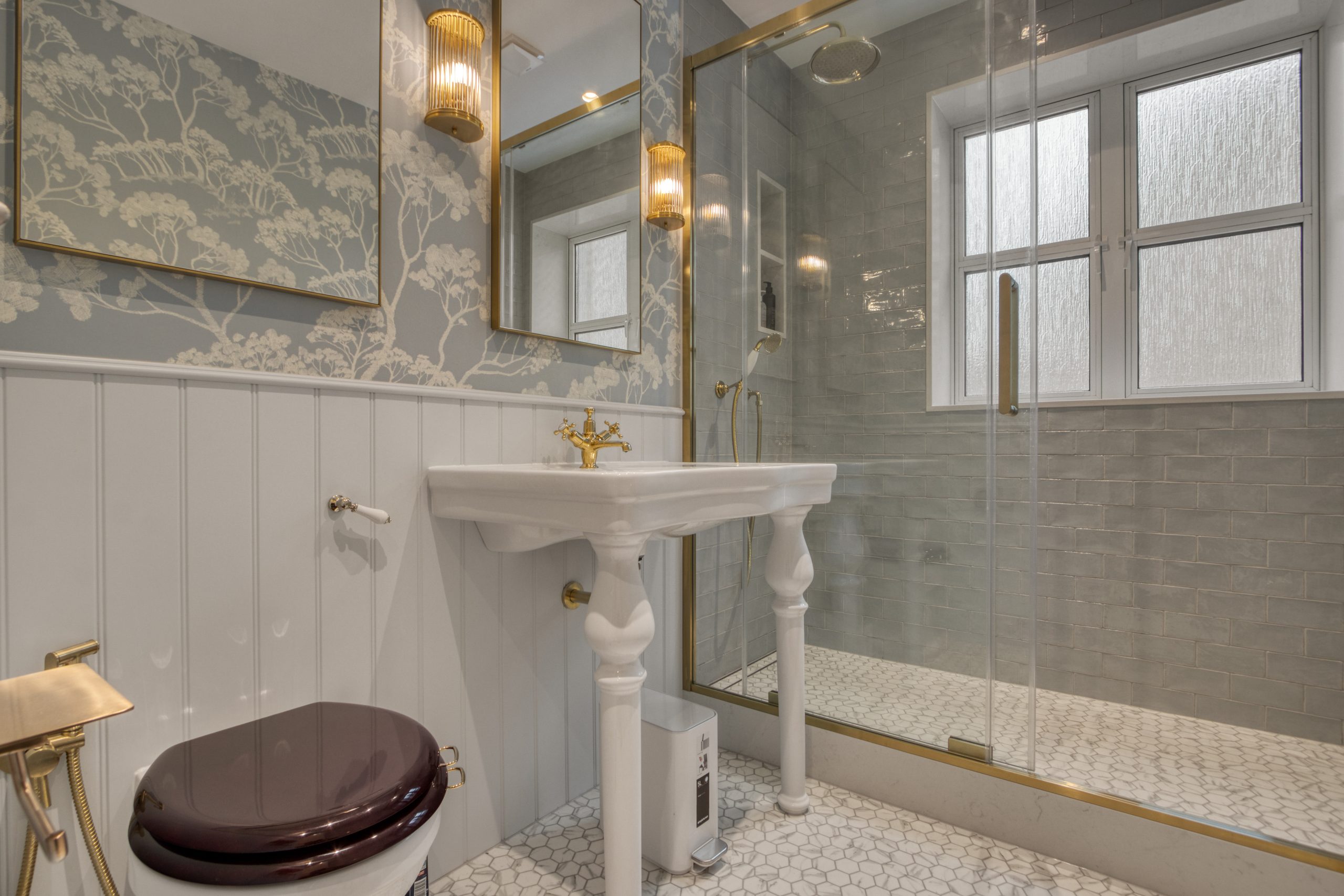
A luxurious bathroom featuring a white pedestal sink, gold fixtures, a glass-enclosed shower, patterned wallpaper, and tiled flooring.
Estimated Reading Time: 9 minutes

Introduction: Understanding Bathroom Renovation Costs

When planning a bathroom upgrade, understanding the average bathroom remodel cost is crucial for proper financial preparation and project success. The bathroom, despite being one of the smallest rooms in your home, often represents one of the most significant renovation investments. Whether you’re refreshing a tired space, addressing functional issues, or creating a luxurious retreat, having a realistic grasp of the average cost of bathroom renovation helps avoid budget surprises and project delays.

For London homeowners, bathroom renovations present unique considerations due to the city’s premium property market and specific building regulations. While the national typical bathroom remodel cost provides a useful baseline, London prices often reflect the capital’s higher living costs and property values. This guide aims to demystify bathroom renovation costs, breaking down where your money goes and highlighting strategies to achieve your desired results within your budget.

By the end of this article, you’ll understand not only the average bath remodel cost but also how various factors influence your specific project’s budget. Armed with this knowledge, you’ll be better positioned to make informed decisions about your bathroom transformation and achieve the best possible return on your investment.

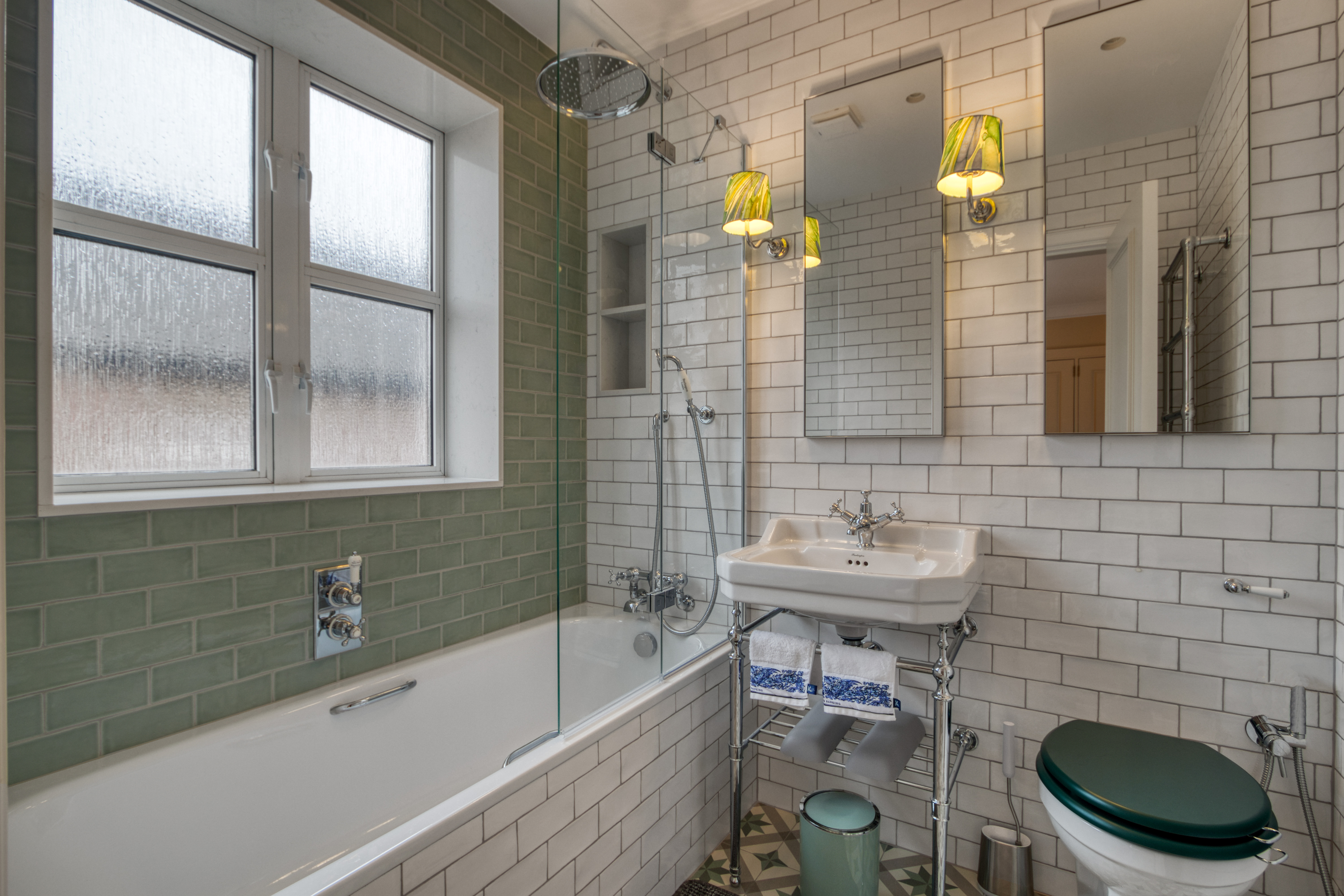
A renovated bathroom featuring a white bathtub, green and white tiles, a wall-mounted shower, a mirrored vanity, and a modern sink with stylish fixtures.

Key Factors Influencing Bathroom Renovation Costs in London

The cost of an average bathroom remodel varies significantly based on several key factors. Understanding these elements will help you develop a more accurate budget for your project.

Bathroom Size and Layout: The physical dimensions of your bathroom play a fundamental role in determining costs. Larger spaces require more materials for walls, flooring, and fixtures. In London, where professional installers may charge £100-£120 per square meter for installation work, size becomes a significant cost factor. Additionally, awkward layouts or limited access points common in London’s period properties can increase labor costs due to the extra time and specialized techniques required.

Current Condition and Scope of Changes: Are you making cosmetic updates to a functioning bathroom, or does your space require a complete overhaul with new plumbing? The extent of demolition, structural modifications, and utility relocations can dramatically affect the reno bathroom cost. London’s older housing stock often necessitates more extensive work to address outdated plumbing and electrical systems.

Quality of Materials and Fixtures: The selection of fixtures, tiles, flooring, and accessories presents the widest range of pricing options. Basic white ceramic fixtures cost significantly less than designer brands or custom elements. In London’s luxury market, high-end materials like marble, premium taps, and bespoke cabinetry can elevate costs considerably but may be essential for maintaining property values in premium postcodes.

Labor and Specialist Requirements: Professional installation typically accounts for 40-60% of the total bathroom renovation budget. London’s higher labor rates reflect the city’s cost of living. Specialized work like moving plumbing lines, electrical modifications, or custom tiling increases these costs further. Additionally, London’s conservation areas and listed buildings may require specialized tradespeople with heritage experience, commanding premium rates.

Property Access and Logistics: London’s urban density creates unique logistical challenges. Limited parking, congestion charges, restricted delivery hours, and narrow staircases in townhouses can all impact your bathroom renovation costs through increased labor time and delivery fees.

Bathroom Renovation Cost Factors
Bathroom Size
Materials Quality
Labor Costs
Fixtures & Fittings
Property Access
Existing Condition

Typical Price Range for Bathroom Renovations in London

Understanding the average bathroom remodel cost in London requires acknowledging that the capital’s prices typically exceed the national average. While the UK average bathroom renovation cost falls between £4,000-£8,500 (with approximately £4,500 as the national average), London prices often start at the upper end of this range and can increase substantially depending on the factors previously discussed.

For a complete new bathroom installation in London, homeowners should expect to budget between £7,000-£10,000 at minimum, compared to the national average of around £7,000-£7,200. This London premium reflects higher labor costs, increased material pricing, and the logistical challenges unique to urban renovation projects.

The average cost of bathroom renovation in London typically falls within these ranges:

Renovation Level London Price Range What’s Included
Basic Renovation £3,000-£6,000 Like-for-like replacements, basic fixtures, minimal layout changes
Mid-Range Renovation £6,000-£10,000 Quality fixtures, partial layout changes, better finishes
High-End Renovation £10,000-£20,000+ Premium fixtures, custom solutions, significant layout changes
Luxury Renovation £20,000-£35,000+ Designer brands, bespoke elements, structural modifications

Location within London also influences the average bath remodel cost. Prime central areas like Kensington, Chelsea, and Westminster command the highest premiums, while outer boroughs may align more closely with national averages. The specific building type matters too—period conversions often require more specialized work than newer properties. It’s critical to be aware of building and planning permissions, and to carry out comprehensive site surveys in such areas for a smooth renovation process.

Local Insight

In London’s competitive property market, a well-executed bathroom renovation can yield strong returns on investment. High-quality bathrooms are consistently ranked as one of the most valuable home improvements, potentially adding 4-5% to your property’s value when done to a standard that matches your home’s overall value proposition.

Cost Breakdown: Where Your Money Goes

To better understand the average bathroom remodel cost, it’s helpful to examine how your budget typically gets allocated across different aspects of the project. This breakdown provides a clearer picture of the cost of an average bathroom remodel in London:

Fixtures and Fittings (25-30% of budget): This category includes your toilet, bath, shower, sink, and taps. In London, a standard bathroom suite starts around £500-£700 for basic models, while mid-range options typically cost £1,000-£3,000. Premium and designer fixtures can easily exceed £5,000-£10,000 for a complete set. The average bath installation alone costs approximately £850, while standard shower installations range from £350-£600, and walk-in shower installations can cost between £200-£2,000 depending on complexity.

Labor and Installation (40-50% of budget): Professional installation represents the largest portion of your bathroom renovation budget. London’s skilled tradespeople command higher rates than the national average, with bathroom fitters typically charging £150-£250 per day. A complete bathroom renovation usually requires multiple specialists—plumbers, electricians, tilers, and possibly carpenters—over a 1-3 week period, depending on complexity. Clear and honest communication between you, your architect, and your contractors is crucial to keep labor costs on track and to ensure your expectations are met throughout the project.

Tiles and Flooring (10-15% of budget): The materials and installation for wall and floor coverings vary dramatically based on quality and complexity. Basic ceramic tiles might cost £15-£30 per square meter, while premium porcelain, natural stone, or designer options can range from £50-£150+ per square meter. Installation costs increase with complex patterns, small tiles, or special cutting requirements.

Additional Elements (15-20% of budget): This category covers everything else, including:

  • Lighting fixtures and installation
  • Ventilation upgrades
  • Storage solutions and cabinetry
  • Mirrors and accessories
  • Underfloor heating systems
  • Waterproofing treatments

For a typical London bathroom renovation, you should also budget approximately 10-20% as a contingency for unexpected issues that might arise during the project. This is especially important for older properties where hidden problems are more common. Obtaining all insurance and certification documents before starting, as detailed in this guide, can also protect you against unforeseen costs.

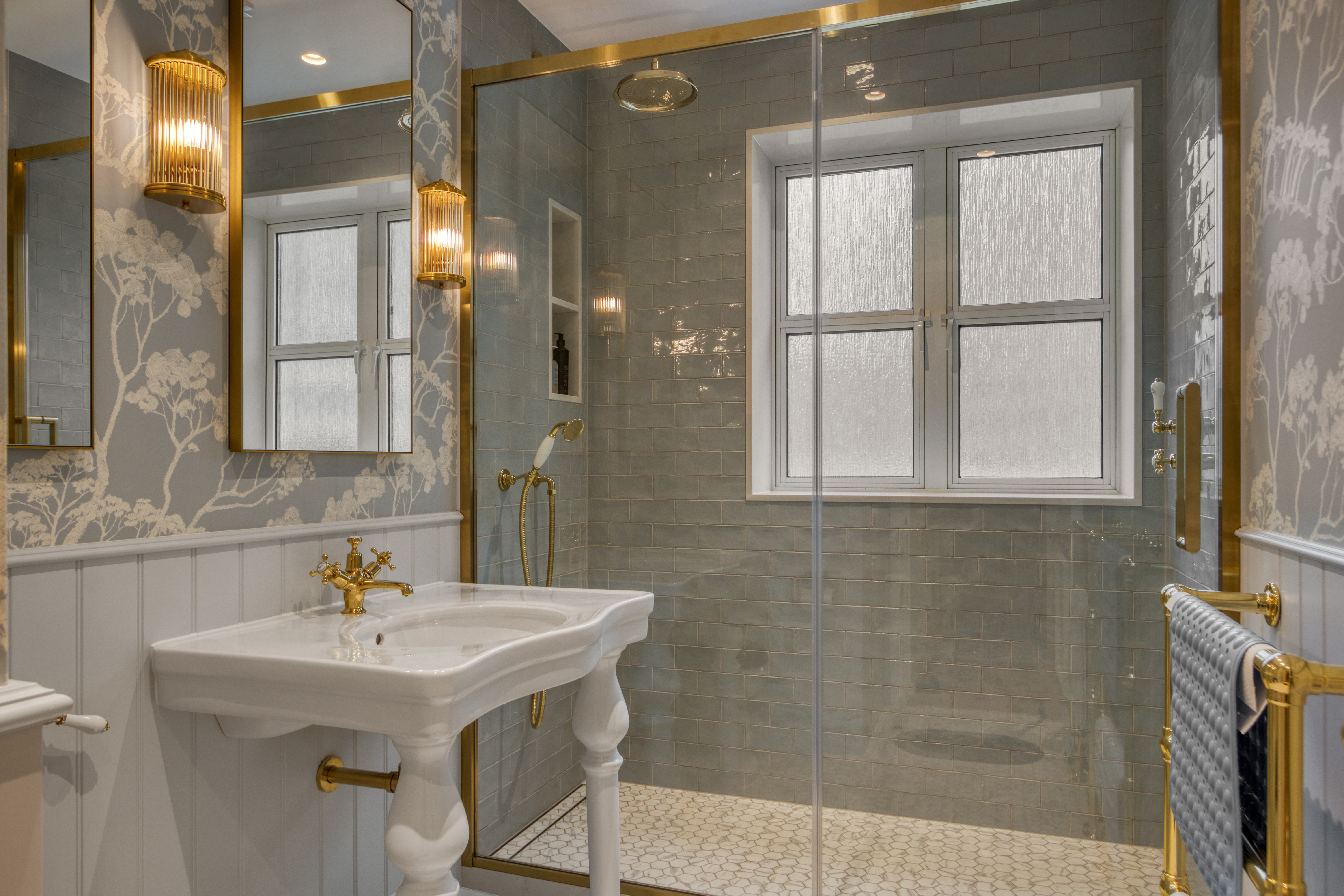
Elegant bathroom with a vintage-style sink, glass shower enclosure, and gold fixtures set against a floral wallpaper and tiled wall.

Comparing Different Renovation Types and Their Costs

The typical bathroom remodel cost varies significantly based on the scope and ambition of your project. Understanding the different levels of renovation can help you align your expectations with your budget.

1. Basic Cosmetic Update (£3,000-£6,000 in London)

This level focuses on refreshing the appearance without major changes to layout or plumbing. It typically includes:

  • Replacing toilet, sink, and possibly bath/shower with standard fixtures
  • New taps and basic accessories
  • Fresh paint or basic new wall coverings
  • Updated flooring with mid-range materials
  • Basic lighting replacements

This approach works well for relatively modern bathrooms that function properly but look dated. The national average for this level starts around £1,500-£4,600, but London prices typically start higher due to increased labor and material costs.

2. Mid-Range Renovation (£6,000-£10,000 in London)

This moderate renovation includes more substantial updates:

  • Complete new bathroom suite with better quality fixtures
  • New wall and floor tiles throughout
  • Upgraded storage solutions
  • Improved lighting scheme
  • Minor plumbing relocations
  • Better quality accessories and finishing touches

Mid-range renovations offer good value for most London homes, balancing quality improvements with reasonable costs. They typically maintain the basic bathroom layout while modernizing all visible elements. Working with an architect can help optimise your design and streamline communication between clients and builders, which is key at this level of complexity.

3. High-End Renovation (£10,000-£20,000+ in London)

High-end renovations deliver significant improvements in both function and aesthetics:

  • Premium fixture brands with advanced features
  • Custom vanity units and storage solutions
  • High-quality natural stone or porcelain tiles
  • Layout reconfiguration with plumbing relocations
  • Upgraded electrical systems
  • Designer lighting schemes
  • Luxury features like digital showers or heated flooring

These renovations often involve altering the room’s layout to optimize space and functionality, requiring more extensive structural and plumbing work. Selecting the right architect and maximizing your communication can help ensure your project comes in on time and on budget.

4. Luxury Renovation (£20,000-£35,000+ in London)

For premium London properties, luxury bathroom renovations include:

  • Bespoke design elements and custom-made fixtures
  • Specialist finishes and materials (marble, natural stone)
  • Smart technology integration
  • Spa-like features (steam showers, jetted tubs)
  • Underfloor heating systems
  • Comprehensive lighting designs with mood settings
  • Built-in entertainment systems

This level of renovation is typically undertaken in high-value properties where the bathroom needs to match the luxury standard throughout the home and where significant return on investment is expected. Be sure to verify builder experience, insurance, and planning requirements for this level of investment.

Feature-Specific Cost Considerations

Understanding the average cost of bathroom renovation requires examining the specific features that contribute to your overall budget. Here’s a breakdown of major bathroom elements and their typical cost ranges in London:

Bathtubs: Standard acrylic baths start from £150-£300, while mid-range options cost £300-£800. Premium freestanding baths can range from £1,000-£5,000+. Installation typically adds £300-£500 for standard baths and £500-£1,000 for freestanding models due to their weight and special plumbing requirements.

Showers: Electric shower units range from £100-£500 installed. Thermostatic mixer showers typically cost £200-£800 plus installation. Walk-in shower enclosures start around £500 for basic models but premium frameless glass systems can exceed £2,000 plus installation. Digital shower systems with multiple jets or steam functions range from £800-£3,000+ before installation.

Toilets: Basic toilets start from £100-£250, while wall-hung models (which require special framework inside the wall) range from £300-£800 plus additional installation costs. Smart toilets with integrated bidets and other features can cost £1,000-£4,000+.

Sinks and Vanities: Pedestal sinks start from £70-£200. Vanity units with storage begin around £200-£500 for basic models and range to £1,000-£3,000+ for bespoke designs. Wall-hung vanities generally cost more than floor-standing units due to the additional structural support needed.

Tiling: Basic ceramic wall tiles range from £15-£30 per square meter, mid-range porcelain tiles cost £30-£60 per square meter, and premium natural stone or designer tiles can cost £60-£150+ per square meter. Labor for tiling typically costs £35-£55 per square meter but increases with complex patterns, small tiles, or difficult-to-work-with materials.

Flooring: Vinyl flooring offers the most economical option at £20-£40 per square meter installed. Porcelain floor tiles range from £30-£100 per square meter plus installation. Natural stone flooring costs £50-£120+ per square meter before installation. For smaller London bathrooms, underfloor heating systems add £100-£150 per square meter.

Lighting: Basic bathroom-rated light fixtures start around £30-£100 each. Mid-range integrated LED lighting systems cost £200-£500, while comprehensive schemes with multiple light sources and controls can range from £500-£1,500+. Installation costs vary based on complexity but typically add £60-£100 per fixture. Choosing energy-efficient LED lighting can help you run a more sustainable and cost-effective bathroom.

When calculating your reno bathroom cost, remember that smaller, luxury bathrooms can sometimes cost more per square meter than larger, standard bathrooms due to the premium materials and bespoke solutions often required to maximize limited space—a common challenge in London properties.

Hidden Costs That Can Impact Your Budget

When planning your bathroom renovation, the average bathroom remodel cost figures provide a useful starting point. However, several hidden or unexpected expenses can significantly impact your final budget, particularly in London properties:

Structural Issues: Removing old fixtures or tiles can reveal water damage, rot, or inadequate support structures that need remediation. In London’s older housing stock, these issues are particularly common and can add £500-£3,000+ to your renovation depending on severity.

Plumbing Upgrades: Older London properties often have outdated plumbing that doesn’t meet current standards or won’t support modern fixtures. Replacing pipes with appropriate materials and dimensions can add £1,000-£3,000 to your project.

Electrical Updates: Bathroom electrical systems must meet strict safety standards. Many older London homes require rewiring and installation of proper extractor fans, GFI outlets, and adequate lighting circuits, potentially adding £500-£1,500 to your costs.

Asbestos Removal: Properties built before 2000 may contain asbestos in floor tiles, insulation, or walls. Professional testing and removal adds £300-£1,500 depending on the extent.

Building Permits and Compliance: Some bathroom renovations require building regulation approval, particularly if you’re altering drainage, ventilation, or electrical systems. Professional drawings and inspections can add £300-£1,000 to your project. For more on navigating local permissions and regulations, see this guide to planning permissions and architectural support in London.

Party Wall Agreements: In London’s terraced houses and flats, bathroom renovations that affect shared walls might require party wall agreements with neighbors, potentially adding £700-£1,500 in surveyor and legal fees.

Waste Disposal: Removing old bathroom fixtures and building materials requires proper disposal. In London, skip hire typically costs £200-£350, while specialized disposal of items containing hazardous materials adds further expense.

Temporary Accommodation: If your property has only one bathroom, you might need alternative arrangements during renovation. In London, even short-term accommodation can significantly impact your overall project budget.

Contingency Planning

Experts consistently recommend setting aside 15-20% of your total bathroom renovation budget as a contingency fund, especially for older London properties where unexpected issues are more likely. This approach helps ensure your project can proceed without compromising on quality when surprises arise.

Smart Budgeting Tips for Bathroom Renovations

Managing the average cost of bathroom renovation requires strategic planning and informed decision-making. Here are practical tips to help London homeowners navigate their renovation budgets effectively:

Prioritize Your Investment Areas: Allocate more of your budget to elements that deliver the greatest impact and longevity. High-quality taps, shower systems, and toilets offer better durability and performance, while you can potentially save on items like accessories or basic tiles that can be easily updated later.

Consider a Phased Approach: If your total budget falls short of your ideal renovation, consider implementing changes in stages. Focus first on essential plumbing and electrical updates, followed by major fixtures, then finishing elements. This approach allows you to spread costs while ensuring critical infrastructure is properly addressed.

Retain Existing Layout Where Possible: Moving plumbing fixtures dramatically increases costs due to new piping, drainage modifications, and additional labor. If your existing bathroom layout functions well, keeping fixtures in their current locations can significantly reduce your typical bathroom remodel cost.

Balance Premium and Standard Elements: Create visual impact by investing in one or two statement pieces—perhaps a stunning vanity or freestanding bath—while selecting more budget-friendly options for less noticeable elements. This creates a high-end impression without the premium price tag.

Explore Ex-Display Options: Many London bathroom showrooms sell ex-display models at substantial discounts. These items are usually in excellent condition and offer significant savings on premium brands.

Consider Refinishing Rather Than Replacing: If your existing bath is structurally sound, professional refinishing costs significantly less than replacement. Similarly, tile refinishing can transform dated surfaces at a fraction of the cost of new tiling.

Research Material Alternatives: Modern materials often provide the aesthetic of premium options at lower cost. Porcelain tiles that mimic marble, wood-effect luxury vinyl flooring, and composite stone countertops offer significant savings over their natural counterparts while providing practical benefits like improved durability and easier maintenance. Sustainable options such as recycled or bamboo products can also reduce your environmental impact and overall cost.

Time Your Renovation Strategically: Some contractors offer discounted rates during slower periods (typically January-February and September-October). Planning your renovation during these times may secure better pricing and more flexible scheduling.

Get Multiple Detailed Quotes: Obtain at least three comprehensive quotes specifying exactly what is included. This helps identify potential savings and ensures you’re comparing like with like. The cheapest quote isn’t always the best value if it excludes important elements that will be added later as “extras.” For further advice on quotations and preparing an efficient project timetable, review these essential bathroom renovation practicalities.

DIY vs. Professional: Cost Implications

When considering the average bath remodel cost, many homeowners contemplate handling some aspects themselves to reduce expenses. While DIY can offer savings, it’s important to understand which elements are suitable for self-execution and which require professional expertise, particularly in London’s complex property landscape.

Suitable DIY Tasks:

  • Decoration: Painting, wallpapering, and installing simple accessories can be handled by competent DIYers, potentially saving £300-£600 in labor costs.
  • Basic fixture replacement: Swapping like-for-like items such as towel rails, toilet seats, and some light fixtures is relatively straightforward if you have basic skills.
  • Demolition: Removing old tiles, fixtures, and flooring can be done yourself with proper safety equipment, potentially saving £500-£800 in labor costs.

Professional-Only Tasks:

  • Plumbing modifications: Any changes to water supply or drainage should be handled by certified plumbers, especially in London where building regulations are strictly enforced.
  • Electrical work: Bathroom electrical installations must meet specific safety standards and typically require certification by a qualified electrician.
  • Structural alterations: Any changes affecting load-bearing elements or requiring building control approval need professional expertise.
  • Waterproofing: Proper tanking and waterproofing are essential to prevent costly water damage and are best left to experienced professionals.

The cost-benefit analysis of DIY versus professional installation should consider not only immediate savings but also long-term implications. In London’s high-value property market, quality workmanship directly impacts resale value. Professional installations typically include warranties and guarantees that protect your investment and provide recourse if problems arise. Effective communication amongst your architect, builder, and client—such as regular site visits and honest discussions—will help assure professional standards and reduce error-related costs.

Additionally, professionals can often complete work more efficiently and obtain materials at trade discounts, partially offsetting their labor costs. They also navigate London’s specific building regulations and permit requirements, helping avoid costly compliance issues. An architect-led process can streamline these coordination issues for a successful outcome.

A balanced approach often yields the best results: hire professionals for critical, technical aspects while taking on simpler cosmetic tasks yourself, potentially reducing your overall cost of an average bathroom remodel by 10-15% without compromising quality or compliance. Remember that construction work is inevitably disruptive, so agree on a timetable, set clear expectations for noise and mess, and work with your contractor to protect your possessions and minimize inconvenience for you and your neighbours.

Conclusion: Planning Your Bathroom Renovation

Understanding the average bathroom remodel cost provides a foundation for successful project planning, but as we’ve explored throughout this guide, bathroom renovations involve numerous variables that influence your final budget. In London’s unique property landscape, careful consideration of these factors is particularly important to achieve both your aesthetic goals and practical requirements.

The average cost of bathroom renovation in London typically ranges from £6,000 for basic updates to £20,000+ for comprehensive, high-quality renovations. However, by strategically allocating your budget, carefully selecting where to invest and where to economize, and planning for contingencies, you can create a beautiful, functional space that enhances both your daily life and your property’s value.

Remember that the reno bathroom cost should be viewed as an investment rather than merely an expense. A well-executed bathroom renovation consistently ranks among the home improvements with the strongest return on investment, particularly in London’s competitive property market where quality bathrooms are highly valued by prospective buyers and tenants.

As you embark on your bathroom renovation journey, consider these final recommendations:

  • Invest time in thorough planning before committing to construction
  • Obtain detailed quotes from reputable contractors with bathroom specialization
  • Allocate a realistic contingency of 15-20%, especially for older properties
  • Prioritize quality for elements you interact with daily (taps, shower controls, toilet)
  • Balance timeless design with contemporary touches for lasting appeal

With careful planning, realistic budgeting, and quality execution, your bathroom renovation can transform not just a functional space but your overall home experience, delivering value that extends far beyond the typical bathroom remodel cost. For further sustainable ideas, explore the benefits of eco-friendly refurbishments and energy-saving upgrades here.

House Refurbishment in London: Boosting Value in Period & Compact Homes

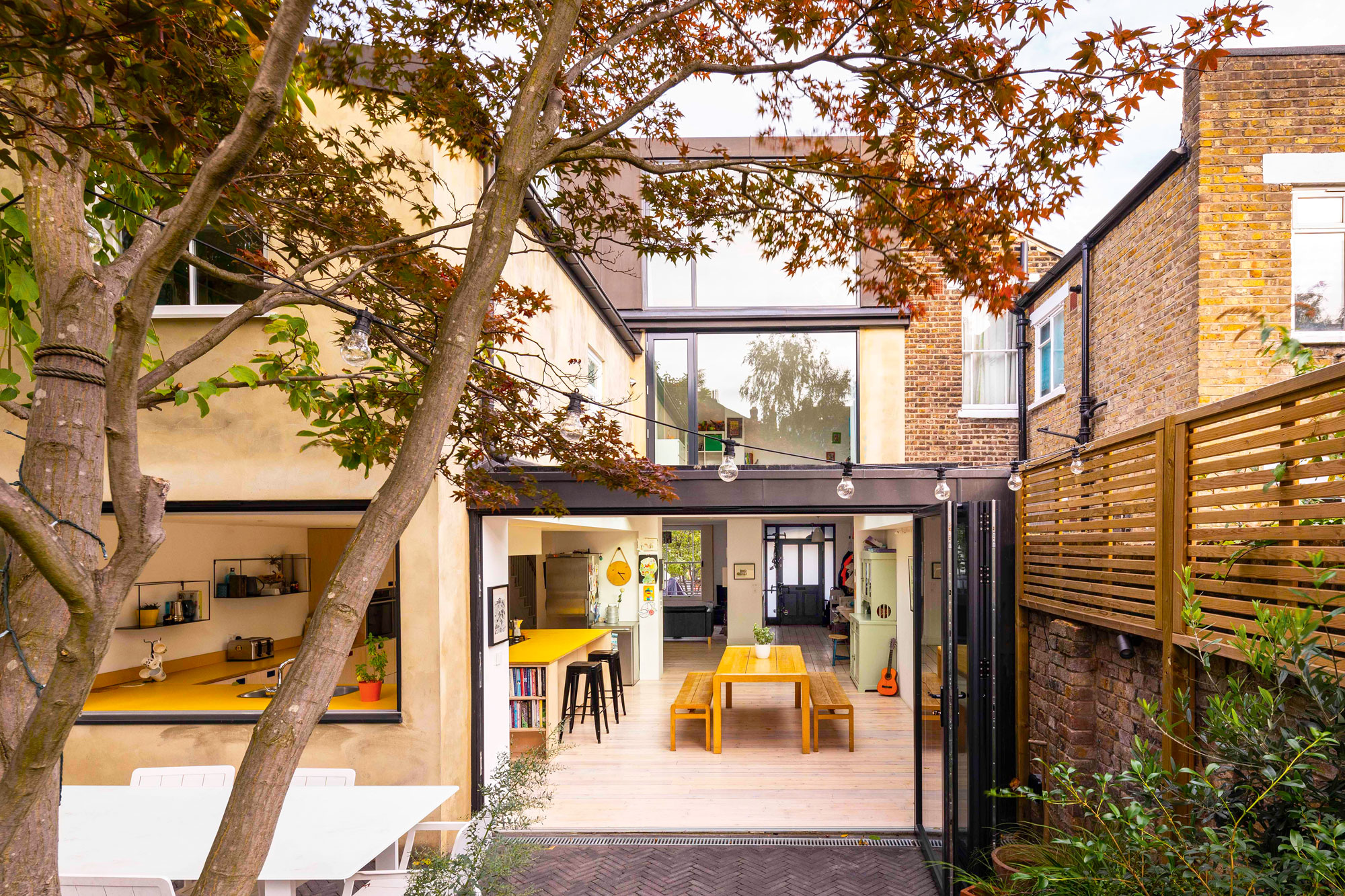
Exterior view of a modern house extension with large glass doors leading to a patio area, featuring a mix of brickwork and wood paneling.
Estimated Reading Time: 12 minutes

Introduction: The London Refurbishment Landscape

London’s housing market presents a unique tapestry of architectural styles spanning centuries, from Georgian townhouses to Victorian terraces and contemporary apartments. For homeowners in the capital, refurbishment offers a strategic opportunity to enhance living spaces without the prohibitive costs and disruption of relocation. Whether you’re residing in a period property in Kensington or a compact flat in Hackney, thoughtful renovation can dramatically improve functionality while boosting property value.

The appeal of refurbishment in London stems from several key factors. The city’s property market continues to command premium prices, making it financially prudent to improve rather than move. Additionally, London’s diverse housing stock often requires modernization to meet contemporary standards of comfort, especially regarding spatial layout and energy efficiency. According to recent market analysis, well-executed renovations in London can deliver returns of 10-25% on investment, depending on the property type and location.

London’s neighborhoods each present distinct refurbishment considerations. In areas undergoing regeneration such as Woolwich, Tottenham, Peckham, Croydon, and Barking & Dagenham, strategic renovations can capitalize on improving transport links and rising property values, as noted by expert mortgage brokers. Meanwhile, prime central locations demand sensitivity to heritage while delivering modern luxury.

This guide explores how to navigate the challenges of refurbishing London homes, with particular attention to the unique requirements of period properties and space-constrained dwellings. We’ll focus on high-impact areas like small bathroom remodeling and budget kitchen renovations, while providing practical insights on planning permissions, contractor selection, and project management in London’s demanding property context.

Period Properties: Preserving Character While Modernizing

London’s architectural heritage is one of its greatest assets, with period properties commanding significant premiums when thoughtfully restored. These homes—whether Georgian, Victorian, Edwardian or Art Deco—possess distinctive features that require specialized attention during refurbishment.

Common period elements demanding preservation include ornate plasterwork and cornicing, original fireplaces, sash windows, decorative tiling, and heritage woodwork. These features not only tell the story of London’s architectural evolution but also constitute key selling points when marketing period properties. The challenge lies in honoring these historical elements while integrating modern conveniences and meeting contemporary standards of comfort.

Period Property Features
Ornate Cornicing
Sash Windows
Original Fireplaces
Decorative Tiling
Heritage Woodwork
High Ceilings

When planning refurbishments for heritage properties in London, several considerations must be prioritized. First, many period homes are listed buildings or situated within conservation areas, requiring planning permission for even minor alterations. As Power Pillar highlights, navigating these permissions is essential before commencing work. Second, building regulations in London are particularly stringent for historic structures, governing everything from structural modifications to energy efficiency upgrades.

Successfully balancing preservation with modernization requires thoughtful design strategies:

  • Carefully restore original features using traditional materials and techniques rather than replacing them
  • Integrate modern systems (heating, electrics, plumbing) discreetly to avoid compromising period aesthetics
  • Use sympathetic materials that complement original construction—lime plasters for breathing walls, matching timbers for repairs
  • Consider “invisible” improvements such as underfloor insulation and secondary glazing that preserve external appearance

For example, when upgrading a Victorian home’s heating system, cast iron radiators can maintain period charm while incorporating modern efficiency. Similarly, contemporary kitchen installations can be designed with cabinetry that echoes original architectural details, creating harmony between old and new elements.

Heritage Specialist Tip

Before beginning any period property refurbishment, commission a detailed building survey from a surveyor experienced in historic London properties. This will identify hidden issues like rising damp, timber decay, or structural movement that must be addressed before cosmetic improvements.

Space Optimization in Compact London Homes

London’s residential landscape is characterized by compact living spaces, with the average property size notably smaller than in other UK regions. This spatial constraint presents both challenges and creative opportunities when approaching refurbishments. Whether working with a Victorian conversion flat in Islington or a modern studio in Canary Wharf, maximizing every square meter is paramount.

The limitations of compact London properties typically include restricted floor plans, inadequate storage, awkward layouts inherited from property subdivisions, and limited natural light. Access issues such as narrow staircases and doorways can also complicate renovation logistics, particularly when bringing in materials or installing large fixtures.

Smart refurbishment strategies can transform these constraints into tailored solutions:

1. Bespoke Storage Solutions
Custom joinery represents one of the most effective investments for compact London homes. Built-in wardrobes that extend to the ceiling, understairs storage units, and window seats with integrated drawers can capture otherwise wasted spaces. According to The MVV’s 2025 trends report, tailor-made storage solutions rank among the highest priorities for London homeowners seeking to maximize functionality.

2. Multifunctional Design Approaches
Furniture that serves multiple purposes—such as sofa beds, extendable dining tables, and fold-down desks—allows rooms to adapt to different needs throughout the day. Wall beds (Murphy beds) are experiencing a renaissance in London flats, providing full-sized sleeping accommodation that disappears when not in use.

3. Visual Space Enhancement
Thoughtful design choices can significantly impact perceived spaciousness:

  • Strategic use of mirrors to reflect light and create the illusion of depth
  • Consistent flooring throughout to create visual continuity
  • Light, warm color palettes that expand spaces visually
  • Glass partitions rather than solid walls to maintain light flow while defining zones

The balance between functionality and aesthetics becomes especially crucial in limited spaces. London refurbishment professionals recommend cohesive design schemes that create visual harmony while maximizing utility. Current trends favor nature-inspired tones and materials that bring warmth to compact spaces, as noted in Auction House London’s 2025 trends forecast.

A particularly effective strategy for London properties involves blurring indoor-outdoor boundaries. Bi-fold or sliding doors that connect living areas to gardens, terraces or balconies effectively “borrow” outdoor space, making interiors feel more expansive. Consistent flooring materials that extend from inside to outside enhance this effect, creating a seamless transition that visually enlarges the living area, according to recent design trends.

Transforming Small Bathrooms in London Properties

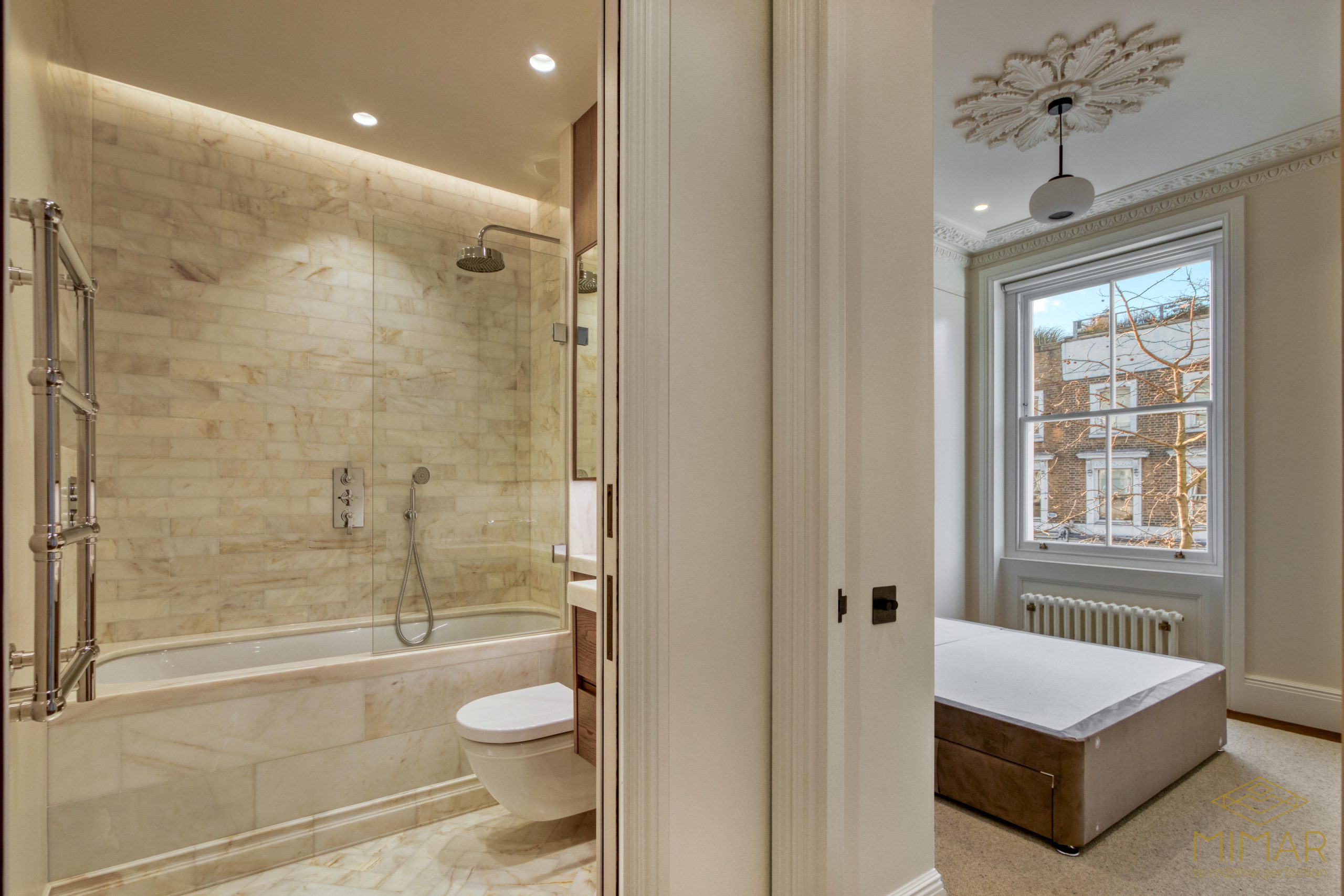
This image shows a modern bathroom with a glass-enclosed shower area featuring stone tile walls and a rain shower head. There is also a sleek vanity with a sink and mirror on the left.

Bathroom refurbishment presents particular challenges in London properties, where these spaces are often compact yet expected to deliver both functionality and luxury. The average London bathroom measures just 4.4 square meters—significantly smaller than the UK average—yet clever small bathroom remodeling can transform these limited spaces into practical, stylish havens.

Bath designs for small bathrooms require careful planning that maximizes every centimeter while creating a sense of spaciousness. The first consideration should be fixture selection, with compact options that don’t compromise on quality:

Compact Fixture Space-Saving Benefit
Short-projection toilets Extend just 60-65cm from the wall vs. standard 75cm
Wall-hung vanities Create visible floor space and a floating effect
Corner sinks Utilize otherwise dead space in room corners
Shower-bath combinations Offer both bathing options without requiring space for both

For extremely limited spaces, designs for very small bathrooms might eliminate the bath entirely in favor of a luxurious walk-in shower with frameless glass enclosure. This creates an unbroken visual line across the room while delivering the premium shower experience most valued by London homeowners and prospective buyers.

Designer Insight

When renovating a small bathroom, consider removing the bathtub in favor of a walk-in shower if there’s another bathroom with a tub in the property. This approach maximizes space while maintaining the home’s overall bathing options.

Storage solutions for small bathrooms require particular creativity. Vertical space utilization becomes essential—tall, slim cabinets, over-door shelving, and recessed wall niches create storage without encroaching on the limited floor area. Medicine cabinets that double as mirrors optimize functionality, while underutilized spaces beneath basins can incorporate custom drawers or shelving.

Material selection dramatically impacts how spacious a small bathroom feels. Large-format tiles with minimal grout lines create cleaner visual lines and fewer breaks, making the space appear larger. Light-reflecting surfaces—such as glass, gloss tiles, and polished stone—bounce light around the room, enhancing brightness. For 2025, there’s a trend toward warmer neutrals over stark whites, bringing warmth to compact bathroom spaces without compromising on the spacious feel.

Lighting deserves special attention in small bathroom refurbishments. Layered lighting combining ambient, task, and accent sources ensures the space feels both functional and inviting. Recessed ceiling lights eliminate visual clutter, while well-placed sconces or LED strips can highlight design features and create depth perception.

Luxury touches that work particularly well in small London bathrooms include:

  • Underfloor heating, which eliminates the need for space-consuming radiators
  • High-quality brassware that provides a focal point and tactile pleasure
  • Heated towel rails that combine functionality with style
  • Backlit mirrors that enhance light distribution while creating atmosphere

Budget Kitchen Renovations with Maximum Impact

A modern kitchen with white cabinetry, marble countertops, and stainless steel appliances, featuring pendant lighting and a herringbone wooden floor.

Kitchen refurbishment often represents the most significant investment in London home renovations, but it’s possible to achieve dramatic transformations without prohibitive costs. Budget kitchen renovations can deliver substantial value when strategic approaches prioritize high-impact changes over comprehensive rebuilds.

The foundation of cost-effective kitchen refurbishment lies in retaining the existing layout wherever possible. Relocating plumbing, gas connections, and electrical points drives up costs substantially, with moving a sink alone potentially adding £1,000 or more to the budget. By keeping the basic footprint while improving finishes and functionality, homeowners can achieve a transformed space at a fraction of the cost.

Several cost-conscious approaches deliver maximum visual impact:

1. Cabinet Refreshment Rather Than Replacement
Replacing cabinet doors and drawer fronts while retaining structurally sound carcasses can reduce costs by 50-70% compared to full replacement. This approach works particularly well for traditional shaker-style kitchens common in London period properties. Paired with new handles or knobs, the transformation can be dramatic without the waste and expense of complete removal.

2. Strategic Worktop Selection
While natural stone represents a significant investment, modern laminates and composites offer remarkable durability and aesthetics at lower price points. Brands like Corian, Minerva, and high-quality laminates provide water resistance and longevity comparable to natural materials at a fraction of the cost. For mixed approaches, consider premium materials for island tops (the most visible surface) with more economical options for perimeter workspaces.

3. Clever Storage Enhancements
Limited space in London kitchens makes storage optimization essential. Pull-out larders, corner carousel units, and vertical dividers can dramatically increase usable space without requiring structural changes. According to kitchen design experts, Londoners are increasingly prioritizing dedicated storage solutions for small appliances to maintain clutter-free worktops in compact kitchens.

Budget Kitchen Upgrades
Cabinet Door Replacement
Quality Hardware
Affordable Worktops
Statement Lighting
Storage Solutions
Splashback Updates

For maximum impact on minimal budgets, focus investments on the elements that draw the eye:

  • Splashbacks – Ceramic tiles or glass panels provide significant visual impact for relatively modest cost
  • Lighting – Under-cabinet and pendant lighting transform atmosphere and functionality
  • Hardware – Quality handles and taps provide tactile satisfaction and visual appeal

Color strategy plays a crucial role in budget kitchen design. While fast-changing trends might suggest bold cabinet colors, London designers increasingly recommend timeless palettes for larger elements paired with easily changeable accents. This approach ensures longevity beyond short-lived trends—particularly important when considering the preferences of future buyers.

For extremely tight budgets, painting existing wooden cabinets offers tremendous transformation potential. Professional spray finishing provides a factory-quality result, while proper preparation and quality paint ensure durability in the high-traffic, high-moisture kitchen environment.

Budget Kitchen Insight

If your budget is limited, focus on replacing the worktop and splashback rather than cabinets. These two elements create the strongest visual impact and can completely transform the kitchen’s appearance while working with existing layouts.

Storage innovations particularly suited to compact London kitchens include slim pull-out pantry units that utilize narrow gaps between appliances, magnetic knife strips that free up drawer space, and ceiling-mounted pot racks that exploit vertical space. These solutions combine aesthetic appeal with practical functionality—the perfect balance for budget kitchen refurbishments in space-conscious London homes.

Other High-ROI Refurbishment Opportunities

Beyond kitchen and bathroom renovations, several refurbishment strategies offer exceptional returns on investment for London properties. These high-impact improvements address the specific priorities of the capital’s property market, where energy efficiency, outdoor space, and flexible living areas command increasing premiums.

Energy Efficiency Upgrades
With energy costs and environmental awareness rising, efficiency improvements deliver both immediate savings and long-term value. For period properties in particular, thoughtful upgrades can transform notoriously drafty London homes into comfortable, economical spaces:

  • Roof and floor insulation, which can be added with minimal disruption
  • Double or triple glazing (or secondary glazing for listed properties)
  • Modern heating systems including smart controls
  • Draft-proofing around doors, windows, and floorboards

According to industry analysis, properties with high energy performance ratings now command premiums of 5-10% in London, with this differential expected to increase as energy efficiency becomes a greater priority for buyers.

Optimizing Outdoor Spaces
London’s premium on outdoor space has intensified, making garden, terrace, and balcony improvements particularly valuable. Even modest outdoor areas can be transformed into desirable extensions of living space:

  • Decking or paving to create usable outdoor “rooms”
  • Integrated seating with hidden storage
  • Weatherproof lighting and heating for year-round use
  • Vertical planting for privacy and greenery in limited spaces

The trend toward outdoor living spaces continues to strengthen in London, with well-designed gardens and terraces increasingly viewed as essential rather than optional features.

Creating Flexible Living/Working Spaces
The shift toward remote and hybrid working has transformed buyer priorities, with dedicated work areas now commanding significant premiums in London properties:

  • Conversion of unused dining rooms or box rooms into home offices
  • Garden room construction for dedicated workspace separated from the main dwelling
  • Multi-purpose rooms with clever storage that conceals work equipment when not in use
  • Improved soundproofing between living and working zones

Properties offering dedicated work spaces now achieve faster sales and higher prices across London boroughs, reflecting the fundamental shift in how Londoners use their homes.

Loft Conversions and Basement Development
Where planning allows, adding habitable space through loft conversion or basement development delivers among the strongest returns on investment in London’s space-constrained market. While requiring significant capital outlay, these projects typically return 15-25% above costs when professionally executed. Key considerations include:

  • Natural light maximization through skylights, light wells, or glazed extensions
  • Proper insulation and ventilation to create truly comfortable living spaces
  • Integration of en-suite facilities to create self-contained bedroom suites
  • Careful design that complements the property’s original character

These substantial projects require careful planning and professional execution but offer the most significant overall value enhancement for London properties where land values make additional square footage particularly valuable.

Navigating London’s Planning and Building Regulations

London’s regulatory landscape presents distinctive challenges for refurbishment projects. The capital’s planning system is notably complex, with 33 different local authorities each maintaining specific policies alongside overarching London-wide and national regulations. Understanding these requirements is essential for avoiding costly delays and enforcement issues.

For standard refurbishments, many internal alterations fall under “permitted development” rights, requiring no formal planning permission. However, London’s high concentration of listed buildings and conservation areas significantly restricts these rights for many properties. According to renovation specialists, approximately 56% of central London lies within conservation areas where external alterations require planning consent.

Key planning considerations for London refurbishments include:

  • Listed Buildings – Any alterations, internal or external, require Listed Building Consent
  • Conservation Areas – External changes including window replacements and roof alterations typically require planning permission
  • Article 4 Directions – Many London boroughs have removed permitted development rights in specific areas
  • Basement Developments – Increasingly subject to restrictive policies, particularly in boroughs like Kensington & Chelsea and Westminster

Building regulations apply universally regardless of planning requirements, governing safety, structural integrity, fire protection, ventilation, energy efficiency, and accessibility. In London, these regulations are often applied more stringently than elsewhere in the UK, reflecting the density and complexity of the capital’s building stock.

Successful navigation of London’s regulatory framework typically requires professional assistance. Architects and planning consultants familiar with specific borough policies can significantly improve approval prospects and anticipate potential objections. For complex projects, pre-application consultations with local authority planning departments offer valuable insights before committing to detailed designs.

Party Wall Agreements represent another critical consideration in London’s terraced and semi-detached housing landscape. Works affecting party walls or structures require formal agreements with adjoining property owners, potentially adding 8-12 weeks to project timelines. Early engagement with neighbors and professional party wall surveyors can minimize delays and disputes.

Planning Tip

Many London boroughs offer pre-application advice services for a fee, providing written guidance on the likelihood of planning approval before submitting a formal application. This investment can save substantial time and redesign costs for complex refurbishments.

Finding and Working with London Contractors

Securing reliable, skilled contractors represents one of the most challenging aspects of London refurbishments. The capital’s construction sector is characterized by high demand, premium pricing, and variable quality, making thorough vetting essential. For projects involving period properties or complex structural alterations, specialist expertise becomes particularly important.

When seeking contractors for London refurbishments, multiple channels should be explored:

  • Personal recommendations from neighbors who have completed similar projects
  • Architect and designer referrals to contractors they’ve successfully collaborated with
  • Trade associations like the Federation of Master Builders or the Guild of Master Craftsmen
  • Specialist directories for period properties or specific crafts

The vetting process should be particularly thorough in London’s competitive market:

  • Visit completed projects and speak directly with previous clients
  • Verify appropriate insurance coverage, particularly public liability and employer’s liability
  • Check relevant accreditations (Gas Safe, NICEIC for electrical work, etc.)
  • Confirm experience with London-specific building types and conservation requirements
  • Request detailed, itemized quotations rather than single-figure estimates

Contract structure deserves careful attention for London refurbishments, where project costs and complexity often exceed UK averages. Fixed-price contracts with clearly defined payment schedules linked to completion stages offer protection against escalating costs. For larger projects, JCT (Joint Contracts Tribunal) contracts provide comprehensive frameworks that protect both client and contractor interests.

Communication protocols should be established before work commences, with weekly site meetings and documented decision trails. This becomes particularly important for projects where homeowners may not be on-site daily or where multiple trades must be coordinated in confined London properties.

For projects in shared buildings (common in London), contractor management requires additional considerations:

  • Clear agreement on working hours to minimize disturbance to neighbors
  • Defined access arrangements for communal areas
  • Protection measures for shared spaces
  • Waste disposal protocols that comply with local regulations

Project Timelines and Living Arrangements

Realistic timeline planning is essential for London refurbishment projects, where logistical challenges and regulatory approvals often extend schedules beyond initial estimates. Understanding typical timeframes helps homeowners make appropriate living arrangements and manage expectations.

For planning purposes, typical London refurbishment timelines can be broken down as follows:

Project Scope Design & Approvals Construction Total Timeline
Cosmetic refresh Minimal 2-4 weeks 1-2 months
Single room renovation 1-2 months 4-8 weeks 3-4 months
Full property refurbishment 3-6 months 3-6 months 6-12 months
Refurb with extensions 6-9 months 6-12 months 12-18 months

These timelines assume relatively straightforward planning processes. For listed buildings or complex planning negotiations, the approvals phase may extend significantly. Similarly, discovering hidden structural issues during construction can extend completion timeframes.

London’s housing density and access constraints often impact refurbishment schedules. Restricted parking, limited storage for materials, and complex delivery logistics can add time compared to suburban or rural projects. Successful refurbishments account for these factors with detailed logistics planning and realistic buffers in projected timelines.

Living arrangements during refurbishments require careful consideration, particularly for whole-house projects. Options typically include:

  • Phased renovation allowing continuous occupation of part of the property
  • Temporary accommodation through short-term rentals (though London’s premium rental market makes this costly)
  • Staying with family/friends for shorter projects

For phased approaches, creating temporary kitchen facilities becomes critical, as does maintaining at least one functional bathroom. Dust containment systems can make partial occupation more manageable, though noise remains a significant consideration, especially for families with young children or professionals working from home.

Utilities interruptions must be carefully planned and communicated. London’s older housing stock often requires complete rewiring or plumbing replacement during comprehensive refurbishments, potentially necessitating extended periods without basic services. Temporary solutions such as chemical toilets or local accommodation during critical phases may be necessary.

Project Management Tip

Build a 15-20% time buffer into any London refurbishment schedule, particularly for older properties where unforeseen issues commonly arise once works begin. This helps manage expectations and reduces stress when inevitable delays occur.

Conclusion: Balancing Vision, Value and Practicality

Refurbishing a London property represents both a significant investment and an opportunity to create a home perfectly tailored to modern living while enhancing long-term asset value. The most successful projects balance aspirational design with practical considerations of budget, timeline, and the unique characteristics of London’s housing stock.

Strategic refurbishment approaches for London homes prioritize interventions that deliver the greatest impact relative to investment. Small bathroom remodeling and budget kitchen renovations frequently offer exceptional returns, transforming daily living experiences while appealing strongly to future buyers. Space optimization through thoughtful storage solutions and multipurpose designs addresses the fundamental challenge of London’s compact living spaces.

For period properties, the preservation of heritage features alongside sensitive modernization creates homes that combine historical character with contemporary performance. This approach particularly suits London’s architectural landscape, where original features command significant premiums when thoughtfully incorporated into renovated spaces.

Navigating London’s complex planning environment requires patience and professional guidance, particularly for properties with heritage designations. Building strong relationships with neighbors becomes especially important in the capital’s densely populated boroughs, where refurbishment works inevitably impact adjoining properties.

Contractor selection deserves particular attention in London’s competitive construction market, with thorough vetting and clear contractual arrangements protecting against quality issues and budget overruns. The investment in professional project management often pays dividends through smoother execution and reduced stress, particularly for comprehensive refurbishments.

Finally, realistic timeline planning that accommodates London’s specific challenges—from parking restrictions to planning complexities—helps manage expectations and living arrangements during the refurbishment process. Building appropriate contingency into both budgets and schedules provides essential flexibility when inevitable surprises emerge during works.

When thoughtfully planned and professionally executed, London home refurbishments deliver significant benefits: enhanced daily living, improved energy performance, and substantial increases in property value. By focusing on high-impact areas like bathrooms and kitchens while respecting the unique character of London’s diverse housing stock, homeowners can create spaces that meet contemporary needs while standing the test of time in one of the world’s most dynamic property markets.

Complete Guide to Home Refurbishment London: Costs, Process & Money-Saving Tips

Modern outdoor patio area with sleek tiled flooring and wooden privacy fencing, surrounded by lush greenery.
Estimated Reading Time: 10 minutes

Introduction: Planning Your Home Refurbishment in London

Embarking on a home refurbishment in London requires meticulous planning, strategic decision-making, and careful budgeting. The unique character of London properties, from Victorian terraces to modern apartments, demands a tailored approach to home refurbishment. London’s distinctive property market, stringent regulations, and higher costs compared to the rest of the UK make proper preparation essential for project success.

Modern dining room with a large table, chairs, decorative chandelier, and large windows with garden view.

Whether you’re refreshing a period property in Islington, modernizing a family home in Greenwich, or upgrading a flat in Hackney, understanding the intricacies of home refurbishment in London will save you time, money, and stress. This comprehensive guide explores everything from initial planning and budgeting to finding reliable contractors and maximizing your property’s value through smart refurbishment choices.

Refurbishment vs Renovation vs Remodeling: Understanding the Differences

While often used interchangeably, these terms have distinct meanings in the context of London’s property market:

  • Home Refurbishment: Typically refers to cosmetic and functional updates that restore or modernize a property without significant structural alterations. This includes painting, new flooring, updating bathrooms or kitchens, and general improvements to the property’s appearance and functionality.
  • Renovation: Involves more substantial improvements, including repairs and upgrades to core systems like wiring or plumbing, or reconfiguring existing layouts without changing the fundamental structure.
  • Remodeling: Encompasses substantial structural changes like removing or adding walls, building extensions, or changing the use of spaces entirely.

In London, these definitions often overlap in practice. Many homeowners undertake projects that combine elements of all three, depending on their property’s needs and their vision. As noted by Power Pillar, refurbishment in London typically focuses on revitalizing interiors, while renovation and remodeling may require additional permissions due to structural work.

Current State of London’s Refurbishment Market

London’s home refurbishment market remains robust in 2025, driven by several factors:

  • High property values making it economically viable to invest in existing homes rather than move
  • A substantial stock of period properties requiring modernization
  • Growing demand for energy-efficient homes amid rising utility costs
  • Changing lifestyle needs, particularly post-pandemic work-from-home requirements
  • Desire to maximize space in a city where square footage comes at a premium

According to Beams Renovation, costs in London remain significantly higher than in other UK regions, with variations across boroughs. Central and North London typically command premium prices for refurbishment work compared to outer boroughs.

Why Londoners Refurbish
Increase Property Value
Improve Energy Efficiency
Adapt to Changing Lifestyles
Update Period Properties
Maximize Limited Space
Avoid Costly Relocations

The Home Refurbishment Process in London

A successful home refurbishment in London follows a structured process:

1. Initial Consultation and Assessment

Begin with a thorough assessment of your property’s current condition and your objectives. This stage helps identify structural issues, potential complications, and opportunities for improvement.

2. Design and Planning

Develop detailed plans, potentially with an architect or designer, especially for complex projects. This stage establishes the scope, aesthetics, materials, and preliminary budget.

3. Obtaining Necessary Permissions

Research and apply for required permissions based on your project scope and property location. This may include planning permission, building regulations approval, or listed building consent.

4. Detailed Quotation and Budgeting

Obtain comprehensive quotes from contractors, itemizing labor, materials, and timeline. Create a detailed budget including contingencies for unexpected issues.

5. Preparation and Site Setup

Prepare the property for work, including protection of existing features, setting up site facilities, and arranging temporary accommodation if needed.

6. Execution Phase

The main refurbishment work begins, following a logical sequence: demolition/stripping out, structural changes, first-fix (electrics, plumbing), second-fix (fitting bathrooms, kitchens), and finishing (decoration, flooring).

7. Snagging and Final Inspection

Identify and address any defects or incomplete items before final sign-off. This ensures everything meets the agreed quality standards.

8. Handover

Receive all documentation including warranties, certificates, and operating instructions for new installations.

Planning Permissions and Regulations in London

London’s complex planning landscape requires careful navigation. Depending on your project, you may need:

  • Planning Permission: Required for major changes like extensions, loft conversions with dormer windows, or significant alterations to external appearance.
  • Building Regulations Approval: Mandatory for structural work, electrical installations, plumbing changes, and energy efficiency upgrades.
  • Listed Building Consent: Essential for any changes to properties with listed status, common in many London boroughs.
  • Conservation Area Consent: May be needed for external alterations in designated conservation areas, which cover substantial parts of London.
  • Party Wall Agreement: Required when work affects shared walls, boundaries, or excavations near neighboring properties.

Power Pillar notes that some London boroughs enforce Article 4 Directions, which restrict permitted development rights. Always check with your local council before proceeding, as regulations vary significantly between boroughs.

Local Authority Insight

Each London borough has slightly different planning policies and application processes. For example, Kensington and Chelsea has stricter controls on basement excavations than some outer boroughs. Research your specific borough’s requirements early in the planning process.

Cost Breakdown of Home Refurbishment in London

Home refurbishment costs in London vary widely depending on several factors, including property size, condition, location, and the quality of finishes desired.

Average Costs by Project Type (2025)

Project Type Typical London Cost Range
Full House Refurbishment (3-bedroom) £56,586–£93,868+
Kitchen Refurbishment £15,000–£30,000
Bathroom Refurbishment £6,000–£12,000
Electrical Rewiring £5,000–£10,000
Plumbing Upgrades £4,000–£8,000
Structural Changes £2,000–£10,000+
Flooring (whole house) £6,000–£12,000

According to Beams Renovation, a full house renovation in London starts from approximately £56,586 for basic specifications, rising to £93,868 or more for premium finishes. BCS Builders London notes that costs in North and Central London are typically higher than in outer boroughs.

Factors Affecting Home Refurbishment Costs in London

  • Property Age and Type: Period properties often require specialist treatments and materials. Victorian and Edwardian homes typically cost more to refurbish than newer properties.
  • Property Location: Central London locations face higher labor costs and logistical challenges (like restricted access and parking).
  • Scope of Work: Comprehensive refurbishments involving structural changes cost significantly more than cosmetic updates.
  • Quality of Materials: Premium fixtures, fittings, and finishes substantially increase costs but may offer better long-term value.
  • Additional Professional Fees: Architect fees (8-15% of project cost), structural engineer fees (£500-£2,500), and planning application costs (£200-£500).

Partial vs Full House Refurbishment

Partial refurbishments focus on specific areas (typically kitchens and bathrooms) and generally range from £15,000-£45,000 depending on the scope. Full house refurbishments address the entire property and start from around £56,000 for a typical London 3-bedroom house with basic specifications, according to Beams Renovation.

Project Timeline Considerations

Realistic timeframes for London refurbishment projects:

  • Kitchen or bathroom refurbishment: 2-6 weeks
  • Partial house refurbishment (2-3 rooms): 6-12 weeks
  • Full house refurbishment without structural changes: 3-5 months
  • Full house refurbishment with structural work: 6-9 months
  • Full house refurbishment of a period property: 6-12 months

These timelines should include planning and permission stages, which can add significant time, especially in conservation areas or for listed buildings. Always factor in potential delays due to weather, supplier issues, or unexpected structural problems.

Creating a Realistic Budget for House Reno Costs

Effective budgeting is critical for refurbishing a house in London:

1. Itemized Cost Breakdown

Create a detailed list of all anticipated works, materials, and finishes. Being specific helps prevent budget overruns.

2. Contingency Allocation

Set aside 10-20% of your total budget for unexpected issues, which are common in London’s aging housing stock.

3. Professional Fees

Include costs for architects, structural engineers, party wall surveyors, and planning consultants where applicable.

4. VAT Consideration

Factor in 20% VAT on labor and materials unless working with a contractor who isn’t VAT-registered (rare for reputable London firms).

5. Phasing Possibility

Consider whether the project can be completed in phases to spread costs over time, especially for larger refurbishments.

Online calculators can provide quick estimates, but consulting with professionals who understand London’s specific market conditions will give you more accurate figures.

Finding the Right Contractors in London

Selecting qualified professionals is crucial for successful home refurbishment in London:

Vetting Process

  • Request detailed quotations from at least three contractors
  • Verify membership in professional bodies like the Federation of Master Builders
  • Check credentials, insurance, and guarantees
  • Ask for references and visit completed projects if possible
  • Search for online reviews and check their company history
  • Ensure they have experience with your property type and in your borough

Red Flags to Watch For

  • Contractors requesting large upfront payments (more than 10-15%)
  • Vague or extremely low quotations
  • Reluctance to provide references or show previous work
  • Pressure to make immediate decisions
  • Lack of proper insurance or professional registrations

DIY vs Professional Approach for Home Refurbishment

While DIY can save money, London properties often present unique challenges:

Suitable for DIY

  • Painting and decorating
  • Simple tiling projects
  • Basic landscaping
  • Assembling flat-pack furniture
  • Cosmetic updates like changing handles or fixtures

Requires Professionals

  • Structural alterations
  • Electrical and plumbing work (legally required to meet building regulations)
  • Gas installations (must be done by Gas Safe registered engineers)
  • Roofing repairs
  • Window replacements (especially in conservation areas)
  • Work on listed buildings or in conservation areas

Power Pillar emphasizes that while DIY can reduce labor costs, professional work ensures compliance with London’s strict building regulations and safety standards, which is especially important when selling your property.

Money-Saving Strategies for London Home Refurbishment

Refurbishing a home in London doesn’t have to break the bank:

Strategic Planning

  • Define a clear scope to avoid costly mid-project changes
  • Retain original layouts where possible to minimize structural costs
  • Schedule work during off-peak seasons when contractors may offer better rates
  • Consider refurbishing room by room to spread costs

Smart Sourcing

  • Source some materials yourself to save on contractor mark-ups
  • Consider ex-display kitchens and bathrooms (available at significant discounts)
  • Mix high-end and budget materials strategically (splurge on visible features, save on hidden elements)
  • Explore architectural salvage yards for period features

Energy Efficiency

  • Investigate government grants and incentives for energy-efficient upgrades
  • Prioritize insulation improvements for long-term savings
  • Consider smart home technology to reduce ongoing utility costs

Cost-Saving Tip

When refurbishing a house in London, consider upcycling existing fixtures where possible. Repainting kitchen cabinets rather than replacing them entirely can save thousands of pounds while still transforming the space.

Maximizing Property Value Through Strategic Refurbishment

Renovated bedroom with elegant chandelier, upholstered headboard, and stylish bedside tables.

Certain refurbishment projects offer better returns on investment in the London market:

High-ROI Improvements

  • Kitchen upgrades: Modern, well-designed kitchens are top priorities for London buyers
  • Bathroom refurbishments: High-quality bathrooms with efficient layouts add significant value
  • Creating open-plan living spaces: Particularly valuable in smaller London properties
  • Adding usable square footage: Loft conversions, basement developments, and extensions
  • Energy efficiency improvements: Increasingly important to environmentally conscious buyers
  • Enhancing curb appeal: First impressions matter in London’s competitive market

For period properties, preserving and enhancing original features while modernizing essentials like heating, plumbing, and electrics offers the best balance between character and contemporary comfort, which commands premium prices in London.

London Home Refurbishment Case Studies

Budget Refurbishment: East London Flat

Property: 1-bedroom flat in Walthamstow
Budget: £35,000
Scope: Kitchen and bathroom refresh, complete redecoration, new flooring throughout
Timeline: 6 weeks
Value Added: Approximately £50,000

This project focused on cosmetic improvements and strategic upgrades to the kitchen and bathroom. The owners saved by retaining the original kitchen layout but installing new cabinet doors, worktops, and appliances. They also project-managed the refurbishment themselves, sourcing materials directly to reduce costs.

Mid-Range Refurbishment: North London Terrace

Property: 3-bedroom Victorian terrace in Islington
Budget: £70,000
Scope: Full house refurbishment including new electrics, plumbing, kitchen, two bathrooms, and bespoke joinery
Timeline: 5 months
Value Added: Approximately £120,000

According to BCS Builders London, this comprehensive refurbishment balanced period features with modern amenities. The owners preserved original fireplaces and cornicing while creating a contemporary open-plan kitchen-dining area and adding a downstairs bathroom.

High-End Refurbishment: Central London Townhouse

Property: Victorian townhouse in Kensington
Budget: £200,000+
Scope: Complete remodel including basement conversion, structural alterations, luxury finishes throughout, and integrated smart home technology
Timeline: 12 months
Value Added: Approximately £500,000

Beams Renovation reports that this project transformed a dated property into a premium home featuring a designer kitchen, marble bathrooms, bespoke joinery, and state-of-the-art home automation. The basement conversion added valuable living space in an area where price per square foot is at a premium.

Financing Your London Home Refurbishment

Several options are available for funding your refurbishment project:

Remortgaging

Releasing equity from your property can be cost-effective for major refurbishments, especially with the added value the work will create.

Home Improvement Loans

Specific loans designed for property improvements, often with competitive interest rates compared to personal loans.

Personal Loans

Suitable for smaller refurbishment projects, typically up to £25,000.

Specialist Refurbishment Finance

For extensive projects, specialist lenders offer products specifically designed for major refurbishments.

Government Schemes

Explore initiatives like the Green Homes Grant or energy efficiency incentives that may partly fund certain improvements.

Conclusion: Your London Home Refurbishment Journey

Home refurbishment in London presents unique challenges but offers significant rewards when executed effectively. From Victorian terraces in Camden to modern apartments in Canary Wharf, each property requires a tailored approach that respects its character while meeting contemporary needs.

Success depends on thorough planning, realistic budgeting, careful contractor selection, and strategic decision-making. By understanding the home refurbishment London landscape—including borough-specific regulations, typical costs, and value-adding improvements—you can transform your property while controlling expenses.

Whether you’re undertaking a cosmetic refresh or a comprehensive remodel, this guide provides the foundation for a successful project. Remember that in London’s premium property market, quality refurbishments consistently deliver returns, both in lifestyle benefits and financial value.

To begin your home refurbishment journey, start by defining your goals, researching local regulations, and consulting with professionals experienced in London’s unique property landscape. With the right preparation, your London home refurbishment can transform your living space while making a sound investment in your property’s future.

Bespoke Interior Design London: Crafting Unique and Luxurious Living Spaces

Estimated Reading Time: 4 minutes

Key Takeaways

  • Bespoke interior design in London offers personalized and luxurious living spaces.
  • Custom-made furniture and fittings are central to creating unique interiors.
  • Luxury finishes and fixtures enhance the sophistication of bespoke designs.
  • Current trends include sustainable luxury, biophilic design, smart home integration, and multifunctional spaces.
  • Choosing bespoke services offers exclusivity, superior quality, and increased property value.

Table of Contents

The Essence of Bespoke Interior Design in London

Bespoke interior design represents more than just decoration – it’s an art form that involves crafting every element of a space to match the client’s unique preferences and requirements. This tailored interior architecture approach ensures that each project is a one-of-a-kind masterpiece.

In London’s luxury property market, this personalized approach has become increasingly significant. According to industry experts, “Bespoke design involves creating custom-made elements unique to each client,” reflecting a growing appreciation for exclusivity and craftsmanship in home design.

The rising demand for personalized interiors in London’s prestigious neighborhoods demonstrates a clear shift towards exclusivity and superior craftsmanship in residential design.

Custom-Made Furniture and Fittings

At the heart of every bespoke interior design project lies the creation of custom-made furniture and fittings. These unique pieces serve as the foundation of personalized design, ensuring that every element fits perfectly within the space while expressing the client’s individual style.

Key aspects include:

  • Made-to-measure sofas and seating
  • Bespoke dining tables and chairs
  • Custom-designed storage solutions
  • Tailored lighting fixtures
  • Built-in wardrobes and cabinets

Industry specialists confirm that “Tailored pieces enhance both functionality and aesthetics and are central to London’s interior trends,” highlighting the essential role of custom furniture in creating truly unique spaces.

Luxury Finishes and Fixtures

The selection of luxury finishes and fixtures plays a crucial role in elevating bespoke interiors to new heights of sophistication. These premium elements include:

  • Rare marble and stone selections
  • Exotic wood veneers
  • Hand-crafted metalwork
  • Designer lighting installations
  • Premium hardware and fixtures
  • Advanced home automation systems

Research shows that “Incorporating high-end materials adds opulence and exclusivity” to bespoke interiors, creating spaces that exude luxury and refinement.

Current London interior design trends reflect a sophisticated blend of luxury and functionality. Key trends include:

Sustainable Luxury:

  • Eco-friendly material selections
  • Energy-efficient systems
  • Sustainable furniture sources

Biophilic Design:

  • Living walls
  • Natural material integration
  • Indoor gardens

Smart Home Integration:

  • Automated lighting systems
  • Climate control
  • Advanced security features

Multifunctional Spaces:

  • Convertible furniture
  • Flexible room layouts
  • Adaptable living areas

These trends align with industry observations that “Luxury interior design in London now focuses on sustainability, technology, and nature-inspired elements.”

Tailored Interior Architecture Solutions

The marriage of interior design and architecture creates truly exceptional living spaces. This integration includes:

  • Custom staircases
  • Innovative room layouts
  • Bespoke architectural details
  • Unique spatial solutions
  • Built-in features

Experts note that “Collaborative efforts between architects and interior designers ensure seamless, unique solutions” in creating cohesive living environments.

Benefits of Choosing Bespoke Interior Design Services in London

Investing in bespoke interior design offers numerous advantages:

  • Exclusivity: Each design is unique and personal
  • Superior Quality: Premium materials and expert craftsmanship
  • Perfect Fit: Custom solutions for your specific space
  • Value Enhancement: Increased property worth
  • Longevity: Timeless design that endures

Research confirms that “Bespoke interiors increase property appeal and often provide greater longevity” compared to standard design solutions.

How to Select the Right Bespoke Interior Designer in London

Finding the perfect designer requires careful consideration of several factors:

Essential Checklist:

  • Portfolio review
  • Client testimonials
  • Design process understanding
  • Supplier network evaluation
  • Communication style assessment

Industry experts emphasize that “Effective communication and a strong track record are essential in selecting the right designer.”

Conclusion

Bespoke interior design London represents the pinnacle of personalized living spaces. Through custom-made furniture and fittings, luxury finishes and fixtures, and tailored interior architecture solutions, homeowners can achieve truly unique environments that perfectly reflect their personality and lifestyle.

The combination of expert craftsmanship, premium materials, and personalized design ensures that each project is not just a living space, but a masterpiece of individual expression. As London’s luxury property market continues to evolve , bespoke interior design remains the definitive choice for those seeking the ultimate in personalized luxury living.

Additional Resources

For further information about bespoke interior design in London, consider exploring:

  • Sustainable luxury design practices
  • Smart home technology integration
  • London’s top bespoke interior designers
  • Latest trends in luxury home automation
  • Eco-friendly material innovations

FAQ

What is bespoke interior design?

Bespoke interior design is a highly personalized approach where every element of the space is tailored to the client’s specific preferences and needs, resulting in a unique and exclusive living environment.

Why choose bespoke interior design services in London?

Choosing bespoke services offers exclusivity, superior quality, perfect fit for your space, enhanced property value, and timeless design that endures over time.

How do I select the right bespoke interior designer?

Consider reviewing portfolios, client testimonials, understanding their design process, evaluating their supplier network, and assessing their communication style to ensure they align with your vision.

Working with Architects on Refurbishments: Transform Your Home with Expert Guidance

Working with Architects on Refurbishments: Your Complete Guide to Successful Home Renovations

Estimated reading time: 12 minutes

Key Takeaways

  • Partnering with architects ensures professional guidance throughout your renovation journey.
  • An architect-led process offers expert design planning, technical expertise, and budget optimization.
  • The collaborative design-build approach enhances communication and streamlines project completion.
  • Understanding London’s planning permissions is crucial for a smooth renovation process.
  • Selecting the right architect is essential for project success and long-term satisfaction.
  • Maximize your refurbishment by focusing on clear communication, budget management, and quality control.

Table of Contents

The Architect-Led Renovation Process: Why It Matters

An architect-led renovation process puts professional designers at the helm of your project, overseeing everything from concept development to construction completion. This comprehensive approach delivers several key advantages:

  • Expert Design Planning: Architects bring years of training and experience to your project, ensuring optimal space utilization and aesthetic appeal.
  • Technical Expertise: Professional oversight ensures all structural and functional elements work together seamlessly.
  • Regulatory Compliance: Architects maintain updated knowledge of building codes and regulations.
  • Innovative Solutions: Creative problem-solving for unique spatial challenges [Source].
  • Budget Optimization: Strategic planning to maximize value within your financial parameters.

Research shows that architect-led projects typically result in higher property values and better long-term satisfaction with renovation outcomes. [Learn More]

Understanding the Collaborative Design-Build Approach

The collaborative design-build approach represents a modern evolution in renovation management, where architects, builders, and clients work as an integrated team. This unified method offers several distinct benefits:

  • Streamlined Communication: Direct channels between all parties reduce misunderstandings.
  • Faster Project Completion: Integrated teamwork eliminates traditional delays.
  • Enhanced Cost Control: Joint planning prevents budget overruns.
  • Superior Quality: Unified oversight ensures consistent standards.
  • Reduced Stress: Single point of responsibility simplifies decision-making.

This integrated approach has shown significant improvements in project outcomes [Source] compared to traditional separated design and build processes.

Planning Permission Tips for London Homes

Navigating London’s unique planning requirements requires specialized knowledge. Here’s what you need to know:

  • Conservation Areas: Many London properties fall under special planning restrictions.
  • Listed Buildings: Historic properties require additional permissions [Details].
  • Local Variations: Each borough has specific planning requirements.
  • Documentation: Detailed submissions must meet exact specifications.
  • Timeline Management: Understanding processing periods is crucial.

Working with architects familiar with London’s planning landscape can significantly smooth the approval process. They can:

  • Prepare comprehensive planning applications.
  • Handle pre-application consultations.
  • Address potential objections proactively.
  • Manage relationships with planning officers.
  • Navigate complex historical building requirements.

Architect Referrals for Home Upgrades: Finding Your Perfect Match

Selecting the right architect is crucial for project success. Consider these essential steps:

  • Gather Personal Recommendations: Ask friends and family about their renovation experiences.
  • Check Professional Organizations: Verify credentials and memberships.
  • Review Portfolios: Examine past projects similar to yours.
  • Interview Multiple Candidates: Compare approaches and personalities.
  • Check References: Speak with previous clients.
  • Discuss Budgets: Ensure alignment on financial expectations.

Your chosen architect should demonstrate:

  • Relevant experience in your type of project.
  • Clear communication skills.
  • Understanding of your vision.
  • Transparent pricing structure.
  • Strong project management abilities.

Maximizing Your Refurbishment Project with Architects

To ensure the best possible outcomes when working with architects on refurbishments, follow these key strategies:

  1. Clear Communication
    • Document all requirements and preferences.
    • Maintain regular project meetings.
    • Keep written records of decisions.
    • Share inspiration images and examples.
  2. Budget Management
    • Set realistic financial parameters.
    • Include contingency funds.
    • Discuss value engineering options.
    • Regular budget reviews.
  3. Timeline Planning
    • Establish clear project milestones.
    • Account for potential delays.
    • Plan for material lead times.
    • Consider seasonal impacts.
  4. Quality Control
    • Regular site inspections.
    • Material quality verification.
    • Workmanship standards [Standards].
    • Final punch list completion.
  5. Design Development
    • Engage in the creative process.
    • Consider multiple options.
    • Balance aesthetics with functionality [Ideas].
    • Focus on long-term value [Benefits].

Conclusion

Working with architects on refurbishments provides a structured, professional approach to home renovation. The architect-led renovation process, combined with a collaborative design-build approach, ensures your project benefits from expert oversight while maintaining efficiency and quality.

Whether navigating London’s complex planning requirements or seeking architect referrals for home upgrades, professional architectural services add significant value to your renovation project.

Take Action Today

Ready to transform your space? Here’s how to get started:

  1. Schedule a Free Consultation
    • Discuss your vision.
    • Get initial feedback.
    • Understand the process.
    • Explore possibilities.
  2. Request Planning Guidance
    • Learn about local requirements.
    • Understand timelines.
    • Get permission tips for London homes.
    • Review documentation needs.
  3. Connect with Verified Architects
    • Access our network of professionals.
    • Review portfolios.
    • Check credentials.
    • Compare approaches.

Contact us today to begin your renovation journey with expert architectural guidance. Our collaborative design-build approach ensures your project receives the attention and expertise it deserves.

FAQ

Q: Why should I work with an architect for my refurbishment?

A: Architects provide professional expertise in design planning, technical solutions, and project management, ensuring a successful renovation that meets your needs.

Q: What is the collaborative design-build approach?

A: It’s a unified method where architects, builders, and clients work together from the start, enhancing communication and efficiency throughout the project.

Q: How can an architect help with planning permissions in London?

A: Architects experienced with London’s regulations can navigate the complex planning requirements, handle applications, and liaise with planning officers for a smoother approval process.

Q: What should I look for when selecting an architect?

A: Look for relevant experience, strong communication skills, understanding of your vision, transparent pricing, and solid project management abilities.